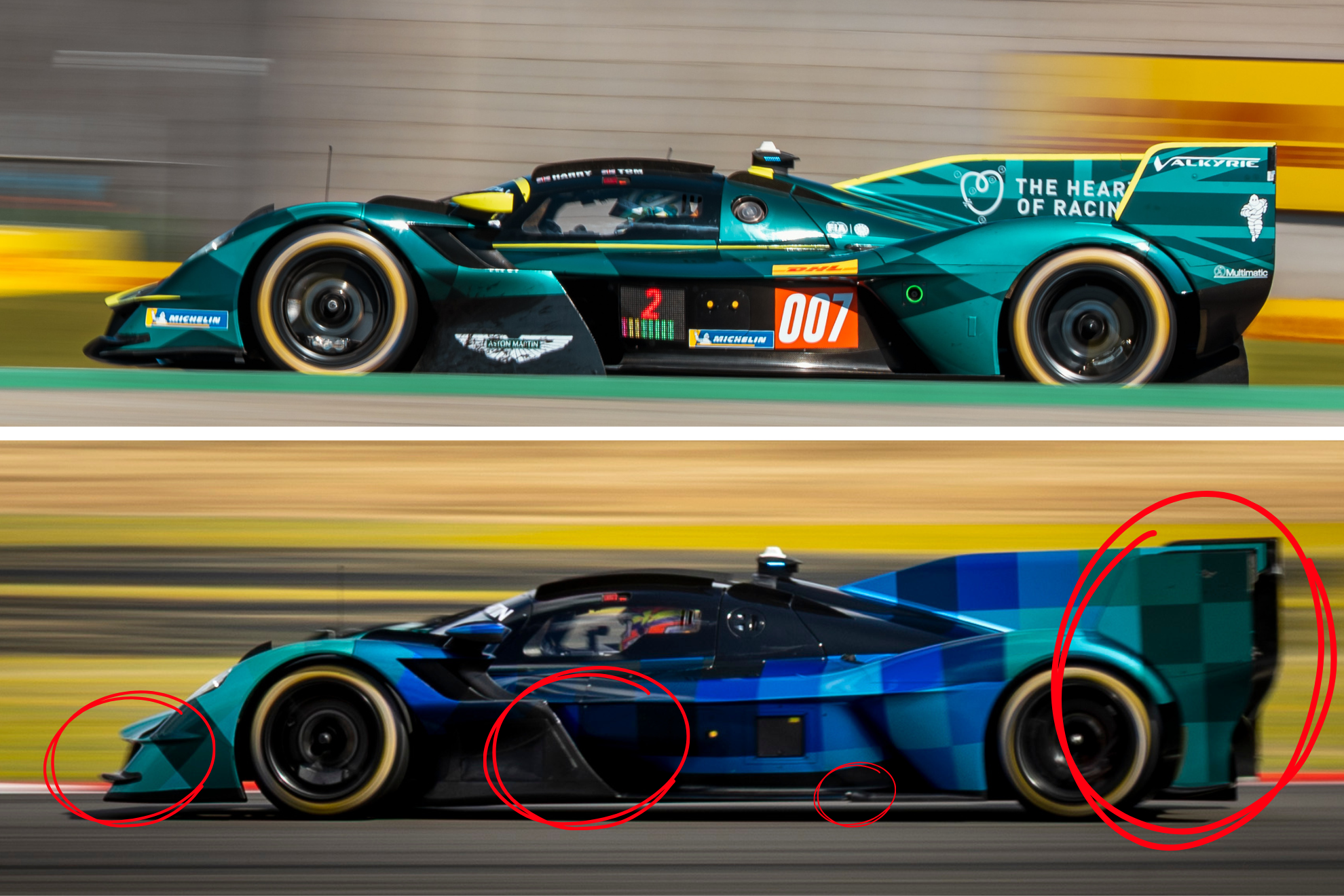
Ross Gunn and Harry Tincknell took turns behind the wheel of a development car on Silverstone’s Grand Prix Circuit yesterday, testing several new technical items that could feature on the 2027 version of the British Hypercar.
The choice of venue was hardly a coincidence. Aston Martin Racing is based just a few miles away, which is why the British manufacturer regularly uses Silverstone for its shakedowns. What’s more, the WEC will return there next year, on April 23-25.
After 18 months of racing, Aston Martin believes it now understands its LMH well enough to start developing it further. Before going any further, though, it is worth remembering how the programme is structured.
“It is a works programme run jointly by Aston Martin Racing and The Heart of Racing,” Adam Carter, Aston Martin Racing’s Head of Endurance Motorsport, previously told us.
The Heart of Racing is responsible for the sporting side of the programme, while Multimatic, which built the car, is also involved in running it in the WEC. Aston Martin Performance Technologies oversaw the establishment of the programme and was responsible for aerodynamic development, while Cosworth works closely with the British manufacturer on the development of the naturally aspirated 6.5-litre V12.
Has the Valkyrie delivered?
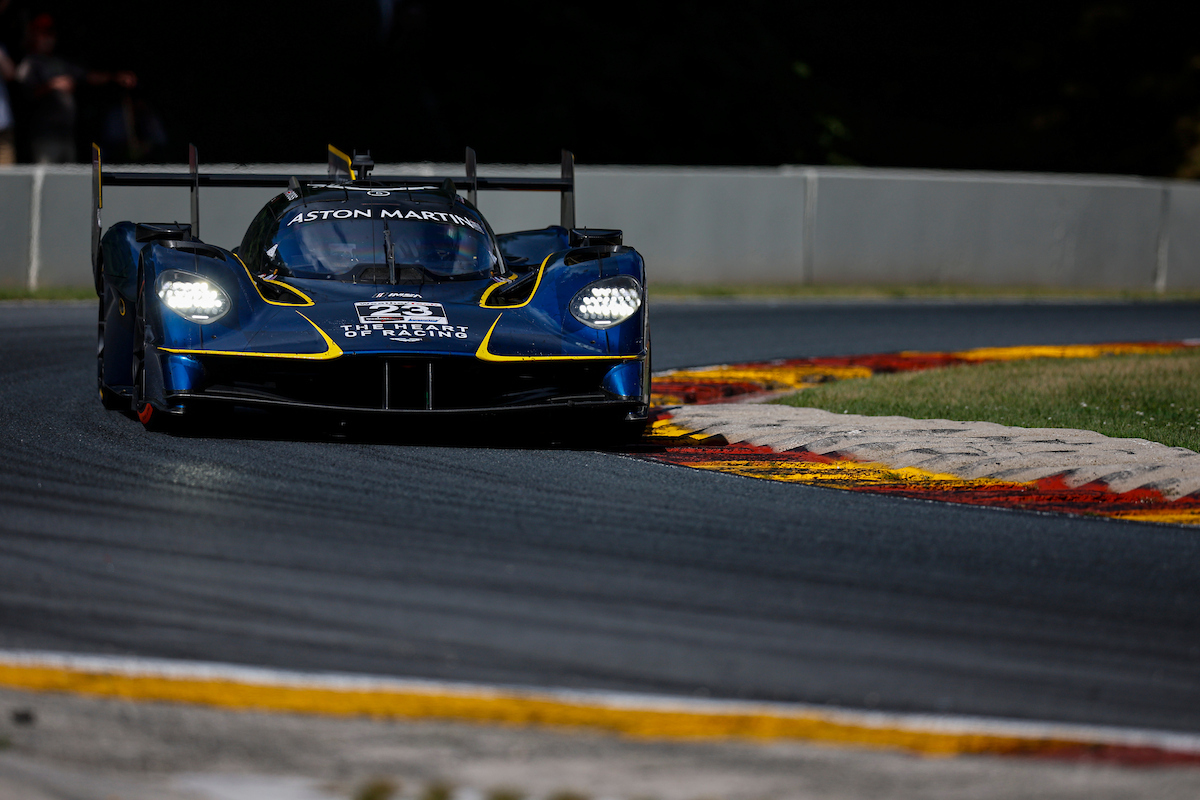
“We’ve been happy with Valkyrie’s performance characteristics in the first two seasons of competition,” said Aston Martin’s Head of Endurance Motorsport, Adam Carter. “We’ve repeatedly said that we’ve entered an arena with a high level of formidable adversaries that are also several years further down the development track than us.”
At São Paulo last month, the Valkyrie recorded its first double-points finish in the WEC, taking sixth and ninth. In IMSA, Ross Gunn and Roman De Angelis were classified fifth at Road America after crossing the line in second, giving the car its second top-five finish following its runner-up result at Petit Le Mans last year.
There is, however, one factor that is difficult to ignore: where the Aston Martin currently sits within the Balance of Performance window. At São Paulo, it was still running at the minimum permitted weight of 1,030kg and the maximum power allowed below 250km/h, at 520kW. That made it almost 40kg lighter than the Ferraris and Toyotas, while giving it roughly 20kW more power.
In IMSA, it was even allowed to run at 1,020kg at Watkins Glen.
In other words, there is not much more room for the BoP to help the Valkyrie in that area. If Aston Martin wants to take another step forward, the gains now need to come from the car itself. And that is where these developments begin to make sense.
What has changed?
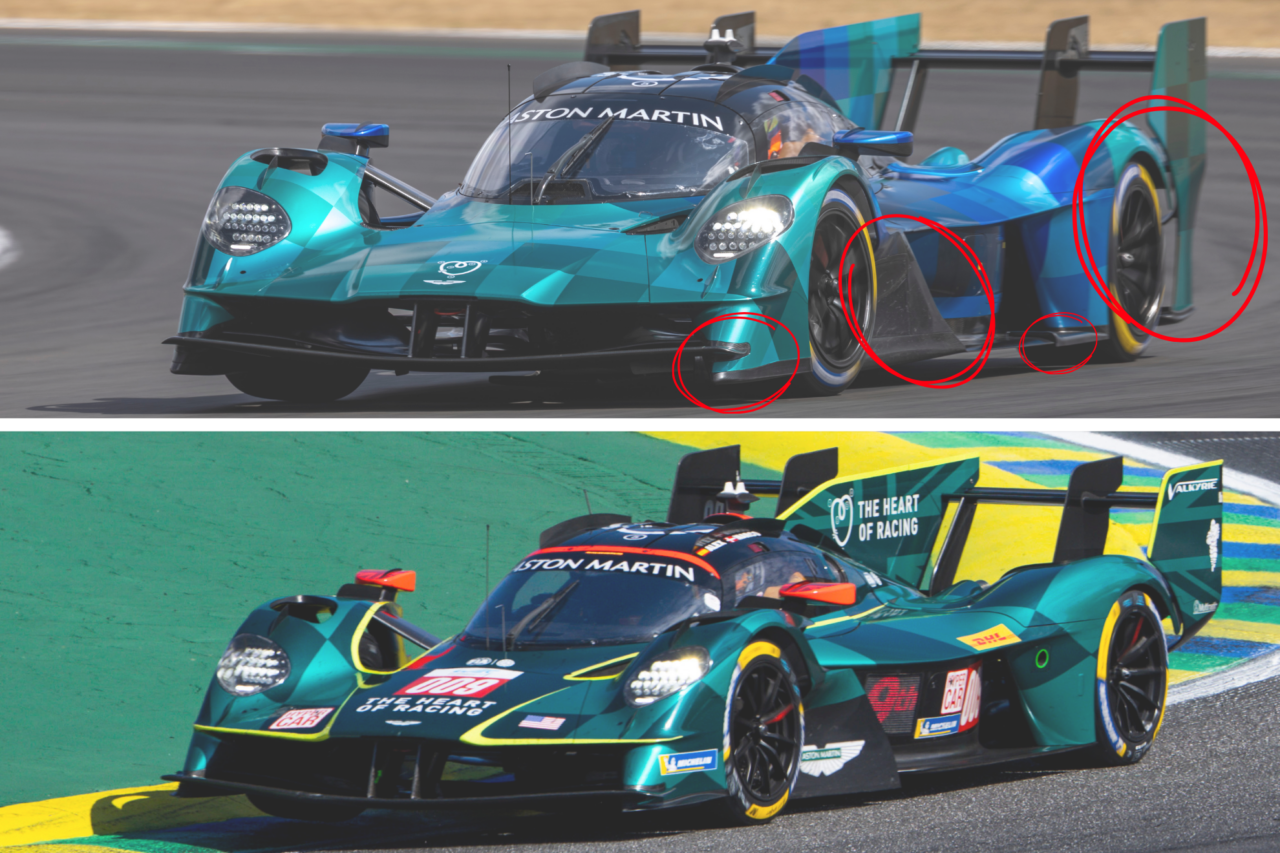
Aston Martin is not saying. What we do know is that Aston Martin THOR “assessed a wide range of technical items under development during the day’s running, gaining valuable data, as the team evaluates the future performance direction of the unique and pioneering Valkyrie Hypercar.”
To the naked eye, the most obvious change concerns the rear-wing endplates and the section at the rear of the front wheel arch. The floor also appears to have been revised. Beyond that, it remains a mystery…
“So, we are now beginning to explore new areas of performance that we may gain through developing the base car, now that we understand its characteristics that much better after 18 months of racing it,” Carter added. “We’re right at the beginning of that journey and this was a useful and informative start to that development process.”
Before changing a Hypercar, you first need to understand exactly what you are trying to improve. It is worth remembering that the Valkyrie is not only the only current LMH directly derived from a road-going hypercar, it is also the only one to use a naturally aspirated V12 without a hybrid system.
What happens next?
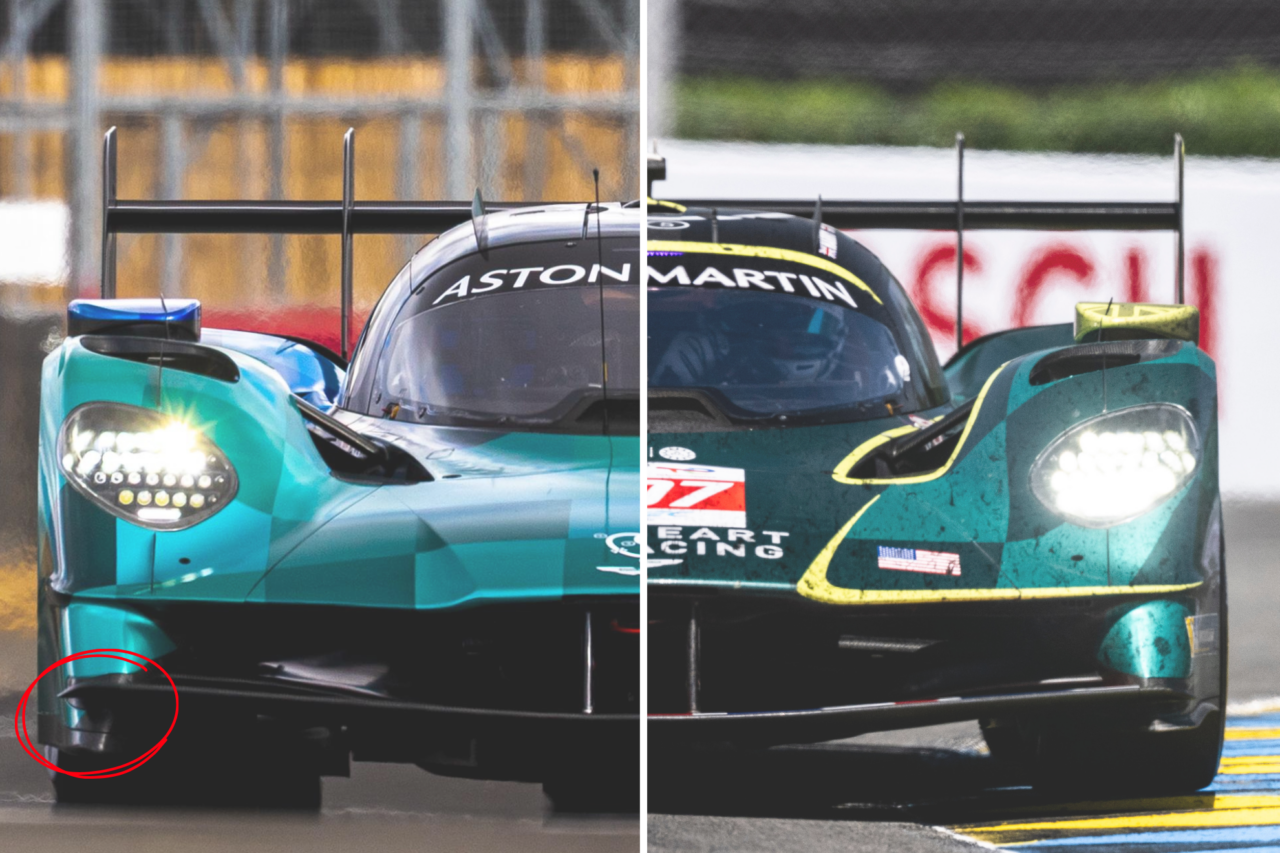
We will probably need to see the Valkyrie again before knowing what the definitive 2027 car will actually look like. Aston Martin THOR Ian James himself suggested as much: “There’s more to come, and I think it gives us reasons to be excited about what might be next for Valkyrie.”
“Some of the developments we tried today will fuel our thinking as we consider the technical direction we go next with Valkyrie. We have been able to evaluate lots of areas of performance on the car, so Silverstone has proved an interesting place to challenge ideas.”
This was only Aston Martin’s first development test, meaning the solutions seen at Silverstone represent just part of the work now under way. Further changes could be tested in subsequent running before a final specification is decided.
Then comes homologation, including another mandatory trip to the Windshear wind tunnel in North Carolina.
Aston Martin and The Heart of Racing could have simply carried on with the existing car and hoped for some help from the organisers. Instead, they chose to develop it further rather than remain entirely dependent on the BoP. That determination deserves recognition.