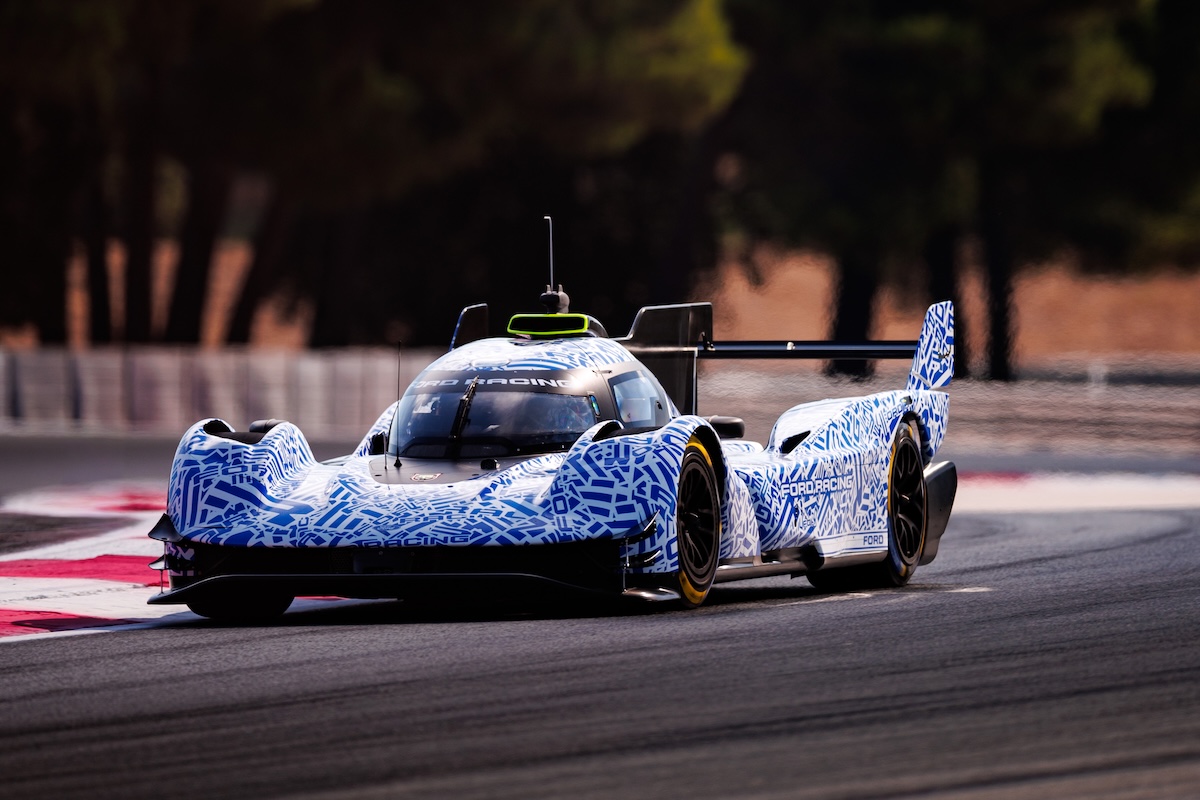
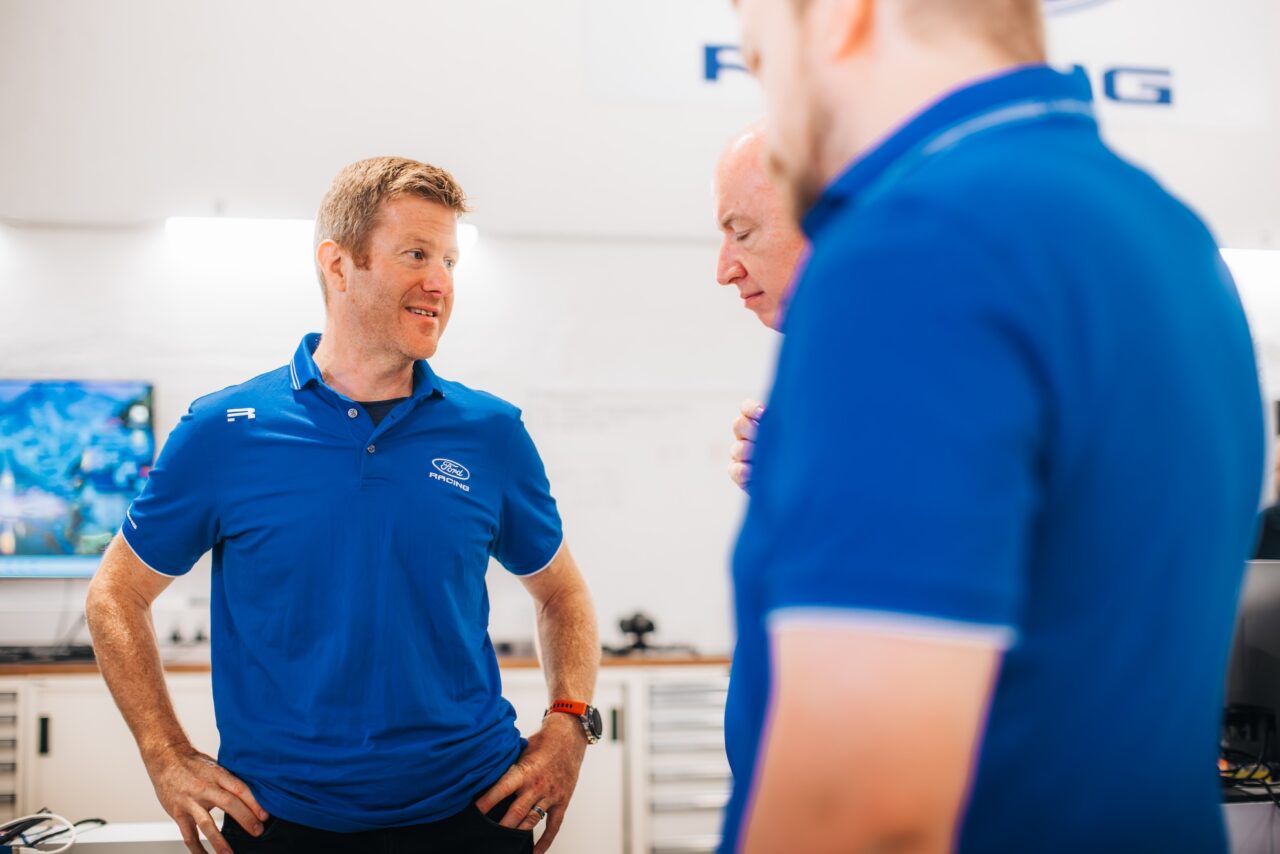
After completing an initial shakedown on Le Castellet Driving Center at the end of last week, Ford’s LMDh began its testing programme at Paul Ricard on Monday. Matt Campbell and Tom Blomqvist, two of the six drivers selected by the manufacturer, are among those present.
It is also the first opportunity to properly see a car which, until now, had essentially existed between computers, the dynos in Dearborn and ORECA’s workshops.
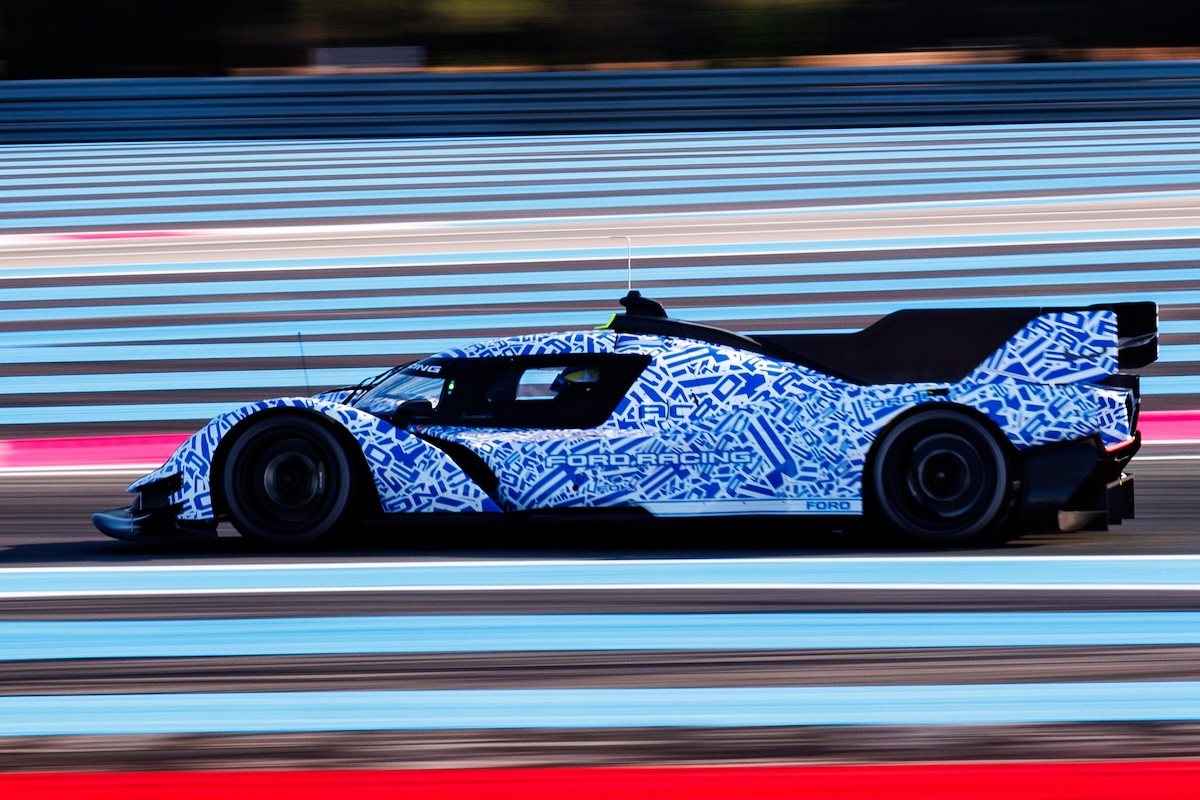
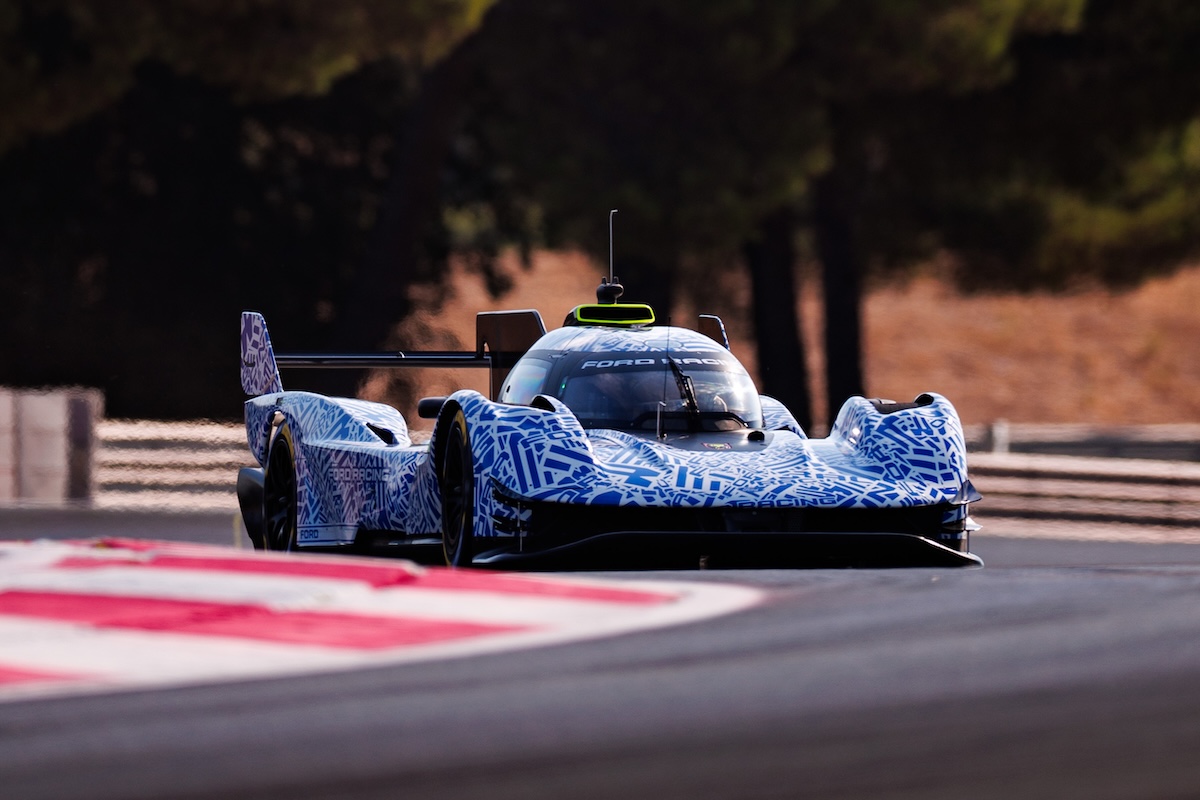
What can we learn from these first images? Not a great deal, in truth. The particularly compact nose gives the car an identity of its own, while some of its shapes more clearly reveal its kinship with the other LMDh prototypes developed around an ORECA chassis. That is particularly true at the rear, where certain features are reminiscent of the Alpine A424.
When we caught up with Dan Sayers in the spring, Ford’s Hypercar programme manager was already targeting August for the car’s first run. Since then, the naturally aspirated 5.4-litre Coyote-derived V8 has continued its development on the dynos in Dearborn before being combined with the hybrid system and installed in the ORECA-built chassis. The complete car was fired up for the first time last month.
The clock is ticking, and the question now is whether Ford remains on schedule.
Has Ford stuck to its timetable?
Ford is not the only manufacturer preparing to join the WEC in 2027. McLaren will also enter the championship, but has opted for a significantly different timetable.
The MCL-HY completed its first laps at Varano, Italy, in early May. As Ford begins its testing programme at Paul Ricard, its future rival already has more than three months of track experience with a complete car.
Is that a concern for Dan Sayers?
“Honestly, no,” the programme manager told us in May. “We are focusing on our programme. The more time we spend designing and optimising virtually through CFD, the better the final product will be. We believe we have found the right balance.”
“Our timeline has been precise since the programme was approved and ORECA was selected as our partner,” added Ford Racing boss Mark Rushbrook. “We established a development plan which we are following very closely. What matters is not simply the number of test days on track with a complete car. You cannot rush to put a car on track and test it without taking the time to design it properly in the virtual world and complete all the necessary laboratory testing.”
Three months later, it is difficult to argue with them on that particular point: Ford said it would run in August, and Ford is running in August — even a little earlier than initially expected.
ORECA’s expertise in design and virtual development is also well established. The 07 is perhaps the best example: despite being homologated only a matter of hours after its first test session began, it went on to dominate the LMP2 category.
That said, the three months of track running McLaren already has under its belt cannot simply be brushed aside. They do not necessarily equate to a three-month advantage in development, but they do represent three additional months spent correlating virtual work with real-world track data.
What do previous programmes tell us?
For some perspective, it is worth looking at the other three LMDh prototypes developed around an ORECA chassis.
In the summer of 2025, Genesis Magma Racing was itself preparing to enter the WEC the following season. After an initial shakedown in early August, the GMR-001 moved straight into its proper testing programme with André Lotterer and Pipo Derani.
Ford is therefore following a very similar sequence today, almost exactly one year later. But what about the other two LMDh cars based on the same platform?
The Acura ARX-06 completed its first shakedown at Paul Ricard in mid-July 2022 before immediately moving on to two full days of testing at Magny-Cours. Less than six months later, it made its competition debut at the 24 Hours of Daytona.
The Alpine A424 followed a timeline relatively similar to Ford’s current programme. After its first run in early August 2023, it properly began its development programme a few weeks later at Paul Ricard. Its competition debut followed in early March 2024 in Qatar.
The situations are obviously not directly comparable. Each manufacturer has its own organisation, engine, software and development methods. But these precedents nevertheless provide a useful benchmark: beginning track testing in the middle of the summer ahead of a competition debut early the following year is nothing unusual for an LMDh programme.
McLaren has simply chosen to give itself significantly more time.
What comes next?
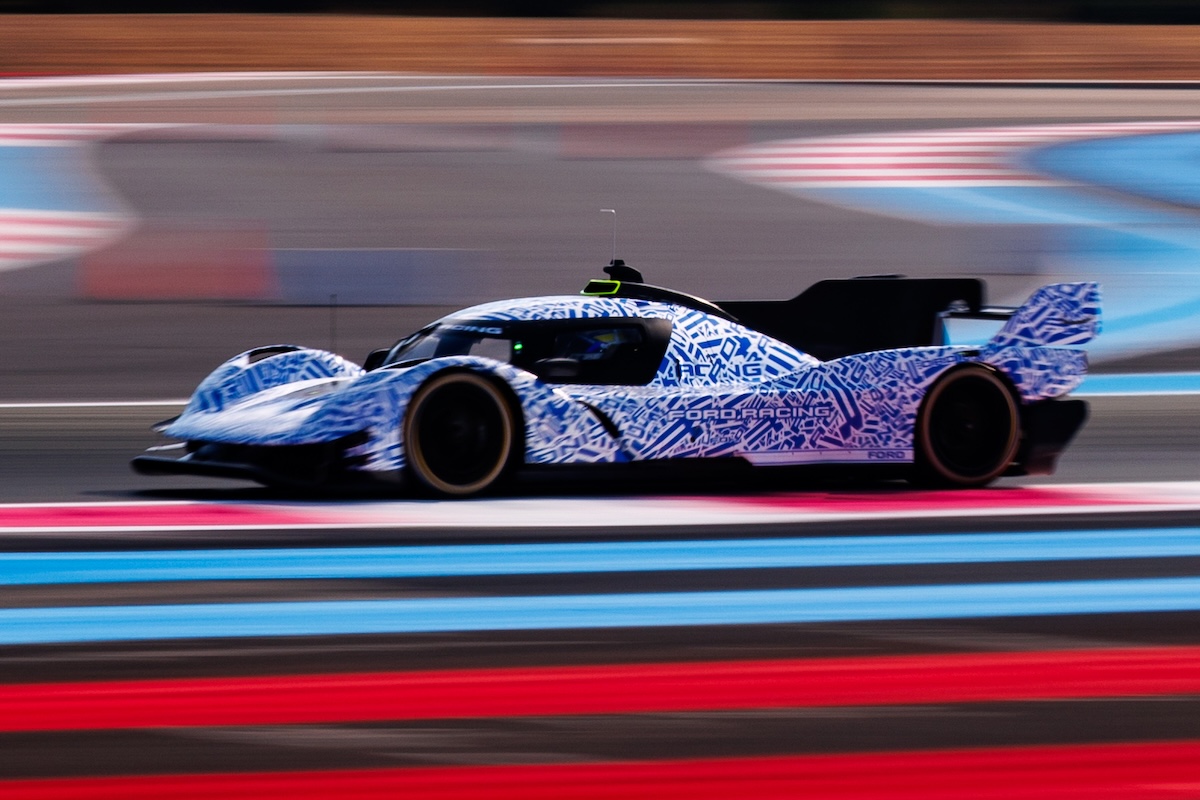
With its first running now completed, Ford can begin to build up its testing programme with Mike Rockenfeller, Sebastian Priaulx, Logan Sargeant, Matt Campbell, Tom Blomqvist and Nick Yelloly.
Ford’s technical structure is also largely in place, although it has already undergone some changes. Leena Gade, who joined the programme in March as a race engineer alongside Jean-Philippe Sarrazin, is understood to have since left the programme.
An initial phase of development is set to take place in Europe before the programme also moves to the United States. Ford ultimately wants to have two cars available in order to accelerate its rate of data gathering.
And the Blue Oval has every reason to make the most of the coming months. Until its LMDh is definitively homologated, the manufacturer retains significant freedom to accumulate test days and continue developing the car.
The first objective has therefore been achieved: Ford wanted to run in August, and Ford is running in August. The precedents set by Acura, Alpine and, above all, Genesis suggest there is nothing particularly concerning about its timetable at this stage, while McLaren has chosen to give itself considerably more time.
It will now be fascinating to see which approach pays off when the two meet for the first time on 27 March at the 1812 km of Qatar, the opening round of the 2027 FIA WEC season.