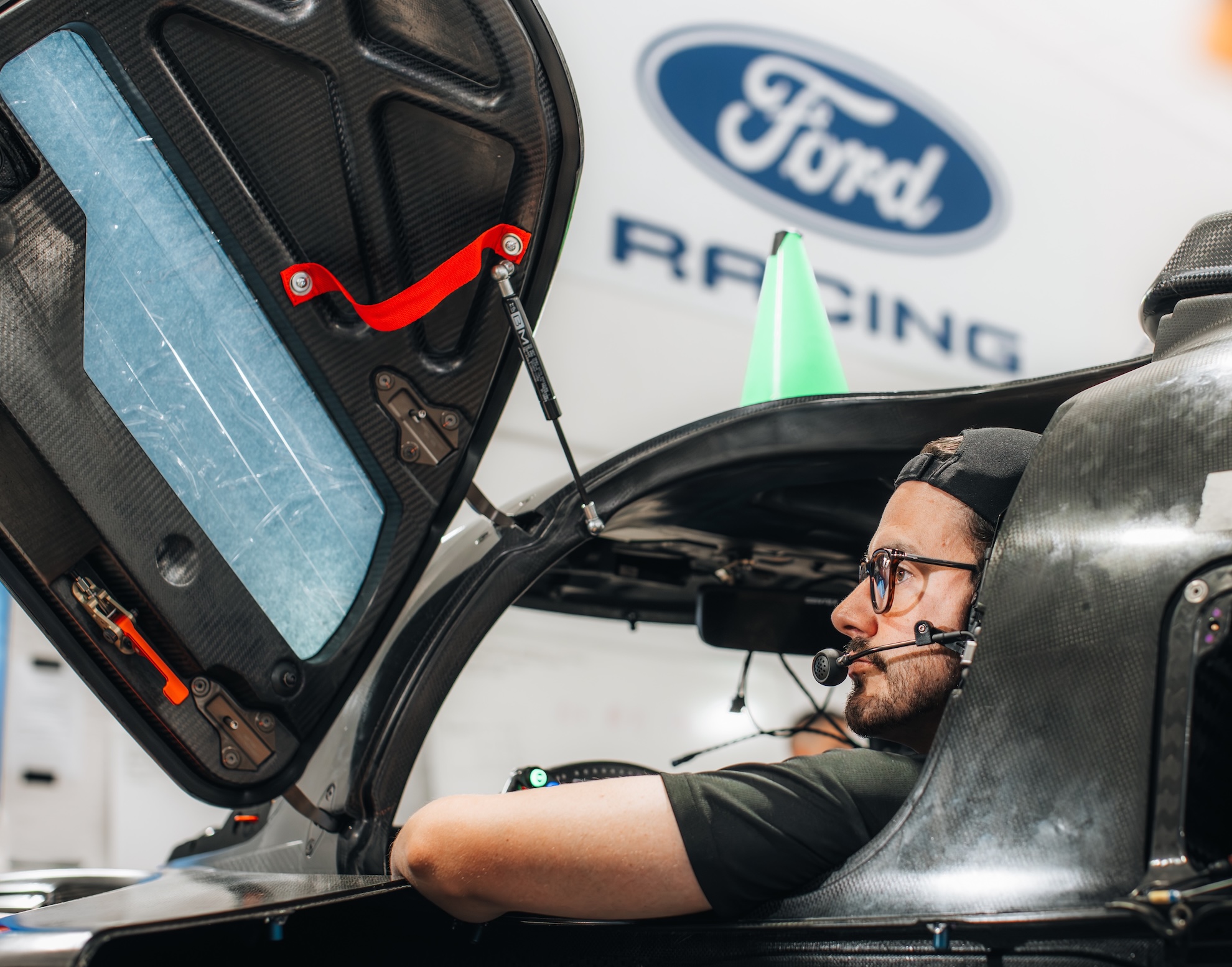
For months, Ford’s Hypercar programme has largely unfolded behind closed doors. That is about to change. After months spent developing the car away from the spotlight, the Blue Oval is preparing to begin track testing in early August, opening what is arguably the most important phase of a project that will eventually bring the manufacturer back to the WEC and the 24 Hours of Le Mans.
What’s changed since Le Mans?
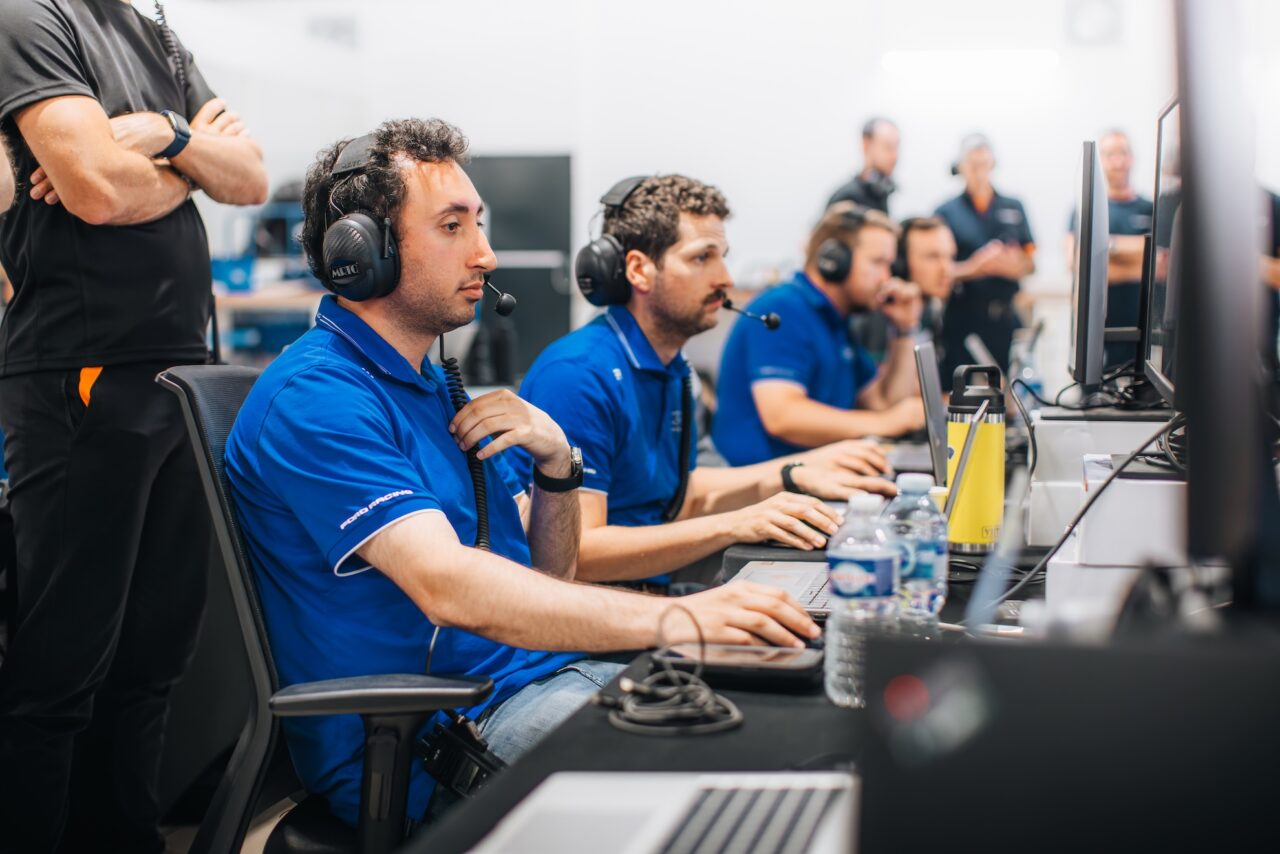
Last week, Ford reached another significant milestone when its naturally aspirated 5.4-litre Coyote-based V8 fired up for the first time inside the Oreca-built chassis. It was the first time the engine, hybrid system and chassis had operated together as a complete package.
While no laps have been completed yet, it marked the point where two development programmes that had largely progressed independently finally came together.
“The firing of the engine at Oreca is more than a symbolic moment – it’s a critical validation step,” says Ford Racing WEC Hypercar Programme Manager Dan Sayers. “Hearing the Coyote V8 come alive within its intended home for the first time confirmed that months of integration work between the powertrain and chassis teams had paid off.”
There is a tendency to overplay moments like these from the outside. After all, an engine fire is still a long way from a race weekend, and it tells us little about how competitive a new car will eventually be. Inside a programme, however, it is viewed rather differently.
Building the foundations
The engine may only now have found its way into the chassis, but it has already spent months on the dyno at Ford’s Performance Technical Center in Dearborn. Designed, developed and built entirely in-house, the naturally aspirated V8 is based on Ford’s production Coyote architecture.
“We are doing everything from an engine perspective in-house,” says Sayers. “We’re doing that because we can react faster, we can learn faster and we can bring that back to the production side of the business.”
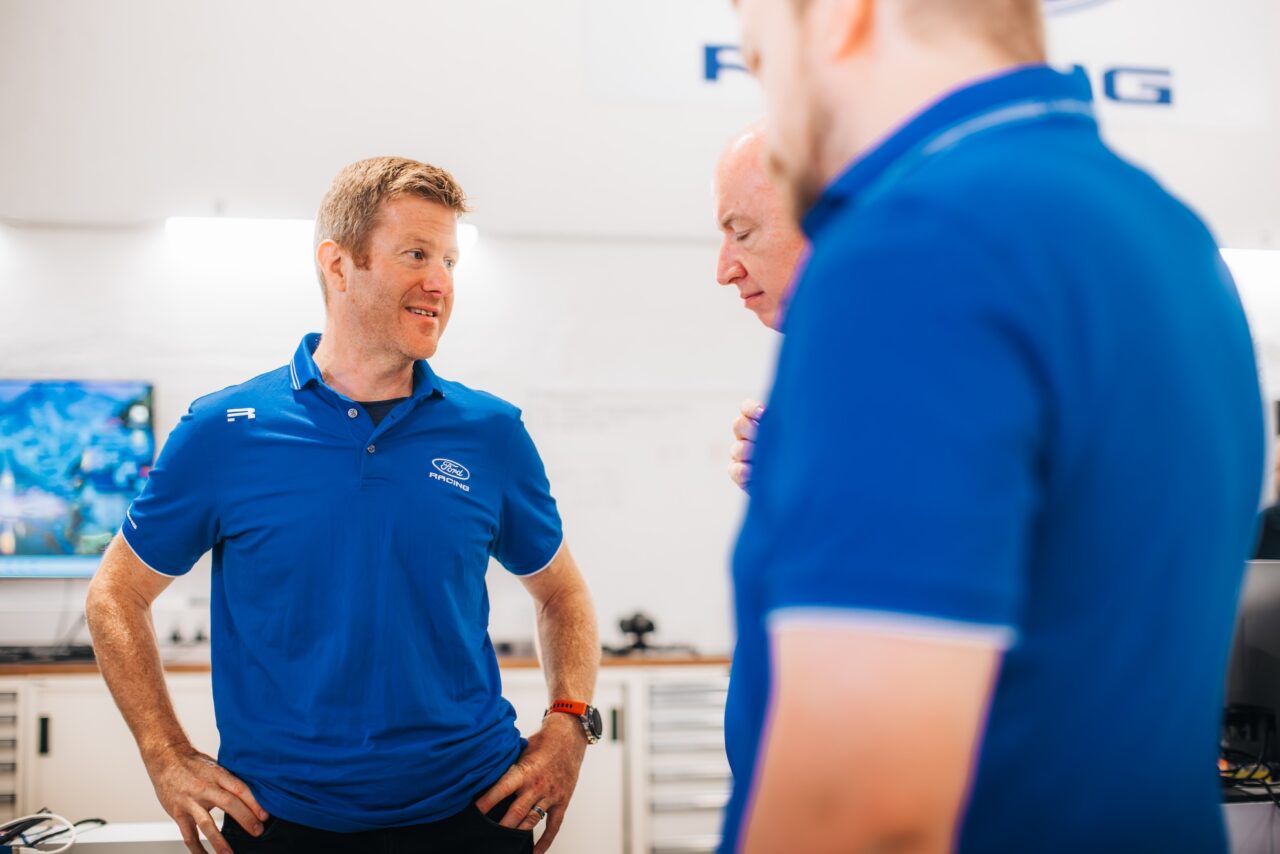
At the same time, chassis development has continued at Oreca, in the south of France, with both sides working towards the moment the complete car could finally be assembled.
“This moment was the culmination of months of painstaking work” continues Sayers. “As I reflect on the journey to this point, I am proud of the groundwork that was laid long before the engine ever turned over in France. That dyno work, combined with parallel progress on the chassis side with ORECA, has now converged into a complete package ready for its next phase.”
That milestone has now been reached. The next one is even more important.
Time to go testing
For all the work completed in the simulator and on the dyno, everyone involved knows the car’s real education will begin once it leaves the workshop.
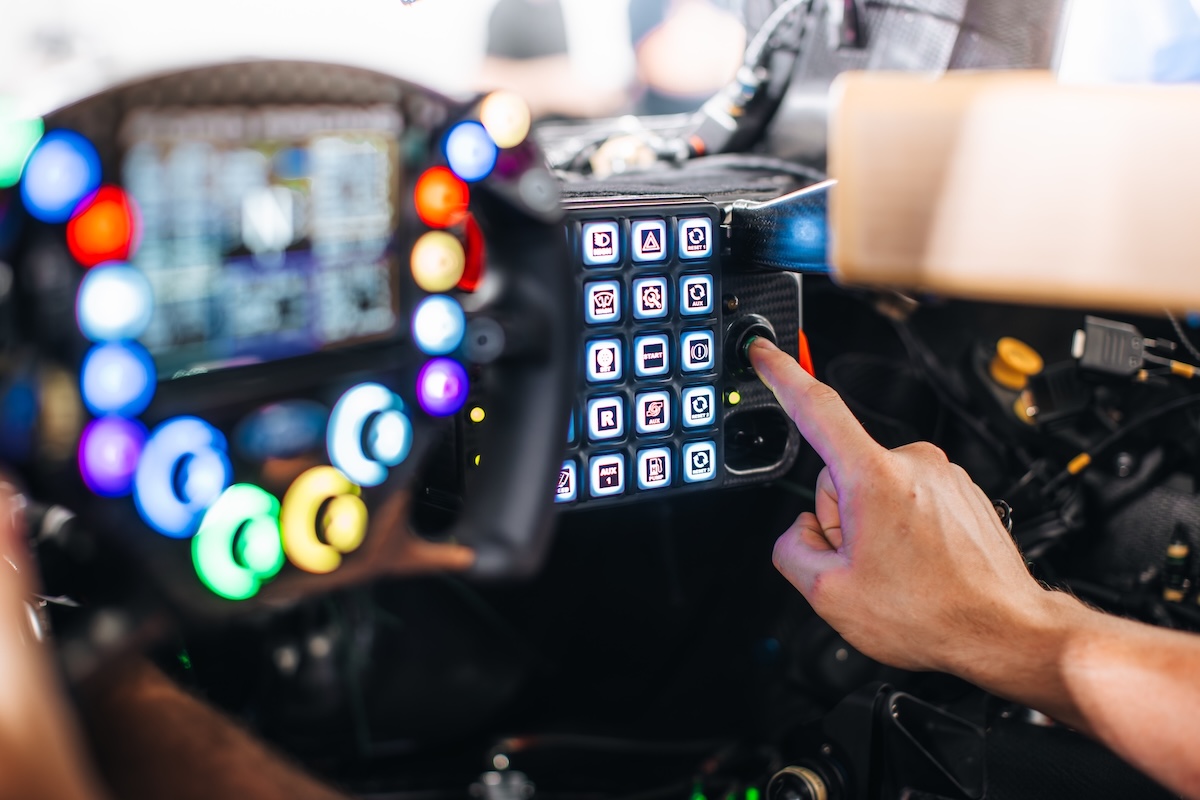
Ford’s first European tests are scheduled to begin in August before the programme expands later in the year. Reliability, hybrid integration, aerodynamic correlation and performance will all be high on the agenda, but so too will be something impossible to reproduce away from the circuit: driver feedback.
“Looking ahead, we have a lot of laps to turn later this year, but the work has already started and I’m excited for what’s ahead,” says Sayers.
The six drivers announced by Ford have already contributed extensively in the simulator, but the first on-track running will inevitably change the direction of development.
“The sim work and dyno numbers give us a great foundation, but there’s no substitute for what the drivers feel through the wheel and the seat once we’re actually out on track,” Sayers explains. “That feedback loop is what will truly sharpen this car over the upcoming months.”
The next phase begins
Between now and Ford’s WEC debut in 2027, there will be thousands of test kilometres to complete, countless decisions to make and, inevitably, problems to solve. That is simply the nature of a new Hypercar programme.
Matt Campbell’s experience at Porsche will prove invaluable, as will the knowledge Tom Blomqvist gained at Cadillac and Acura, and Nick Yelloly at BMW before moving to Acura.
Nobody at Ford expects to have all the answers after a few days of testing. If anything, the first laps are more likely to raise new questions than provide definitive ones.
But after months spent out of sight, Ford’s return to endurance racing is finally ready to move from the workshop to the racetrack.