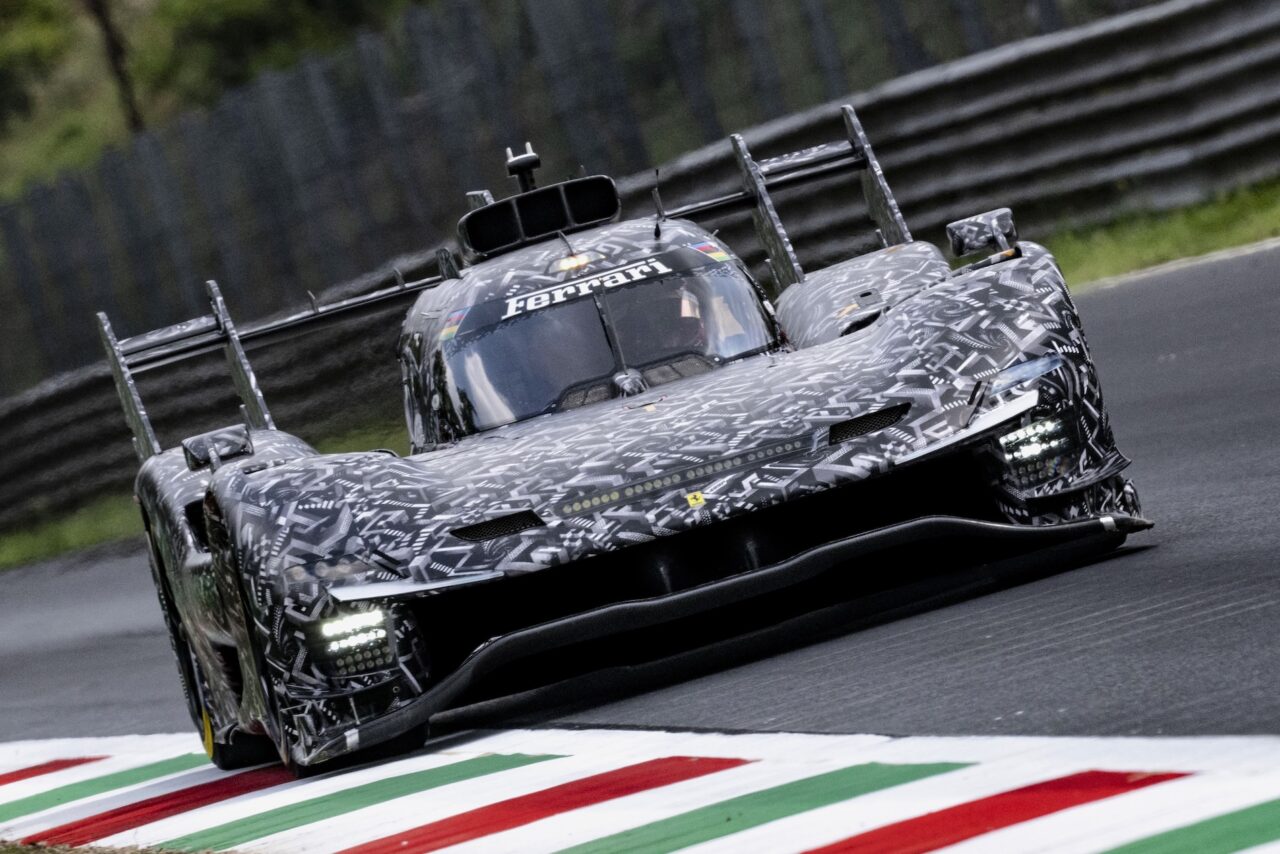
Did Peugeot and Ferrari compare notes? Just days after the French manufacturer gave the first public glimpse of its 2027-spec Hypercar, Ferrari also took to the track with an extensively revised version of the 499P. The Italian manufacturer conducted a private test at Monza this week, sharing the circuit with Aston Martin, yet revealed very little about the car itself.
In its official statement, Ferrari merely confirmed that Antonio Fuoco, Antonio Giovinazzi, Alessandro Pier Guidi and Miguel Molina were behind the wheel while the programme focused on the evaluation, testing and validation of a wide range of technical and aerodynamic solutions.
That wording leaves plenty of room for interpretation.
Not every component tested this week will necessarily make it onto the homologated car. But what can already be learned from the first images, and what do they tell us about Ferrari’s plans for 2027?
Where does Ferrari stand with its Evo Jokers?
Since making its racing debut in 2023, the Ferrari 499P has established itself as one of endurance racing’s benchmark prototypes. It has claimed three consecutive victories at the 24 Hours of Le Mans (2023, 2024 and 2025) while also securing both the FIA World Endurance Championship Manufacturers’ and Drivers’ titles in 2025.
Success, however, did not prevent Ferrari from developing the car.
The first significant update arrived at the São Paulo 6 Hours in July 2024. It primarily focused on the rear brake cooling system, with redesigned cooling ducts aimed at improving airflow management. Visually, the easiest way to identify the updated specification was the addition of a small aerodynamic flick beneath the front headlights. Those modifications required Ferrari to spend one of its Evo Jokers.
According to information gathered by The Stint, Ferrari still had four Evo Jokers remaining before the start of the 2026 season, as well as one unused homologation available before the current regulatory cycle concludes (see regulatory explainer below).
A comprehensive aerodynamic overhaul…
The camouflage livery worn by the 499P does an excellent job of disguising the detail, but it doesn’t hide everything. While the chassis itself has been retained, describing the 2027-spec car as a revolution would be far from an exaggeration.
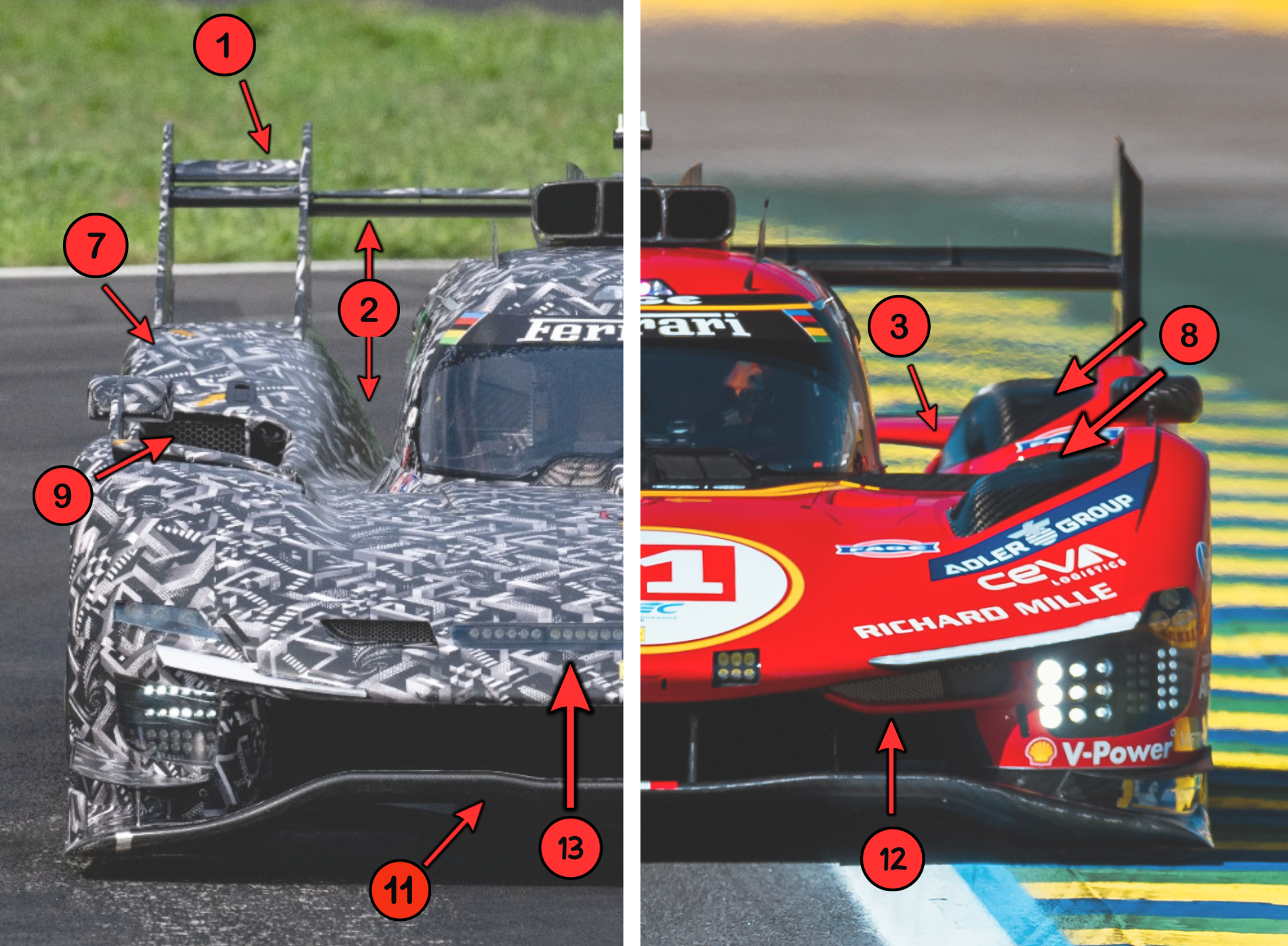
The most striking changes are found at the rear. The rear wing has been completely redesigned and is now split into three distinct elements (1). The two outer sections sit slightly higher and at a shallower angle than the central plane.
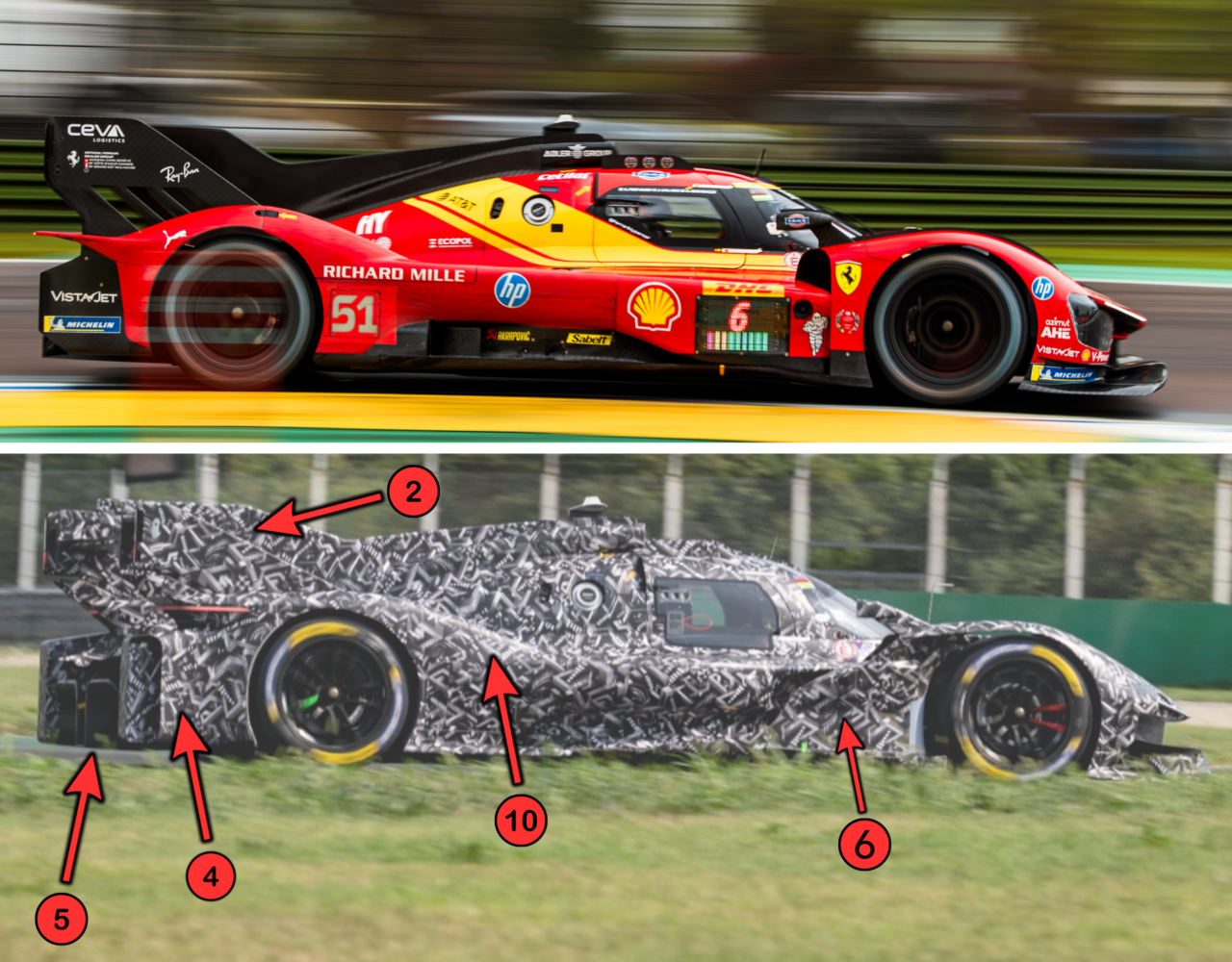
The wing assembly itself also appears to sit higher than on the current car (2). It is supported by an entirely new architecture that blends into a heavily reworked engine cover behind the cockpit, with mounting pylons adopting a completely different geometry.
The secondary aerodynamic element (3), which discreetly housed the rear light on the current 499P, has disappeared altogether. More broadly, the entire rear bodywork (4) has been redesigned, including the diffuser (5).
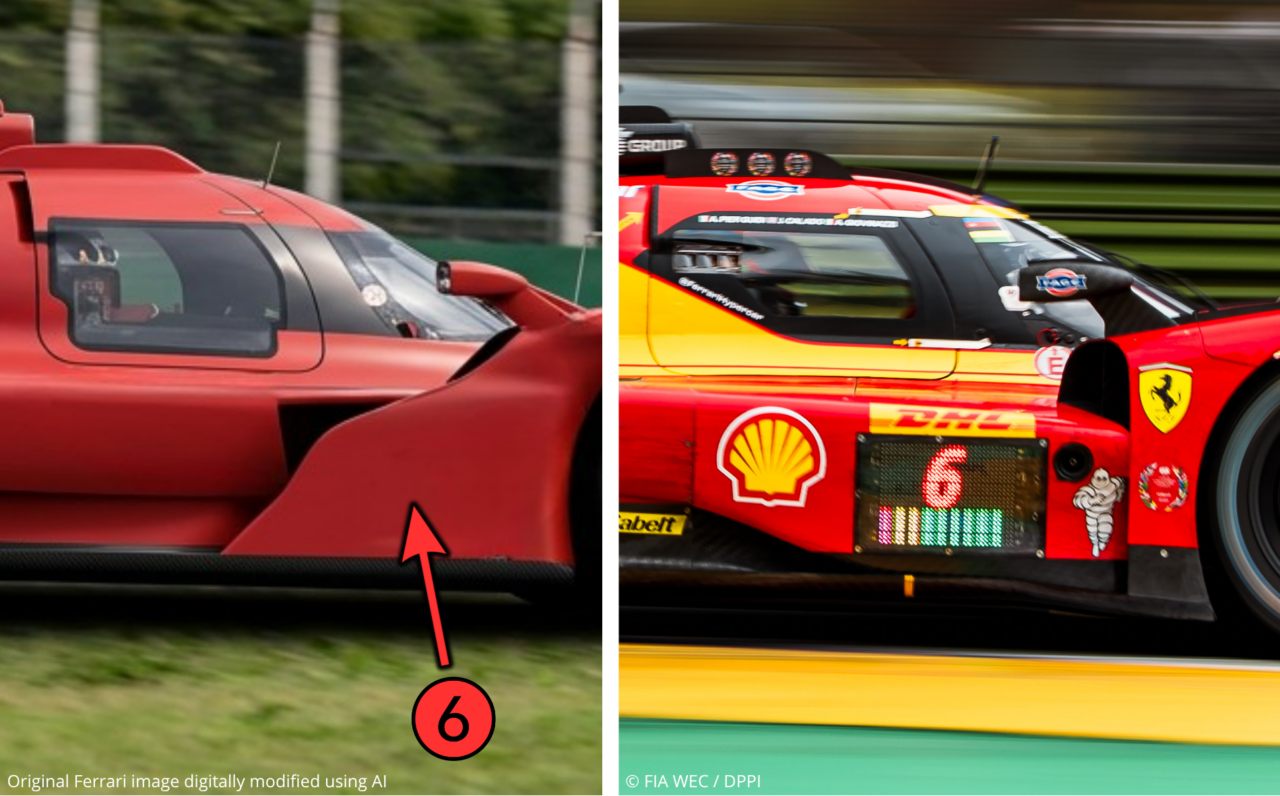
Everything suggests Ferrari has fundamentally reworked the way airflow is managed around the car. That impression is reinforced by the redesigned wheel arches, particularly at the front (6), where airflow management also appears to have been extensively revised.
The wheel arches themselves are also different, especially at the rear (7). The pressure-relief openings at the top of the rear arches – designed to evacuate air trapped inside the wheel wells and prevent aerodynamic lift – have disappeared (8), while those at the front are noticeably more discreet.
At the rear, the new bodywork also reveals a cooling intake (9) that was absent from the previous specification. The sidepods (10) have likewise been reshaped.
At the front, several further changes can be identified, including revisions to the splitter (11) and to the ducts (12) located around the headlights.
…and perhaps a stylistic one too?
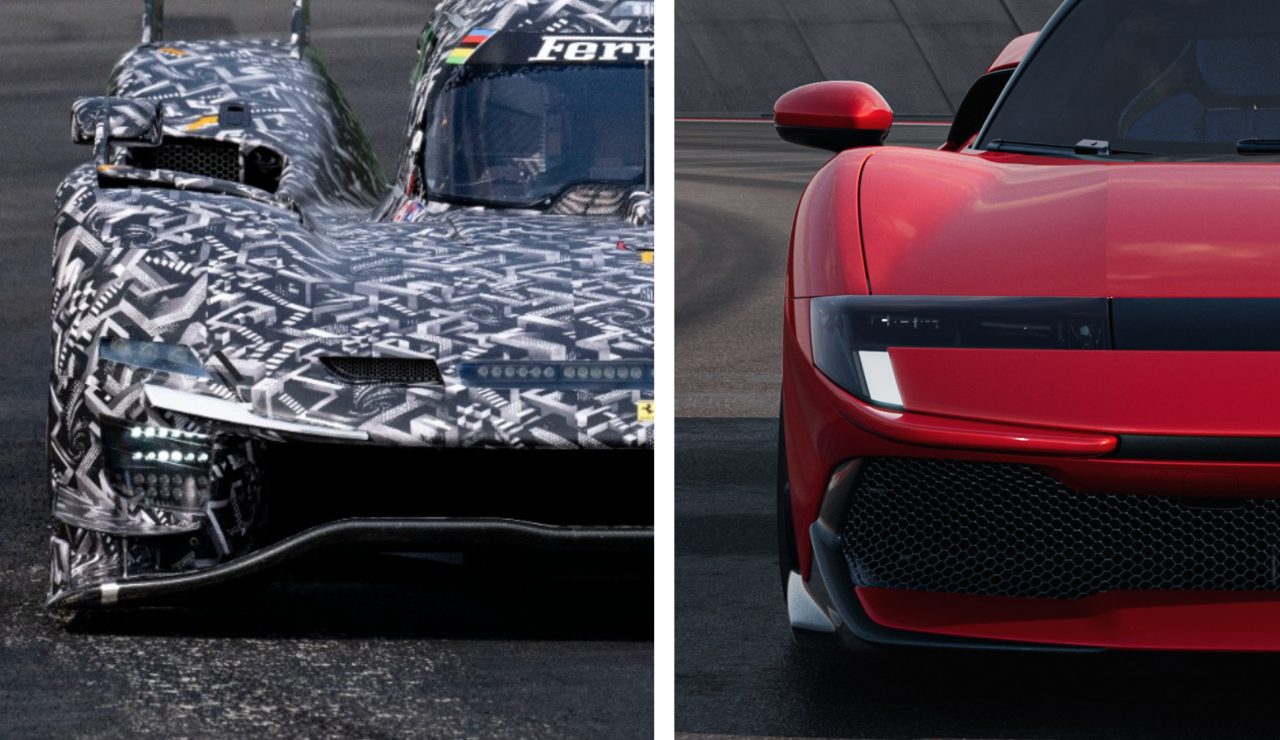
Ferrari also appears to have used this redesign to give the 499P a subtly different visual identit, or perhaps the styling changes are simply the consequence of the aerodynamic work. Either way, a number of intriguing details have not gone unnoticed.
At this stage, any comparison remains speculative, but certain features evoke the 849 Testarossa, particularly around the headlight treatment, despite Ferrari’s best efforts to conceal them beneath the camouflage livery.
Such a connection would make sense, especially as both the FIA and the ACO have increasingly encouraged manufacturers to ensure their Hypercars maintain a visual link with their production models.
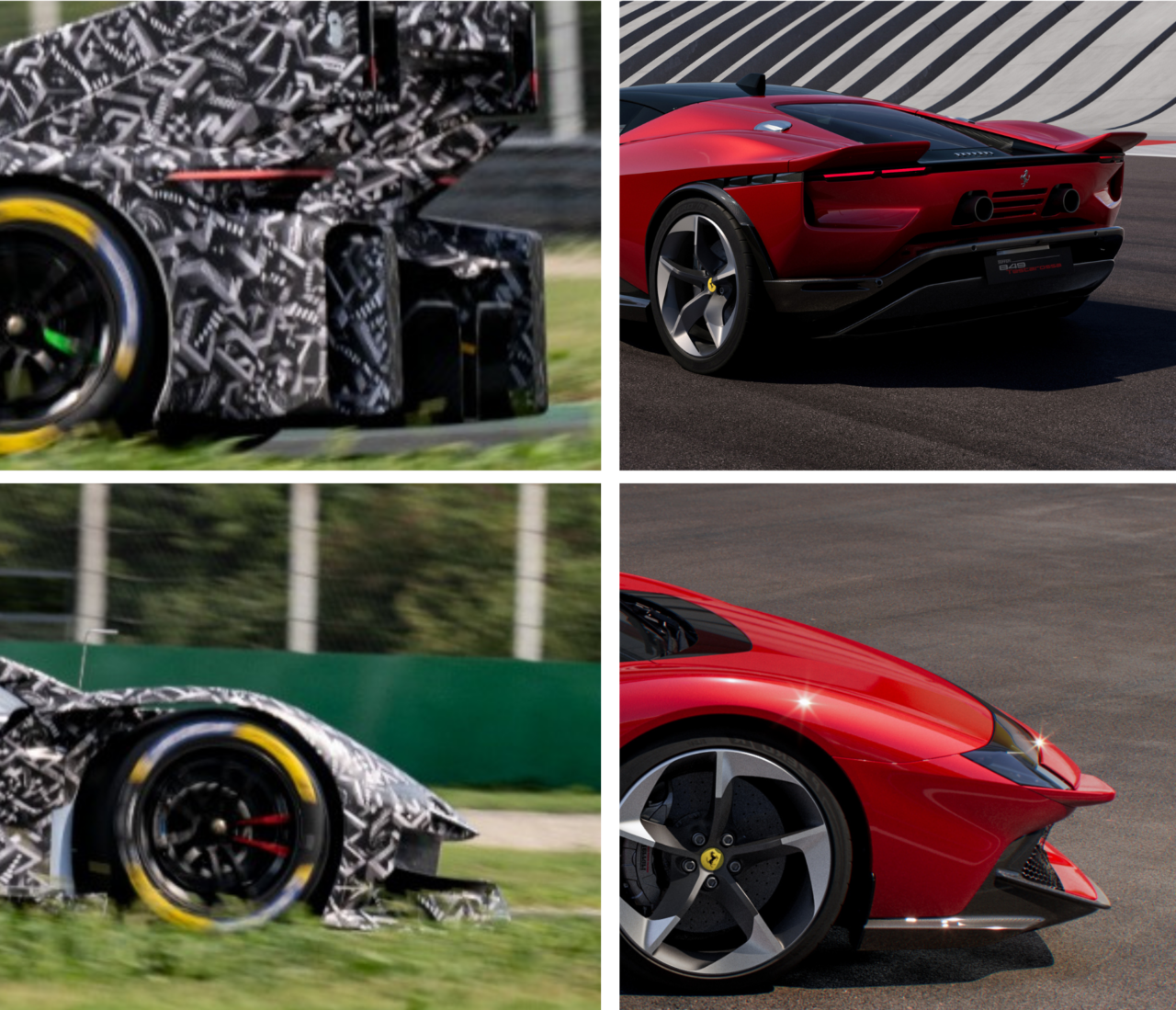
The lighting signature and the two air intakes (13) emerging from the front bodywork already hint at a bridge-like horizontal panel linking the headlights, echoing a design cue already seen on the Ferrari 12Cilindri, F80 and 948 Testarosse.
Whether those visual similarities ultimately remain on the homologated car is another matter entirely. Any styling elements must first make their way through the FIA and ACO’s lengthy homologation process before receiving final approval.
What conclusions can be drawn?
According to Ferrari, the programme follows a step-by-step approach, with different technical and aerodynamic configurations being evaluated on track to keep several development options open ahead of the car’s final homologation.
That is hardly surprising for a test programme still in its early stages. With more than six months remaining before the start of the 2027 FIA WEC season, the 499P will continue to evolve through private testing. Some of the solutions seen at Monza may ultimately be discarded, while new ideas could emerge before the car is homologated.
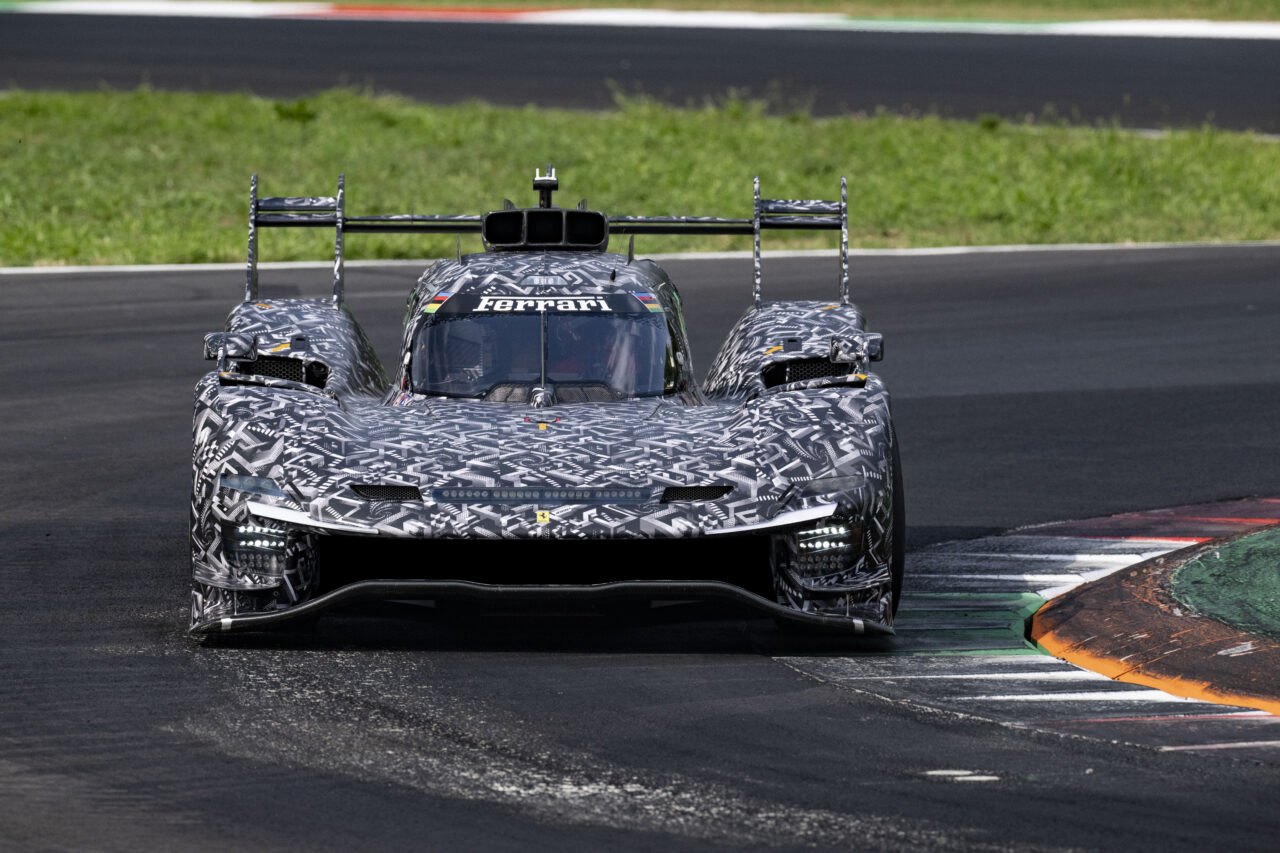
Beyond the visible aerodynamic changes, little can yet be said about the technical package. One thing, however, is certain: Ferrari has retained its 2,992cc twin-turbocharged F163 V6.
Does that mean the three-time Le Mans winner will continue to carry the 499P name? If the engine’s displacement remains unchanged, that would seem the logical outcome. Given the scale of the redesign, however, the possibility of a revised designation cannot be ruled out.
One thing is already clear: the 2027-spec 499P will be far more than a simple evolution of its predecessor. Beneath a carefully crafted camouflage livery, Ferrari is already shaping the next chapter of its Hypercar programme. One that, once homologated, will effectively be frozen for the remainder of the current regulatory cycle.
Regulatory explainer: How do Evo Jokers work?
Once a Hypercar has been homologated, it can no longer be freely developed—or at least not in theory.
The regulations allow manufacturers to introduce performance-related updates through a system known as Evo Jokers. Under the current rules, each manufacturer may homologate a maximum of two cars during the present regulatory cycle, which runs from January 2021 until December 2029. Both homologations remain valid until the end of that period.
Not every modification requires an Evo Joker. Changes introduced for reasons of safety, reliability, operational improvements, component obsolescence or cost reduction may be approved without any numerical limit.
Performance upgrades, however, are tightly controlled. Between January 2021 and December 2027, each manufacturer may use no more than five Evo Jokers, regardless of how many homologations it has available. A further two Evo Jokers may then be used between January 2028 and December 2029.
Every proposed performance update must be supported by a technical dossier submitted to both the ACO and the FIA, which retain the sole authority to approve—or reject—the requested evolution.