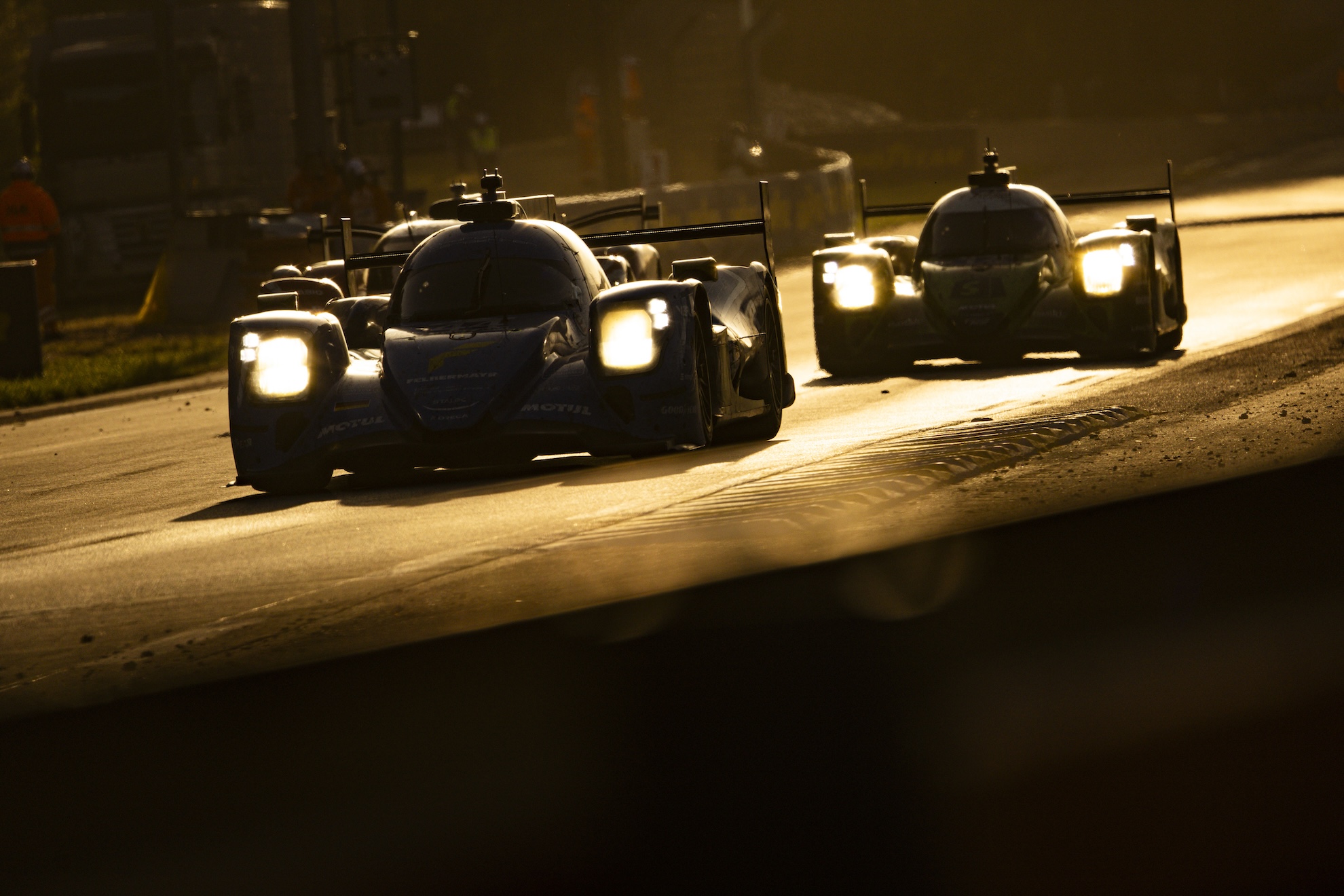
While the ACO and FIA are preparing to introduce the next generation of LMP2 machinery in 2028, IMSA has opted for a different path. Announced during the Six Hours of The Glen weekend, the North American championship confirmed it will extend the life of the current Oreca 07 by one additional season before switching to the new prototypes in 2029.
Behind what appears to be a simple one-year delay lies a broader reality: a category that remains healthy, one nobody wants to disrupt, and a paddock where investments are measured over years rather than months.
What will the next generation of LMP2 look like?
LMP2 occupies a unique place in endurance racing. It may not enjoy the spotlight reserved for Hypercar manufacturers, but it remains one of the discipline’s foundations. Behind the familiar silhouettes are private teams, gentleman drivers, rising talents and the organisations that keep the paddocks of the European Le Mans Series, Asian Le Mans Series and the 24 Hours of Le Mans alive.
After more than a decade of competition, the generation introduced in 2017 is finally preparing to hand over the baton. Earlier this year, the ACO and FIA confirmed the framework for its successor, guided by a clear philosophy: evolve a successful formula without reinventing it.
“With this 2028 generation, we are building on a proven success while preparing for the future—enhancing safety, preserving performance and driving pleasure, and ensuring cost control for our competitors.” said Pierre Fillon, President of the ACO. “LMP2 will remain at the very heart of endurance racing for many years to come.”
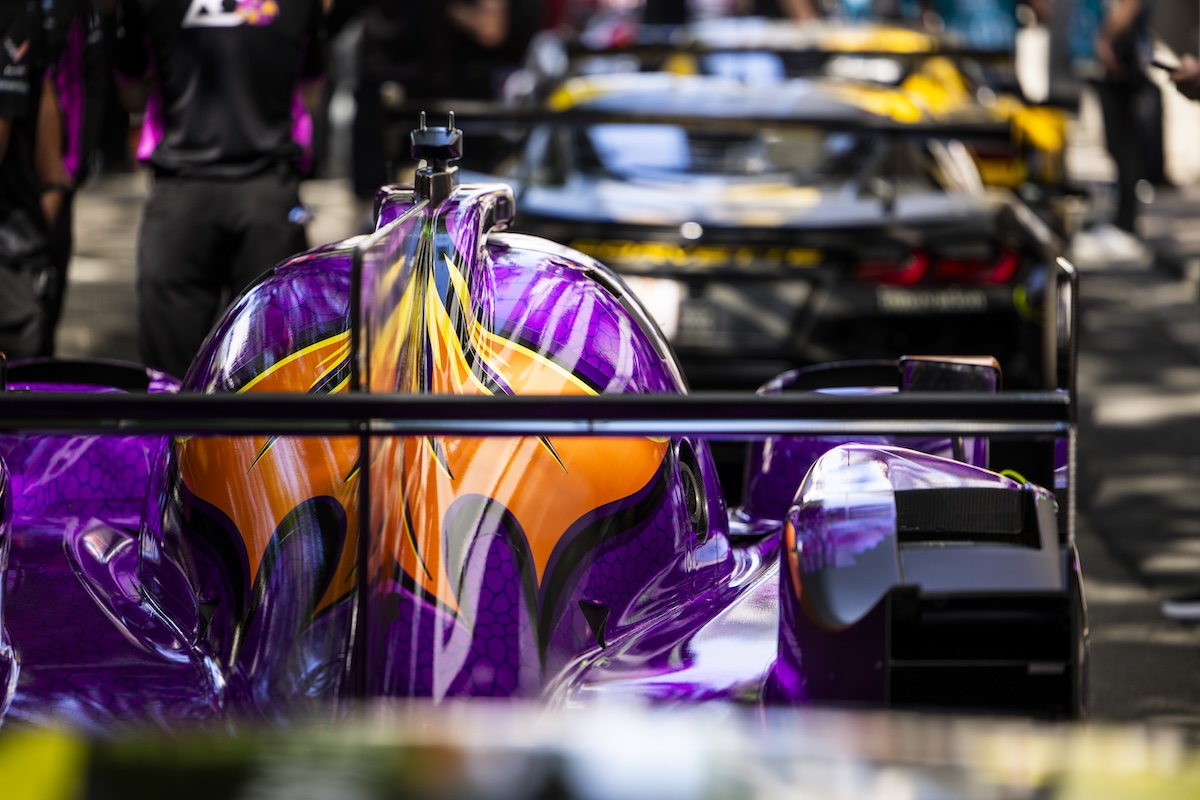
Performance will remain broadly in line with the current cars. The new generation will feature a 420kW turbocharged Gibson V6 engine, a target weight of 950kg and, most importantly, a significantly improved survival cell designed to raise safety standards. Goodyear will continue as the exclusive tyre supplier.
Another major change is the reduction in chassis suppliers. Only Oreca and Ligier Automotive were selected by the ACO and FIA, ahead of rivals including Lola and Tatuus. Dallara and Multimatic, believing the business case no longer justified the required investment, chose not to submit bids.
The new regulations also bring an end to the long-discussed idea of aligning LMP2 platforms with LMDh. Technical constraints, timing and cost considerations ultimately made the concept impractical, leaving the two categories to continue on separate paths.
Has the current LMP2 era been a success or a failure?
The answer depends on your perspective. When the current regulations debuted in 2017, four manufacturers entered the fight: Oreca, Ligier, Dallara and Riley-Multimatic. On paper, the category promised genuine competition. On track, that battle proved remarkably short-lived. Very quickly, choosing an Oreca 07 was no longer really a choice. It became almost a prerequisite if you wanted to win.
The French chassis established itself as the undisputed benchmark, gradually turning LMP2 into what was effectively a one-make category. Rival manufacturers slowly disappeared from the grid as teams naturally gravitated towards the package that combined outright performance with reliability, ease of operation and unrivalled customer support.
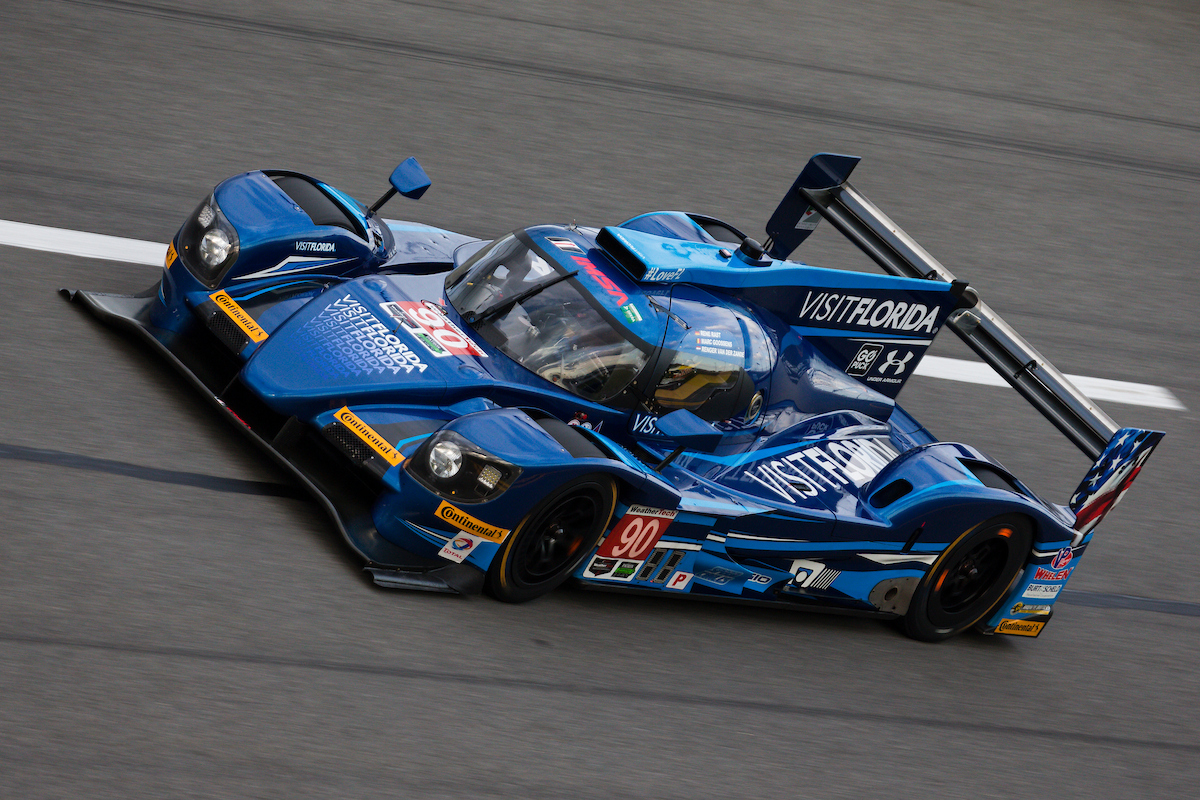
That dominance, coupled with a smaller global market following LMP2’s departure from the FIA World Endurance Championship after the 2023 season, helps explain the philosophy behind the next ruleset. The priority is no longer to maximise the number of manufacturers, but to ensure the category remains financially sustainable over the long term.
Ironically, a platform whose replacement was delayed several times will ultimately enjoy a lifespan of more than ten seasons. Few prototype regulations have remained relevant for so long, a testament to both their technical maturity and their ability to satisfy the needs of private teams. And its story is not over yet.
Why IMSA is waiting one more year
Against that backdrop, IMSA’s decision comes as little surprise. The SportsCar Championship will continue using the current Oreca 07 chassis through the end of the 2028 season before introducing the new generation at the 2029 Rolex 24 At Daytona.
The reasoning is primarily economic. Since LMP2 disappeared from the FIA World Endurance Championship after 2023, IMSA has become the category’s highest-profile platform. Grids remain healthy, teams have already amortised their existing equipment and there is little incentive to force an early transition.
“One of our top priorities is to provide IMSA competitors with plenty of runway to plan for the future,” said IMSA President John Doonan. “This announcement provides clear direction for current and prospective future LMP2 competitors on the timeline for using existing equipment, as well as the opportunity to plan for investment in new cars for the 2029 season.”
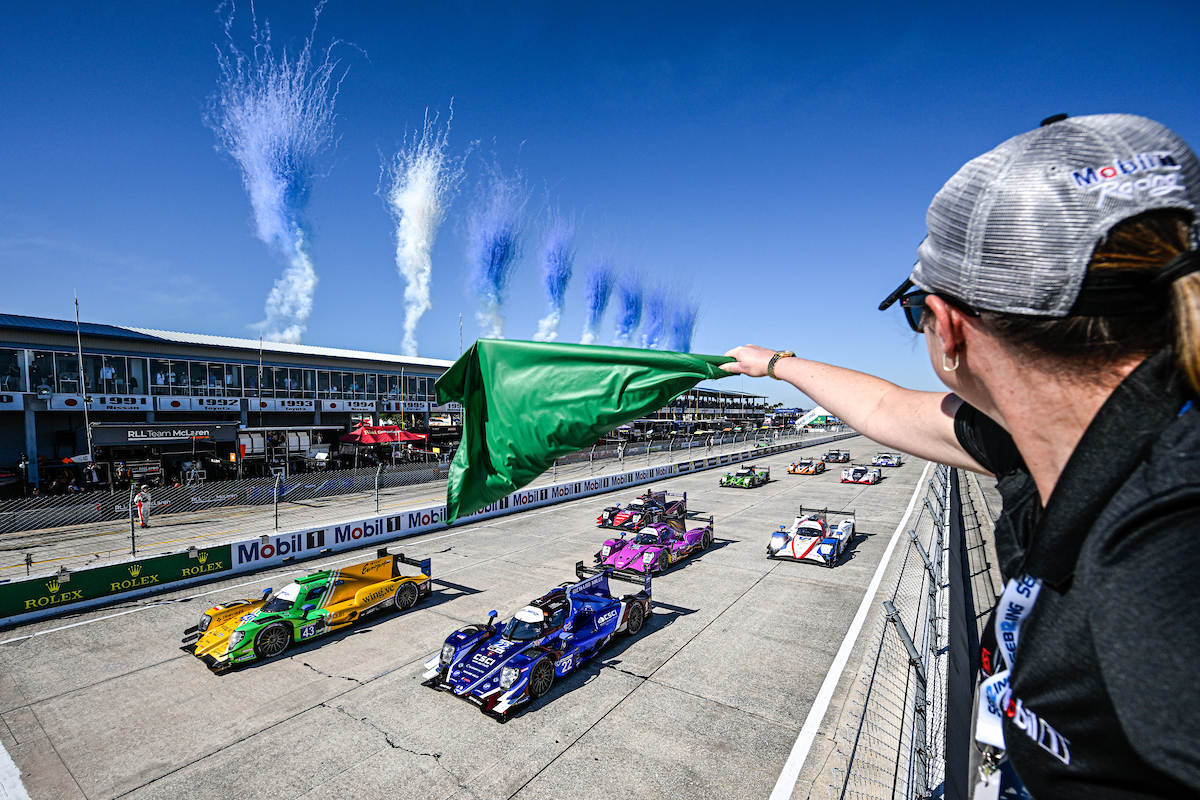
Doonan also expressed confidence in the category’s current momentum.
“The current LMP2 class has become robust in the WeatherTech Championship. We expect to see that continue through the end of the current generation in 2028 and into a strong debut for the new cars coming in 2029.”
The one-year delay also offers a practical advantage. While ACO championships will introduce the new regulations in 2028, IMSA will be able to observe the cars in competition, learn from any early teething issues and launch the new generation with the benefit of a full season’s worth of real-world experience.
IMSA has not chosen to delay the future. Instead, it has decided to let the current generation complete its story before beginning the next chapter — a reminder that, in endurance racing, stability is often the best way to prepare for what comes next.