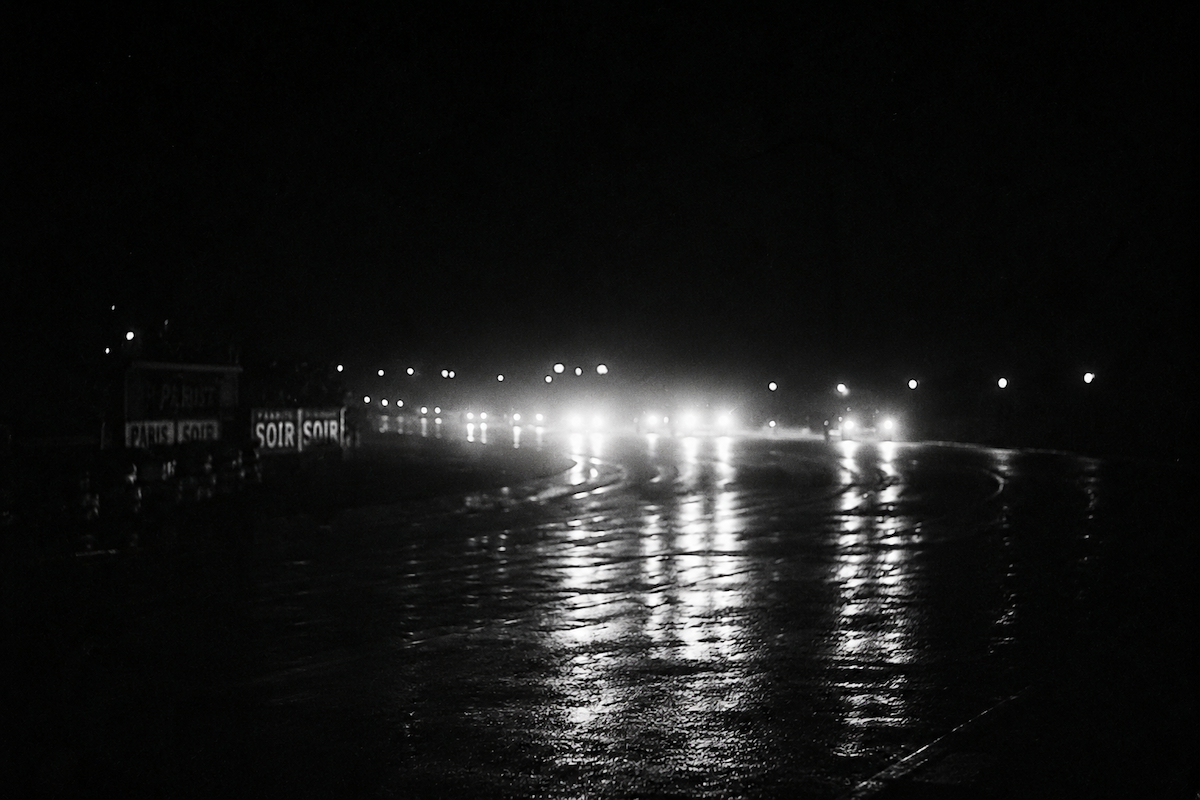
Louis and Jean-Louis Rosier won the 1950 24 Hours of Le Mans. That is what the official results say.
The record books, however, do not deal in nuances. For more than seventy-five years, they have listed Louis and Jean-Louis Rosier as the winners of the 18th edition of the French endurance classic. Yet on that Sunday, June 25, only one man climbed out of the No. 5 Talbot-Lago T26 GS truly exhausted.
His son did drive the car. Two laps according to the commonly accepted version, perhaps two stints according to Jean-Louis himself. His father, however, spent about twenty-three hours behind the wheel.
History remembers a family victory. It remembers even more vividly a man who attempted to take on one of the world’s most demanding races almost entirely on his own.
One year after the rebirth of the 24 Hours of Le Mans, which had been suspended during the Second World War, the Sarthe circuit was gradually returning to its pre-war appearance. The grandstands filled once again, manufacturers came back and the entry list became increasingly international. Ferrari returned hoping to confirm its 1949 victory, Jaguar made its Le Mans debut and Cadillac discovered the French classic for the first time.
Among the favourites was Raymond Sommer, sharing his Ferrari with Dorino Serafini. The Frenchman led the early stages of the race, but mechanical issues gradually eliminated the Italian cars from contention, allowing Louis Rosier to inherit the lead during the third hour.
Driving the Talbot T26 GS, the 44-year-old driver from Auvergne set a relentless pace. As evening fell, he became the first driver in Le Mans history to complete a lap at an average speed exceeding 160 km/h.
Some spectators fell asleep on the grass while the machinery began to fail. The Ferraris disappeared, retirements multiplied and Rosier simply carried on. Everything appeared straightforward. It was not.
“You had to be crazy to do things like that,” Rosier later told Ouest-France. “During the night, a bird crashed into my windscreen. The frame remained intact, so I was not forced to retire, but the force of the air I had to fight against exhausted me and left my whole upper body aching.”
The #5 Talbot-Lago also had to overcome another major setback. Around 4:30 a.m., a rocker shaft and a rocker support had to be replaced. The repair took thirty-eight minutes, an impressive feat for the period.
“Without that, I would have covered another 100 kilometres,” Rosier said after the finish.
It was at that point that Jean-Louis took the wheel. The 21-year-old completed only a very short stint before handing the car back to his father. Louis climbed back into the Talbot. He would not let go of the wheel again. After reclaiming the lead during the morning, he drove the car all the way to the chequered flag, becoming the first man to see it.
To this day, Louis and Jean-Louis Rosier remain the only father-and-son pairing ever to win the 24 Hours of Le Mans. Yet this is not the statistic most people remember from the 1950 edition.
Contemporary accounts credit Louis Rosier with approximately 23 hours and 10 minutes of driving time, although the exact duration of Jean-Louis’ stint remains open to debate. Whatever the precise figure, the achievement remains unique.
The sport has changed considerably since then. Driving-time regulations are now strictly enforced and no driver would be allowed to remain behind the wheel for such a period.
The Rosiers therefore remain an anomaly in the Le Mans record books. Two names engraved on the trophy but nearly twenty-three hours driven by one man…
DID YOU KNOW? Such performances were not entirely unusual at the time. In 1949, Luigi Chinetti won the 24 Hours after spending more than twenty-two hours behind the wheel of his Ferrari 166 MM. Reportedly unconvinced by the driving abilities of his teammate, Lord Selsdon, the Italian is said to have treated him to a particularly heavy evening of drinking before the race in order to keep the wheel for as long as possible during the event.