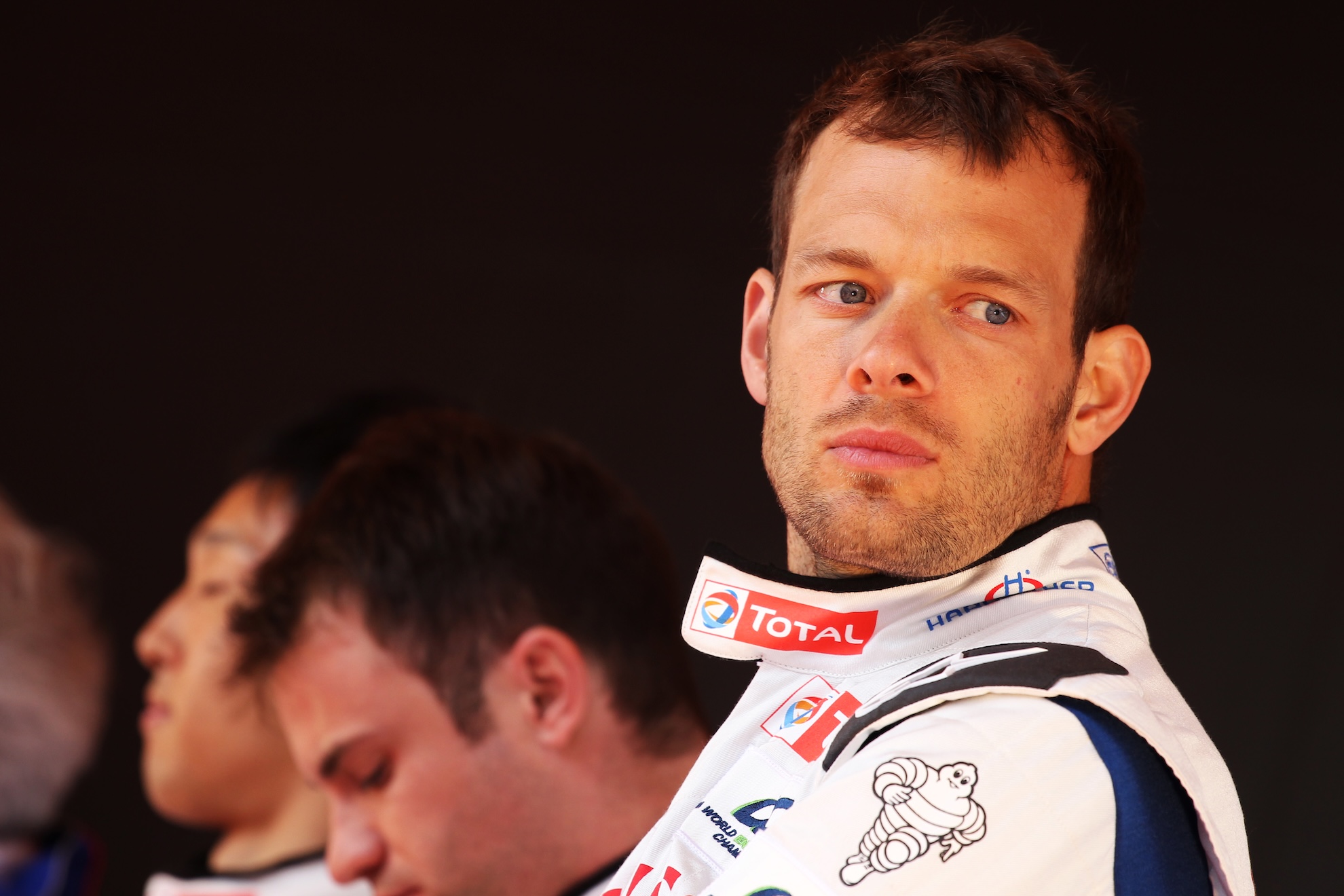
At 22, the Austrian had already lived several sporting lives. Former BMX world champion. Formula Ford winner. Formula 3 graduate. Touring car driver with Joest Racing’s Opel programme. Yet none of it guaranteed a future. The money had dried up. Formula 1 remained a distant prospect. He had begun wondering whether it was time to stop.
Even Le Mans was not supposed to be part of the plan.
“I was not supposed to be on the entry list of the 1996 Le Mans 24 Hours,” Wurz would later admit on the official 24 Hours of Le Mans website. “Reinhold Joest was looking for a driver and after a test session, he decided to trust a young guy to drive the TWR Porsche.”
The car itself had no business still being there.
Years before Wurz climbed aboard, it had already earned a place in endurance racing folklore. It had first appeared in 1991 as the Jaguar XJR-14, Tom Walkinshaw Racing’s sophisticated Group C successor powered by a Ford-derived Formula 1 V8. It conquered the World Sportscar Championship before being transformed into Mazda’s MX-R01 for Le Mans in 1992.
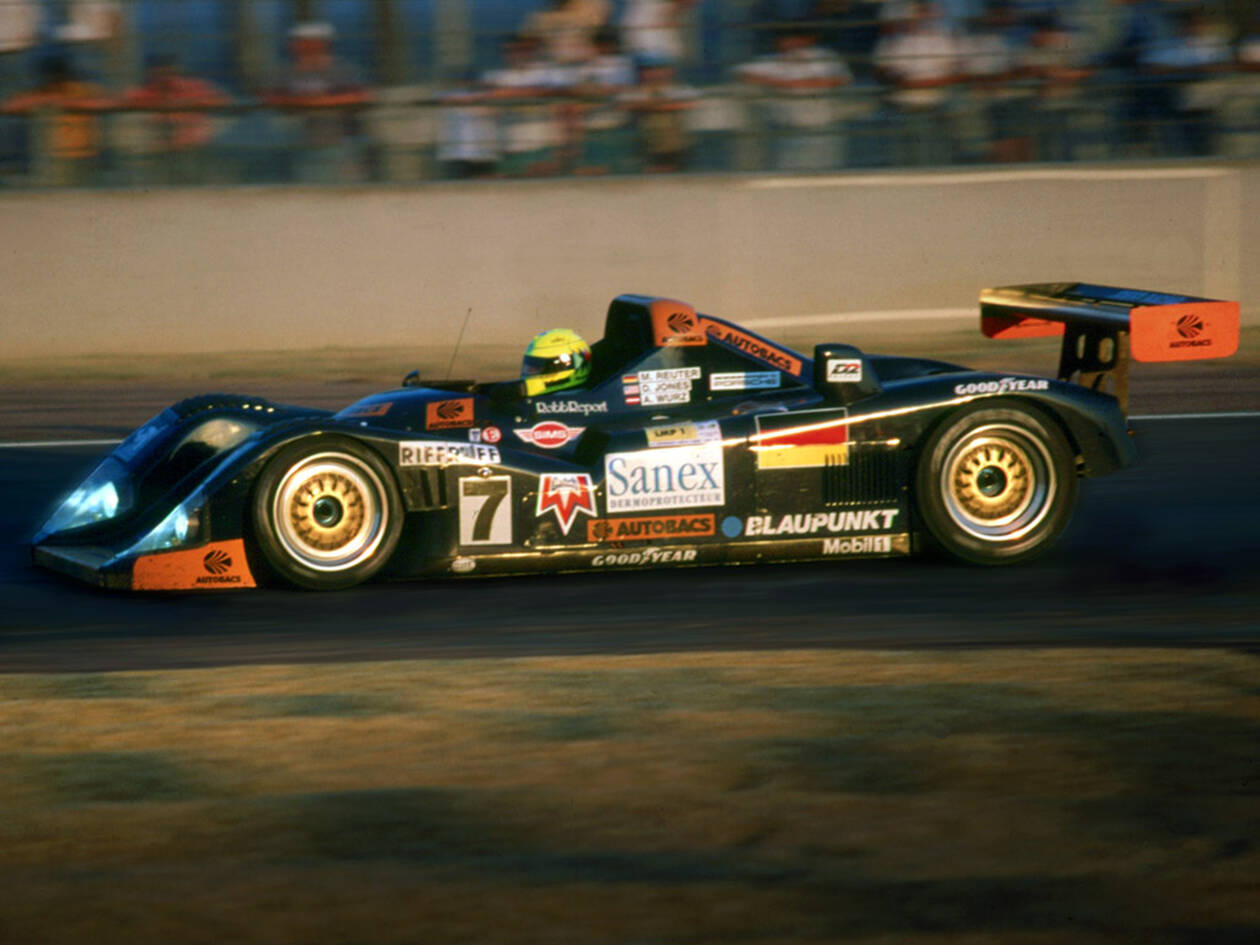
Most racing cars disappear quietly. This one refused. Its roof was removed. A Porsche turbocharged flat-six found a new home beneath its bodywork. Under Reinhold Joest’s watchful eye, it evolved once more into the TWR-Porsche WSC-95. By 1996, it represented something increasingly rare at Le Mans: a privately run prototype capable of troubling the factories.
Joest saw something similar in Wurz. The Austrian’s pace impressed him. So did his curiosity.
“I was at the point of ending my career because I was completely broke,” Wurz recalled. “By a stroke of luck, Reinhold Joest needed a driver to carry out testing with the car they were going to use at Le Mans. I was only supposed to do that session, but he realized how much I loved Le Mans. I had asked him so many questions about the TWR-Porsche, its driving, that he decided to he was going to make this young Austrian driver do test after test.”
Those tests kept leading to the same conclusion.
“I was the fastest as early as my third lap in the car. Reinhold Joest said to himself: ‘I’m going to make sure this guy doesn’t cut the corner or something like that!’ And I didn’t (laughs, Ed.). He then made me do another test and once again I was the fastest. In the end, he named me third driver in the #8 car.”
Eventually, Joest moved him into the faster of the team’s two entries, the #7 shared with Manuel Reuter and Davy Jones. What followed remains one of Le Mans’ most improbable victories.
While Porsche’s factory-supported 911 GT1s and the McLaren F1 GTRs commanded much of the attention, Joest’s prototype simply kept going. Hour after hour, stint after stint, it remained in contention. Then came Sunday morning.
“It was a tough fight with the official Porsche,” Wurz remembered. “At 8am on Sunday morning, we were leading with an eight-second margin, but we finally won.”
When the chequered flag waved, the image captured something quintessentially Le Mans. A privately entered Porsche prototype had beaten Porsche’s own factory effort.
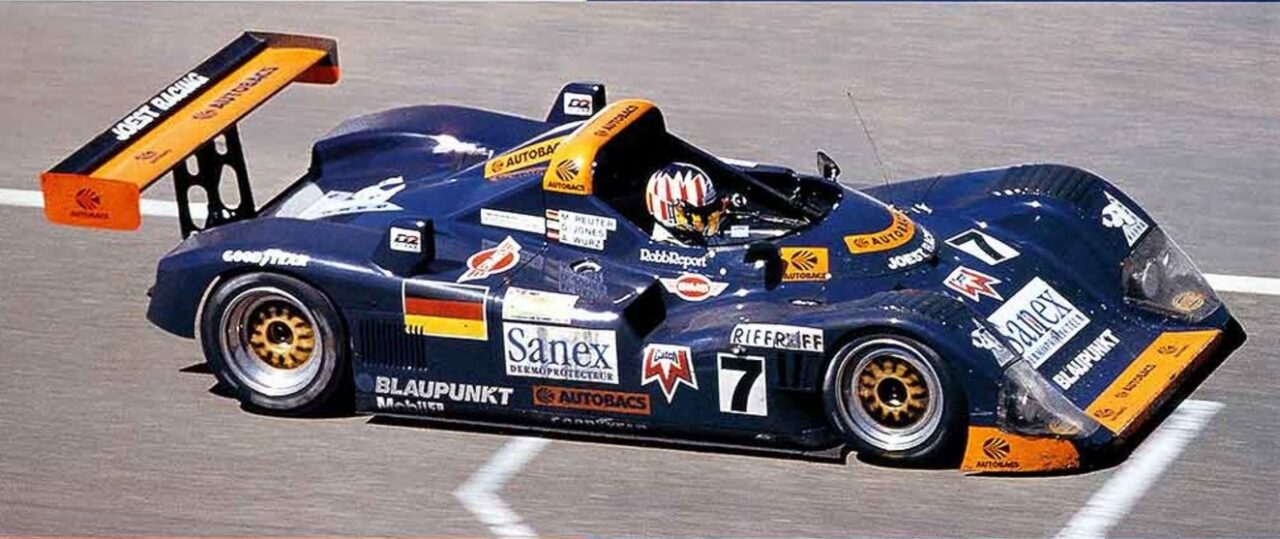
Reuter secured his second overall victory, seven years after triumphing with Sauber-Mercedes. Davy Jones became the most recent American to win outright in the Sarthe, a distinction he still holds today. Reinhold Joest added another chapter to a relationship with Le Mans that would eventually lead him to Audi’s era of dominance.
And Alexander Wurz became the youngest winner in the history of the race (22 years, 91 days). He did not yet understand how profoundly those 24 hours would alter the course of his life.
“Shortly before the race, I was at the point of ending my career because I was completely broke,” he admitted. “We won the race, it was a lifesaver.”
A week before Le Mans, Wurz had managed to arrange a brief meeting with Flavio Briatore.
“He asked me what I was doing the following weekend,” Wurz said. “I told him I was competing in the 24 Hours of Le Mans. So he told me: ‘If you win Le Mans, I’ll let you test.'”
The fax arrived the day after the race. Silverstone followed. Wurz topped the timesheets during his Formula 1 test. More opportunities emerged. The young man who had been contemplating retirement suddenly found himself heading towards the pinnacle of single-seater racing.
Le Mans had done what it has always done best. It had changed a life. In June 1996, a rookie searching for a future and a racing car refusing to fade into history found each other in La Sarthe. Neither left unchanged.
DID YOU KNOW ?
The TWR-Porsche WSC-95 chassis 001 is one of only four chassis to have won Le Mans outright on two occasions (1996-1997), alongside Bentley Speed Six “Old Number One” LB2332 (1929-1930), Ford GT40 1075 (1968-1969) and Porsche 956-117 (1984-1985).