On June 3, 2011, nineteen years after the collapse of the World Sportscar Championship, the FIA and the Automobile Club de l’Ouest officially announced the creation of a new FIA World Endurance Championship.
Today, with grandstands packed and manufacturers flocking to the Hypercar category, it is easy to forget how uncertain endurance racing’s future once seemed. Yet in 2011, the return of a world championship was anything but guaranteed.
The World Sportscar Championship had been one of motorsport’s great institutions since its inception in 1953, helping to forge the legends of Ferrari, Porsche, Jaguar and Mercedes-Benz. But by the early 1990s, the series was in decline. Escalating costs, shrinking grids and the FIA’s controversial decision to mandate 3.5-litre Formula 1-derived engines proved a disastrous combination.
At the end of the 1992 season, the championship disappeared altogether. For the first time in almost four decades, endurance racing no longer had a world championship to call its own.
The road back
The seeds of its eventual return were planted years later. Audi’s arrival at Le Mans at the turn of the century helped sustain prototype racing through a difficult period, but the lack of sustained manufacturer opposition limited broader momentum. That changed in 2007, when Peugeot entered the top category and reignited one of endurance racing’s great rivalries.
The Audi-Peugeot battle not only captivated fans but also demonstrated that manufacturers remained willing to invest heavily in endurance competition. Behind closed doors, discussions between the FIA and the ACO intensified.
The first concrete step came in 2010 with the launch of the Intercontinental Le Mans Cup (ILMC), effectively a global extension of the European Le Mans Series. With races in Europe, North America and Asia, it offered a glimpse of what a future world championship might look like. The concept worked.
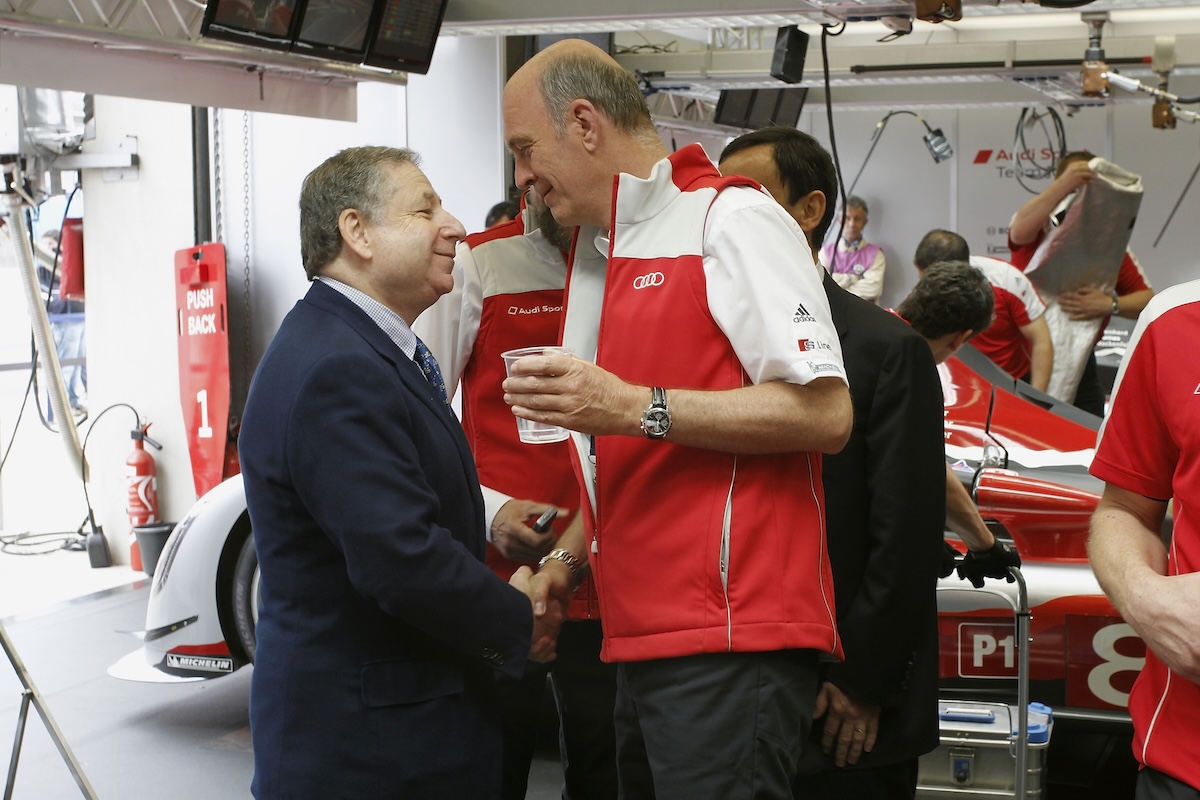
On June 3, 2011, just days before the start of the 24 Hours of Le Mans, the FIA and the ACO made it official: the FIA World Endurance Championship would return in 2012.
“Obviously back in 2012, teaming up with the FIA gave a lot of credibility to the championship,” Sébastien Buemi later reflected. “And then to get the world championship title, it really gave extra credibility.”
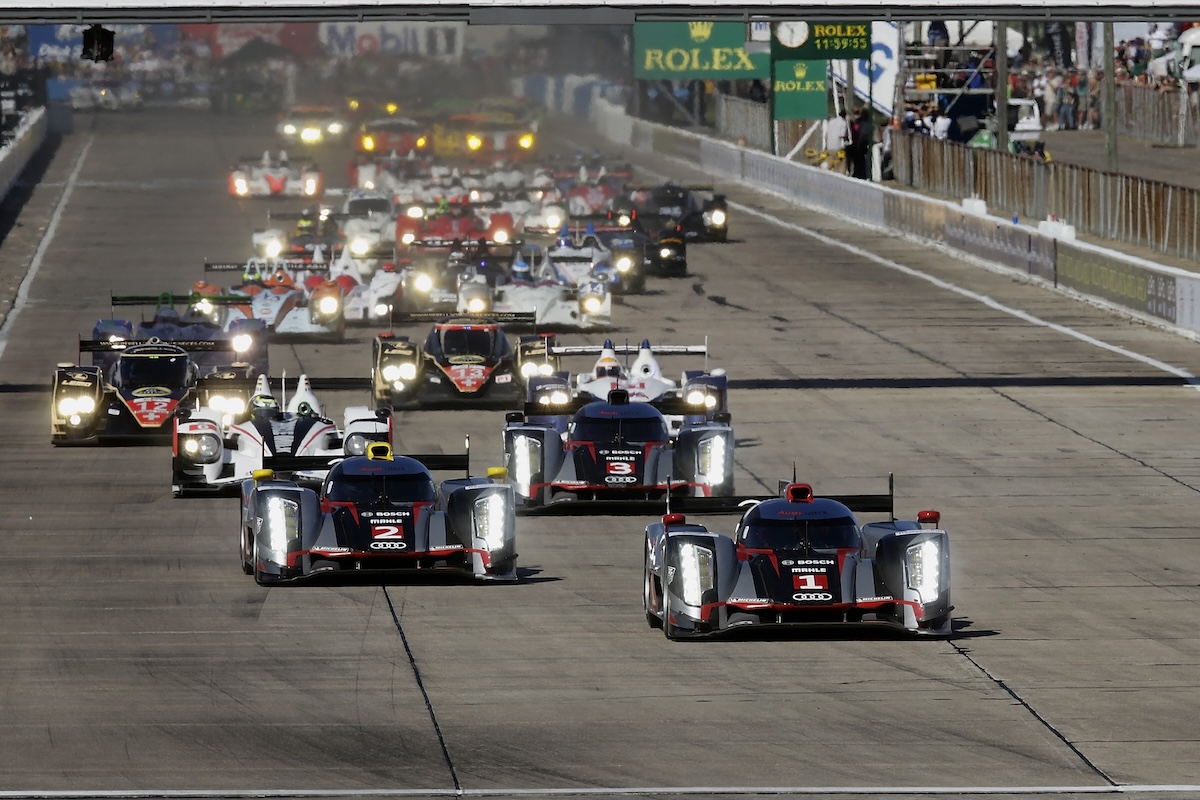
The inaugural WEC season finally began at Sebring in March 2012. Thirty WEC entries joined forces with the American Le Mans Series to produce a remarkable 64-car grid. McNish, Tom Kristensen and Rinaldo Capello delivered the championship’s first outright victory in an Audi R18 e-tron quattro.
The second chance that endured
Few attending that modest press conference in June 2011 could have imagined what endurance racing would become. Ferrari returned to the top class for the first time in 50 years. Porsche, Toyota, Cadillac, BMW, Peugeot, Alpine and Aston Martin joined the Hypercar ranks. Genesis has joined the Hypercar ranks, while Ford and McLaren are preparing to follow.
The discipline that once struggled simply to justify its existence has become one of motorsport’s greatest success stories.
“I never doubted, I always believed.” Pierre Fillon said.
Perhaps that is the defining characteristic of modern endurance racing. Its history has never followed a straight line. Each time, the championship found a way forward. On June 3, 2011, endurance racing wasn’t simply launching a new championship. After nearly two decades in the wilderness, the discipline had been given a second chance. On this day, endurance racing proved that its story was far from over.