The FIA World Endurance Championship has become accustomed to adapting. Regulations evolve, manufacturers arrive and depart, calendars change from one season to the next. It is far less common, however, for world events to reshape a championship while the season is still unfolding.
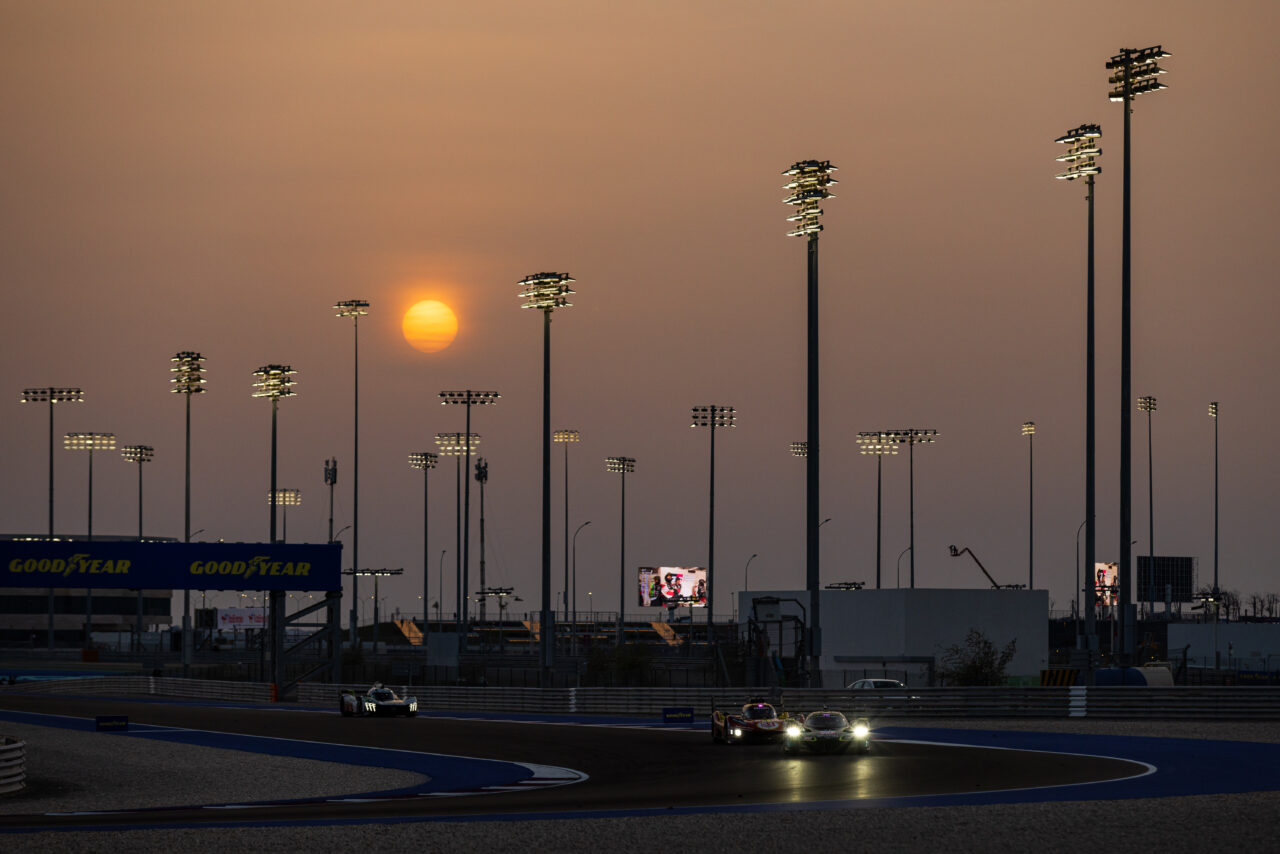
That is precisely what has happened. The 1812 km of Qatar, initially postponed from 28 March to October 24, has now been cancelled altogether. The same applies to the 8 Hours of Bahrain, originally scheduled for November 7.
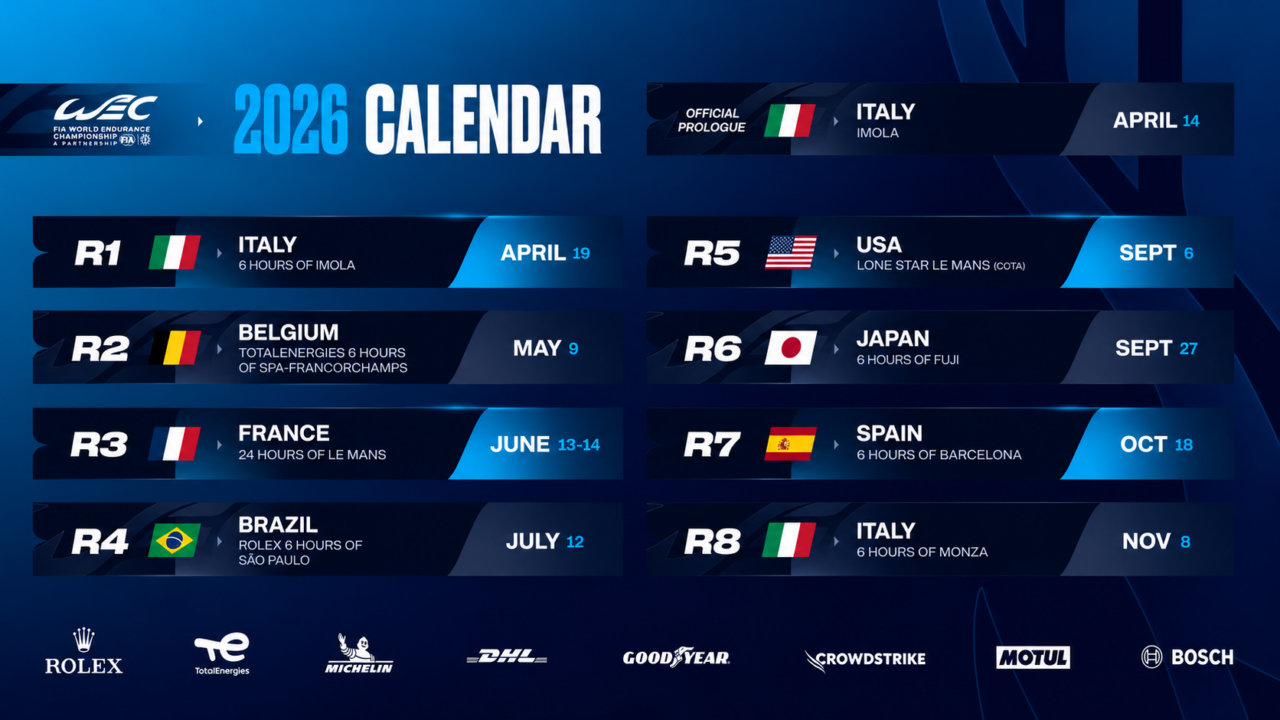
Instead, the WEC will come back to Europe to complete its 2026 campaign, with Barcelona joining the calendar before the season concludes at Monza.
What have we learned?
The announcement confirms what many inside the paddock had already expected. Although the situation in the Gulf is more stable today than it was during the height of the military escalation earlier this year, tensions involving Iran, Israel and the United States continue to create uncertainty.
For an international championship transporting hundreds of people and vast amounts of equipment across the world, uncertainty is rarely something organisers can afford.
“We have been closely monitoring developments in the Middle East over recent months. A few weeks ago, we were optimistic about being able to race in Qatar and Bahrain, but unfortunately, the present situation obliges us to switch to an alternative plan” FIA WEC CEO Frédéric Lequien. “We have duly resolved to replace those two end-of-season rounds with Barcelona and Monza. Logistically, it was imperative to take this decision now to allow manufacturers, teams and the FIA WEC organisation to make all necessary arrangements.”
Barcelona joins the calendar on October 18, while Monza will host the season finale on November 8.
Why couldn’t the WEC go to the Gulf?
Modern endurance racing depends on one of the most sophisticated logistical operations in world motorsport. Manufacturers, suppliers, tyre companies, broadcasters and freight partners all work to schedules planned months in advance. Any disruption quickly affects the entire chain.
“I would like to warmly thank Qatar and Bahrain for their understanding in these times” Lequien added. “We have been in constant dialogue with both tracks and their national federations, and are proud of the close, long-standing relationships we have built in the Middle East. They are hugely important and well-established events in FIA WEC, and will remain so for many years to come.”
Security is naturally one consideration. Corporate policy is another.
Several multinational companies involved in the championship have restrictions preventing employees from travelling to certain parts of the region. Others have significantly tightened their travel policies over recent months, making participation increasingly difficult for engineers, suppliers and technical partners.
For LMEM, relocating the final two rounds became the only realistic way of ensuring the championship could continue without introducing further uncertainty for competitors and stakeholders alike.
The WEC has adapted to unexpected circumstances before. This time, though, the reasons lie well beyond motorsport.
Why Barcelona and Monza?
Once the decision had been made to remain in Europe, the list of realistic alternatives quickly narrowed.
Portimão was understood to have been among the options considered. The Autódromo Internacional do Algarve has already hosted the WEC in 2021 and 2023. But with the loss of the Qatar and Bahrain rounds already represents a colossal financial blow for LMEM, committing to a venue where strong attendance is far from guaranteed simply made little sense.
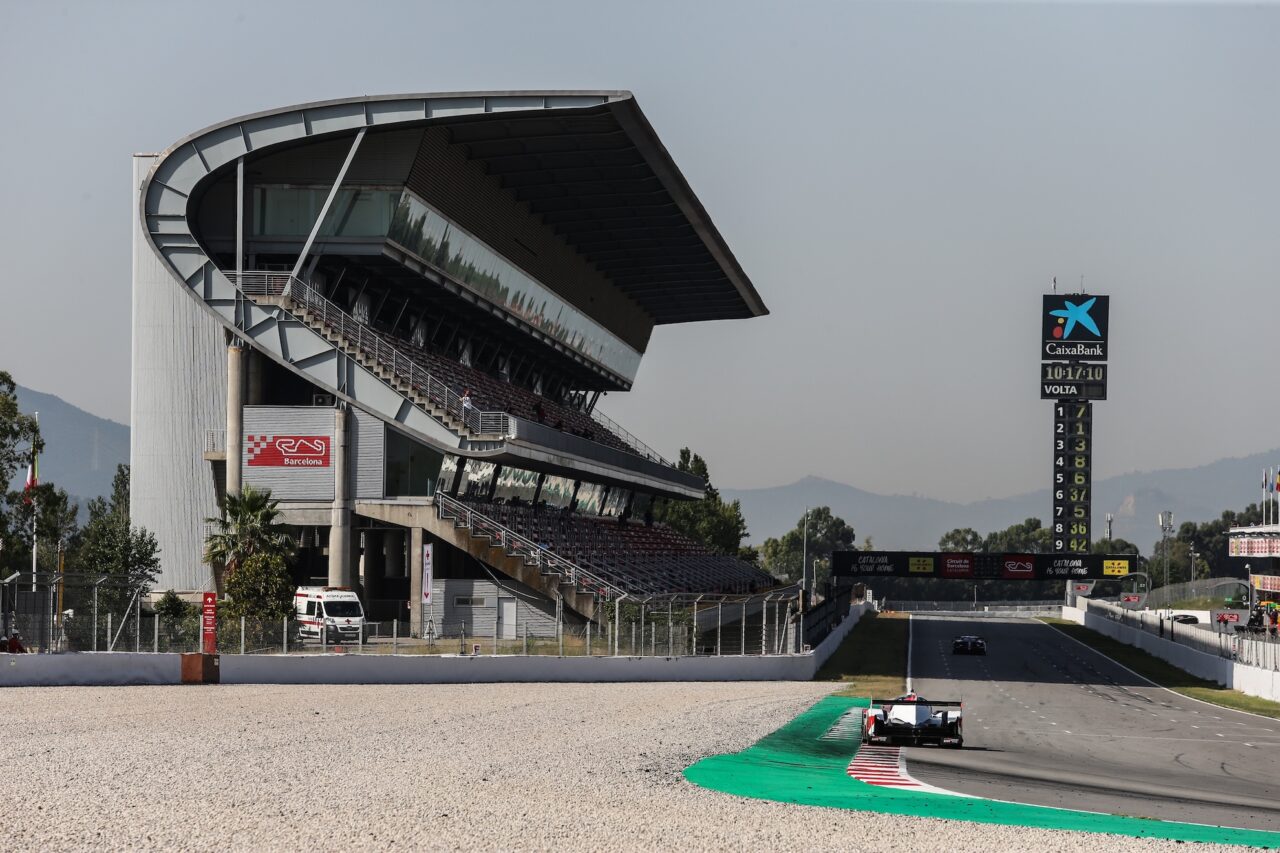
Barcelona quickly emerged as a logical solution. The Barcelona-Catalunya circuit has become one of the European Le Mans Series’ strongest events in terms of attendance, while its location and infrastructure made it an obvious candidate for a championship looking for certainty.
The WEC’s only previous visit to Barcelona came on 23–24 July 2019, when the circuit hosted the Prologue ahead of the 2019–20 season.
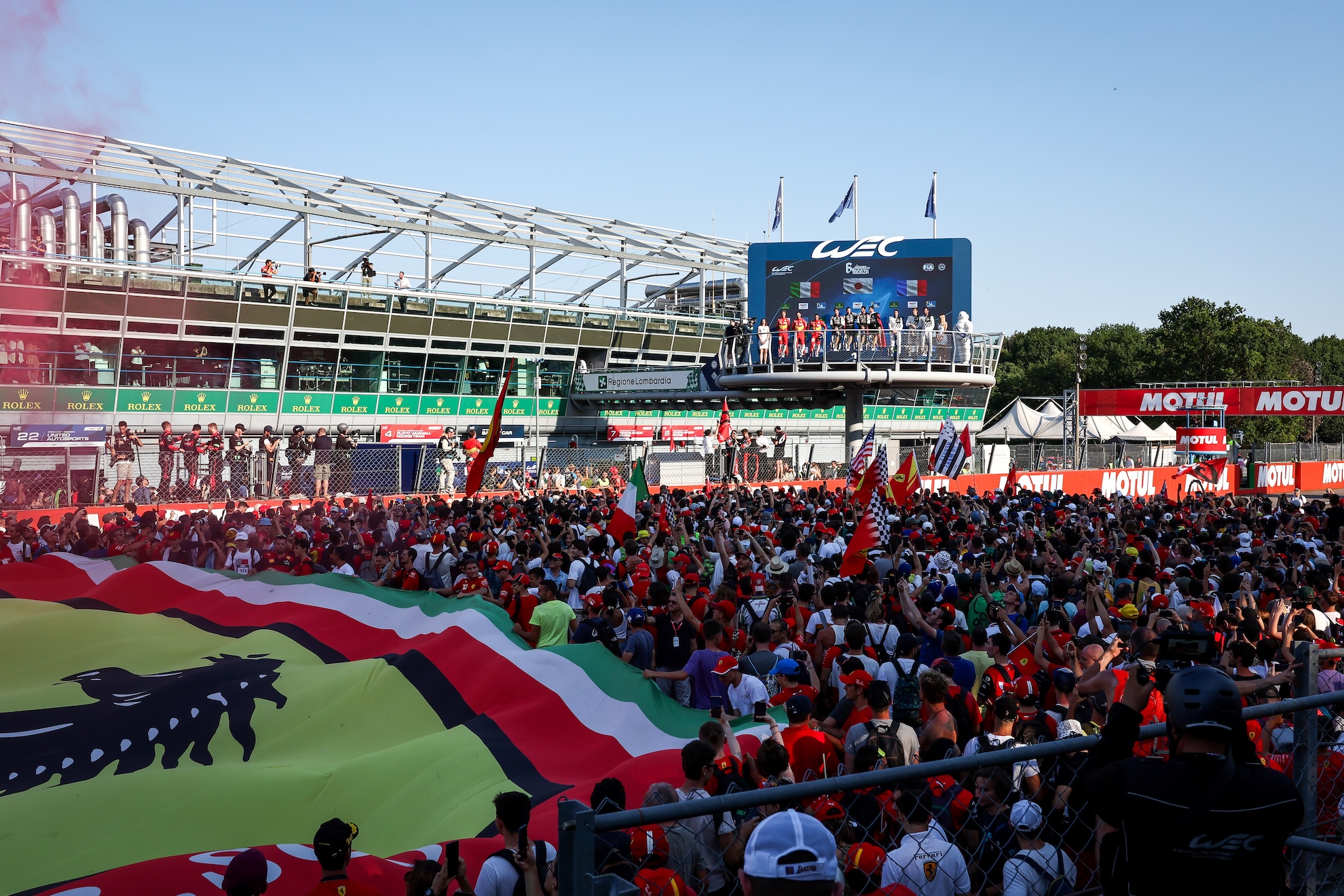
Monza was equally difficult to overlook. Beyond its WEC history, the Temple of Speed gives the championship the opportunity to finish the season on Ferrari’s home soil, where spectator interest is unlikely to be an issue.
The Italian track has welcomed the WEC on three previous occasions, with Toyota winning in 2021 and 2023 and Alpine claiming its first overall victory there in 2022.
There were practical considerations, too.
At that time of year, moving further north would have brought a different set of challenges, with shorter days, colder temperatures and a greater risk of poor weather. Southern Europe offered the best compromise, even if early November in Lombardy is far less predictable than Bahrain.
A reshuffle that raises questions
The ACO naturally explored every possible option to take the championship to the Middle East. The financial hit is significant, with both Qatar and Bahrain paying hosting fees to stage WEC rounds, an important source of revenue that helps underpin the championship’s economic model. While the WEC is now financially robust enough to withstand such a blow, the consequences are nonetheless far from negligible.
On the sporting front, if replacing the venues was relatively straightforward, preserving the competitive balance of the championship is a more complicated matter.
Barcelona’s arrival creates an immediate clash with the GT World Challenge Europe season finale at Portimão. Three teams and no fewer than 19 drivers are now affected, leaving some facing difficult choices while others may have to rethink their driver line-ups.
There is another debate that is unlikely to disappear any time soon.
The original calendar featured a ten-hour race in Qatar and an eight-hour finale in Bahrain, both awarding points with a 1.5 multiplier (38 points for the winners). They have now been replaced by two six-hour races carrying standard championship points (25 points of the winners).
Some argue that inevitably changes the complexion of the title fight. Replacing them with shorter events changes both the sporting challenge and the mathematics of the championship.
The counterargument is equally valid. Organising eight or ten-hour races at Barcelona or Monza in late October and early November would have presented obvious challenges, particularly in terms of daylight and weather conditions.
Whether the revised calendar ultimately influences the outcome of the title fight will only become clear over the final two rounds. For now, the priority was to ensure the championship could continue. The sporting consequences will reveal themselves soon enough.