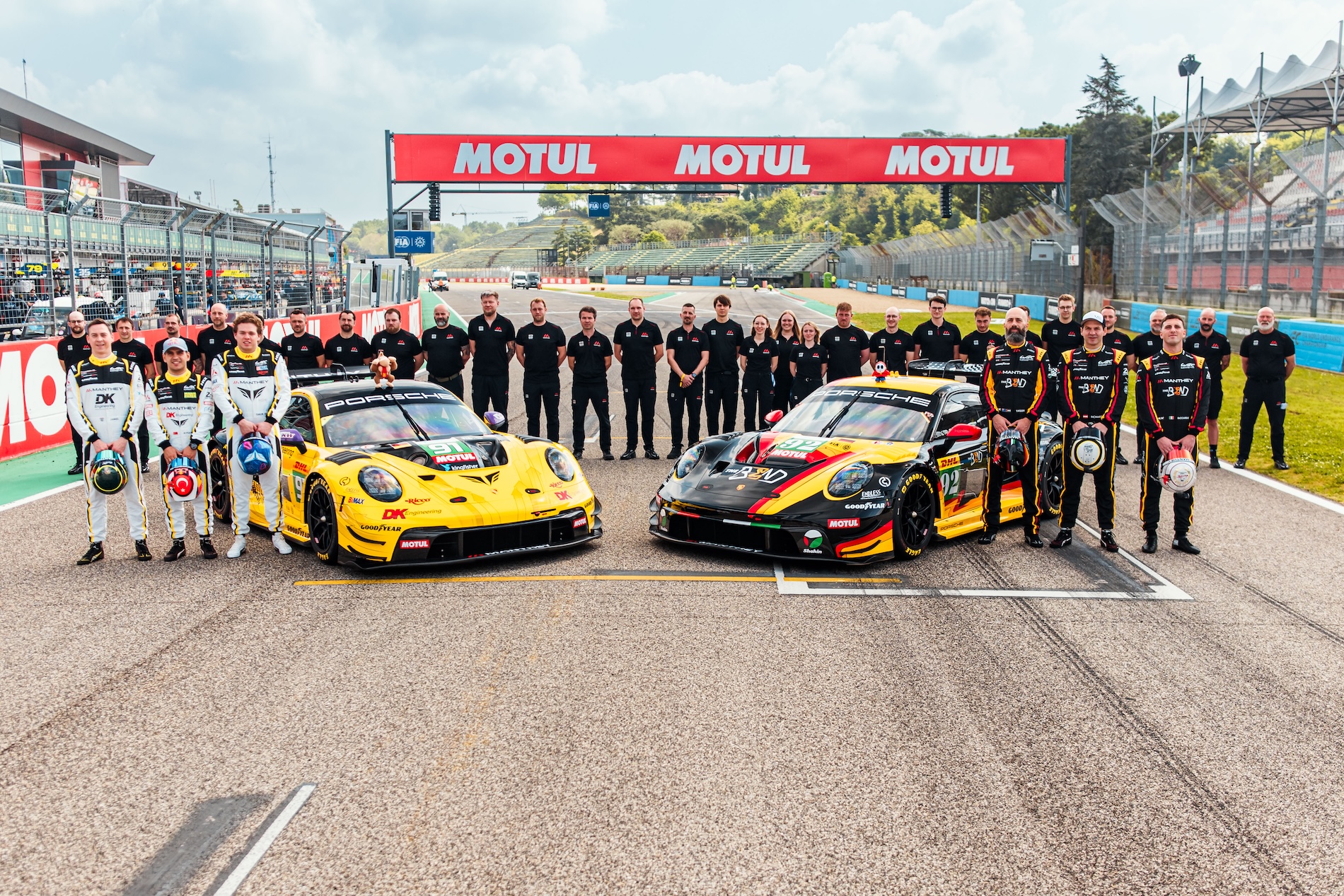
Until now, two cars run by the same team could find themselves competing against each other in the Teams’ standings. Each scored its own points towards the FIA Endurance Trophy for LMGT3 Teams, with its race number serving as the reference.
But Article 15.2.3 of the 2027 FIA WEC Sporting Regulations now states that the FIA Endurance Trophy for LMGT3 Teams will be awarded to the Competitor that has “scored the greatest number of points after consideration of all the results obtained by the two cars in each Competition entered under the Competitor licence.”
The change follows a similar reform introduced in Hypercar in 2025. Since then, the results of both cars entered by a manufacturer have counted towards the FIA Hypercar World Endurance Manufacturers’ Championship, whereas previously only the better-placed car scored points for its manufacturer after each race.
Two Cars, Two Names… But One Licence?
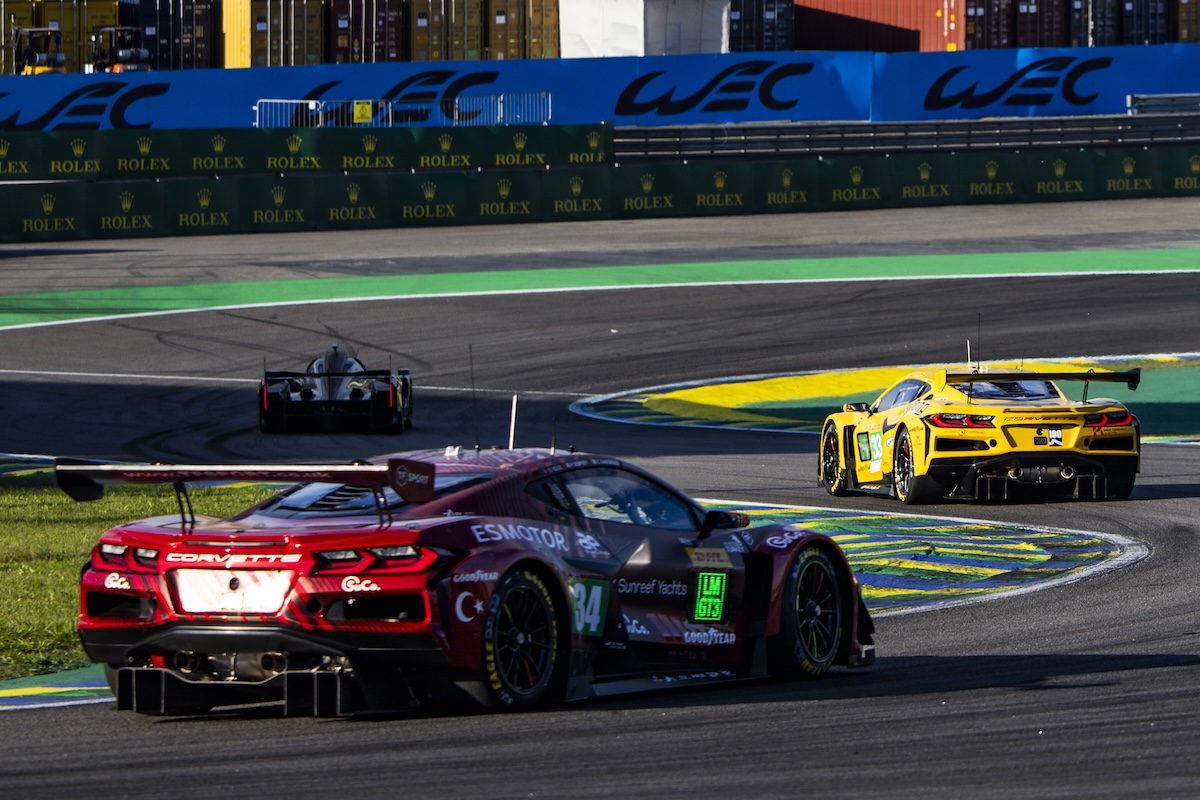
Yes. But to understand how this works, it is important to distinguish between the Manufacturer, the Team and the Competitor. The Manufacturer supplies the car and nominates its LMGT3 representatives. The Team is responsible for running the car on track. The Competitor is the entity officially entered in the championship, identified by its licence.
Article 3.1.5 b) of the 2027 regulations states: “The wording of the Competitor’s licence submitted may be followed by an additional commercial wording.” The full designation will appear on official documents, including entry lists, Free Practice, Qualifying, Hyperpole and race classifications. However, the regulations specify an exception for the “FIA Endurance Team Trophy classification, where only the wording of the Competitor’s licence will be used”.
Names such as The Bend Manthey and Manthey DK Engineering, or TF Sport and Racing Team Turkey by TF, will therefore remain possible. However, Article 3.2.4 specifies that “A Manufacturer may designate two cars, under two different licenses, on the sole condition that these cars are entered by the same company.”
There is therefore nothing explicitly preventing a manufacturer from entrusting the operation of its two cars to different teams, as Aston Martin has done in the past, notably with TF Sport and D’Station Racing, Heart of Racing and D’Station Racing, or Heart of Racing and Racing Spirit of Léman.
However, having both cars entered by the same company does not necessarily mean they can score points together. Only two cars entered under a common competitor licence will have their results combined in the standings. If they operate under separate licences, they will be classified separately, significantly reducing their chances of winning the trophy.
Would the reform have changed previous champions?
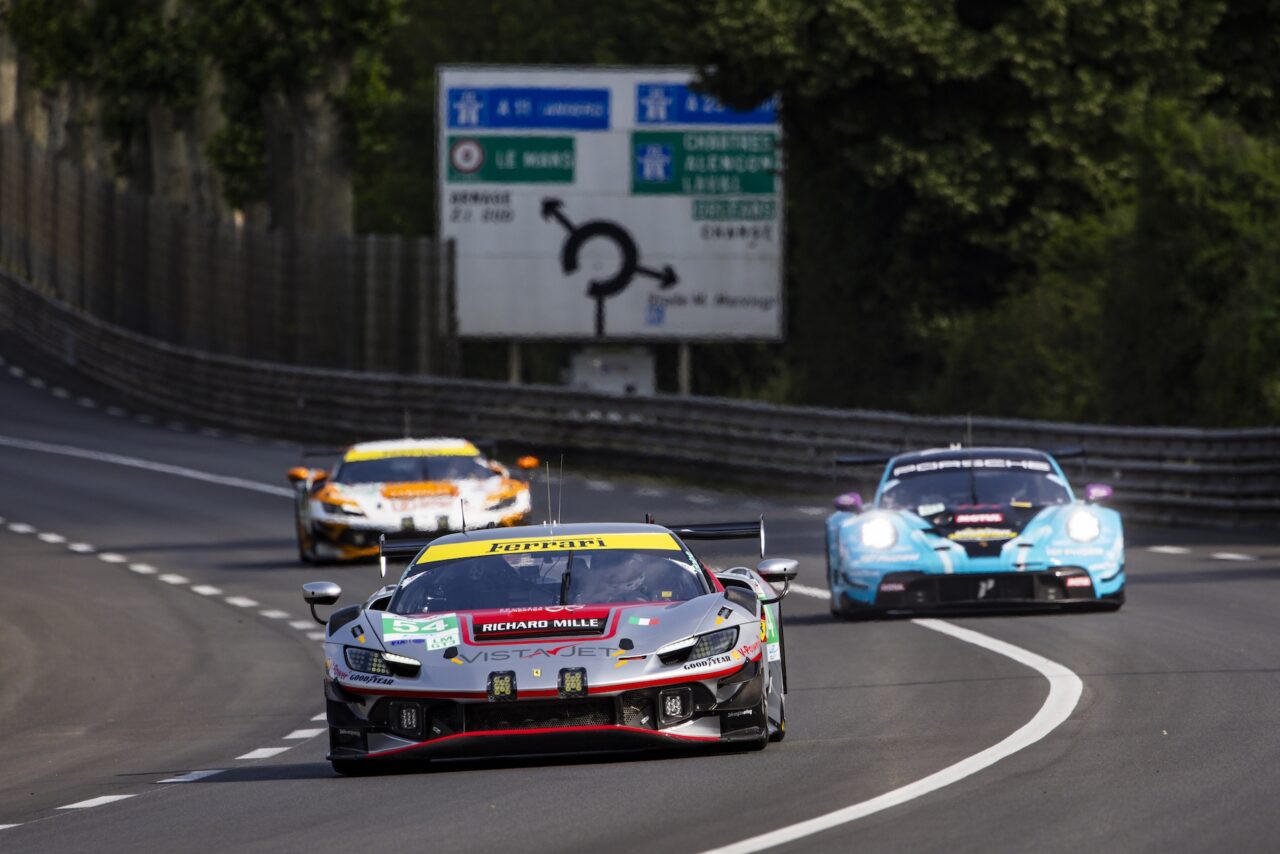
With the 2026 season finale at Monza (8 November) approaching, four cars remain in contention: TF Sport’s #33 Corvette, The Bend Manthey’s #92 Porsche, Racing Team Turkey by TF’s #34 Corvette and Team WRT’s #69 BMW.
The two Corvettes provide a particularly revealing example. Although both race under the TF Sport licence, the #33 and #34 currently pursue separate objectives in the Teams’ standings. Had the new rule applied this season, however, the overall picture would not have changed dramatically. Combining the points scored by both cars would put TF Sport in the lead on 162 points, ahead of Manthey (128) and Team WRT (114). The latter, though, would already be out of title contention.
The 2025 season offers a far more telling illustration. Manthey 1st Phorm’s #92 Porsche claimed the FIA Endurance Trophy for LMGT3 Teams with 123 points. But had the results of both cars from each competitor been combined, Vista AF Corse (Ferrari) would have come out on top with 163 points, ahead of TF Sport (159) and Manthey Racing (142).
From 2027, the consistency and overall strength of both driver line-ups will therefore take on greater importance. Two cars regularly finishing in the points could gain the upper hand over a rival capable of winning races but repeatedly hampered by difficulties affecting its second entry.
A positive change for the championship?
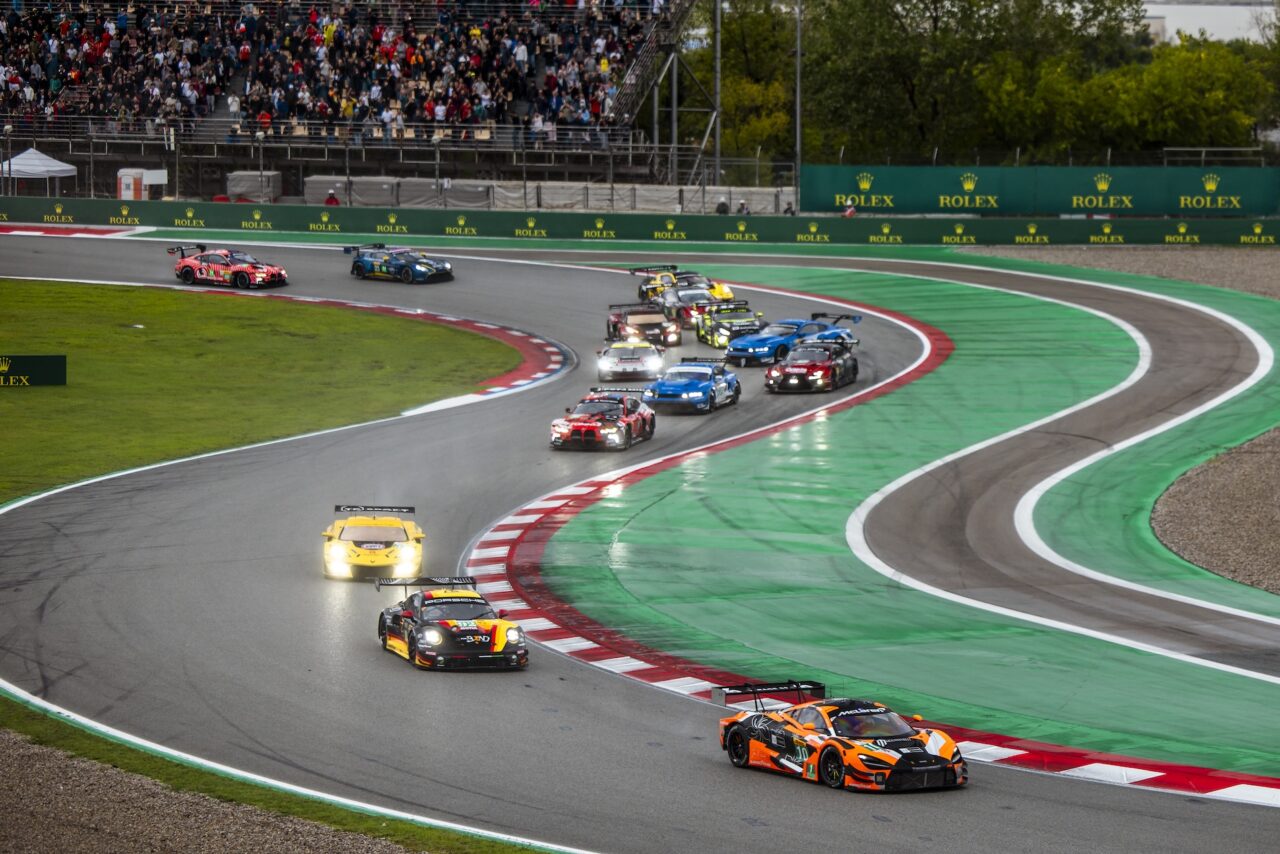
There is a compelling sporting logic behind the reform. In a category where each manufacturer fields two cars, rewarding their combined performance seems entirely reasonable. The work carried out within the same garage, shared preparation and the ability to improve both crews will be more directly reflected in the championship standings.
The change could also influence race strategy. A car no longer in contention for a podium will still have a valuable role to play by picking up a handful of points. Conversely, a retirement or a difficult race for one crew will have consequences for the team’s overall championship campaign.
Internal rivalries will not disappear, however, as each crew will continue to pursue its own interests in the LMGT3 Drivers’ Trophy. And in a category where gentleman drivers pay for their seats, team orders are not always easy to enforce.
From 2027, the FIA Endurance Trophy for LMGT3 Teams will therefore reward a collective achievement. It is a welcome change for a championship table that, until now, had been almost an exact replica of the Drivers’ standings and consequently struggled to establish a meaningful identity of its own.