IMSA: Is the show starting to overshadow the racing?
Published on , by Thibaut Villemant
On paper, IMSA has probably never looked stronger. The grids are exceptionally deep and the racing almost always delivers. But as the season unfolds, another impression is beginning to emerge: that of a championship whose sporting narrative is, at times, becoming increasingly difficult to follow.
Where other championships allow performance gaps to emerge naturally, IMSA has long embraced uncertainty. Full Course Yellows reshape the race, strategies are repeatedly reset and victory is rarely secure until the checkered flag falls. That philosophy is at the heart of the series’ success and explains why drivers, teams and fans remain so deeply attached to it.
As a NASCAR subsidiary, IMSA is rooted in an unmistakably American philosophy, one in which entertainment occupies a central role. But spectacle must ultimately remain in the service of competition.
The questions raised by the 2026 season are not the result of a single controversial episode. They stem from different aspects of the championship, yet all point towards the same issue: do competitors still understand the logic behind the decisions shaping the series?
A Balance of Performance that raises questions
Balance of Performance has always been a delicate balancing act. Its purpose is not to make every car identical, but to bring performance closer together so that the competitive order is ultimately decided by the quality of the teams and the drivers.
This year, however, that balance appears increasingly difficult to achieve. Ironically, competitors have recently been prevented from speaking freely about BoP, both in the media and on social media, mirroring a policy already in place for several years in the World Endurance Championship.
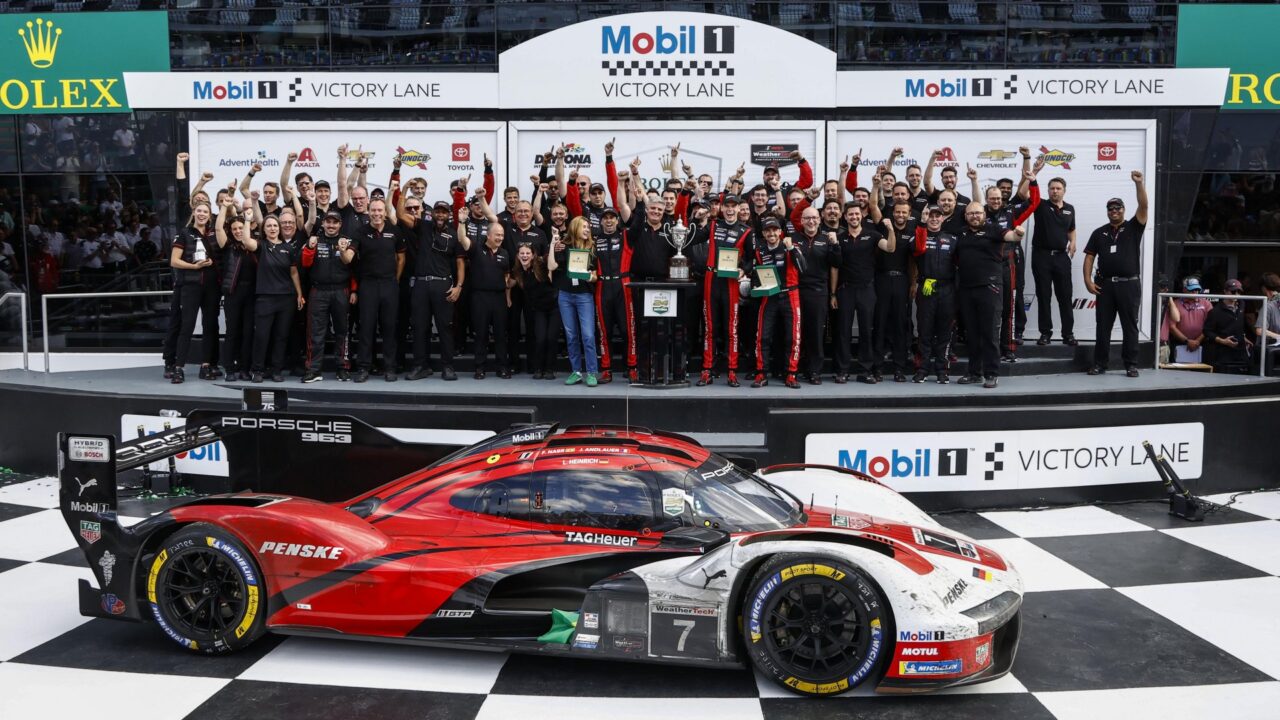
After winning both the 24 Hours of Daytona and the 12 Hours of Sebring, reigning champions Porsche Penske Motorsport have seen their Porsche 963s heavily constrained by several BoP adjustments. Since then, the team has managed just a single podium finish in five races, at Long Beach.
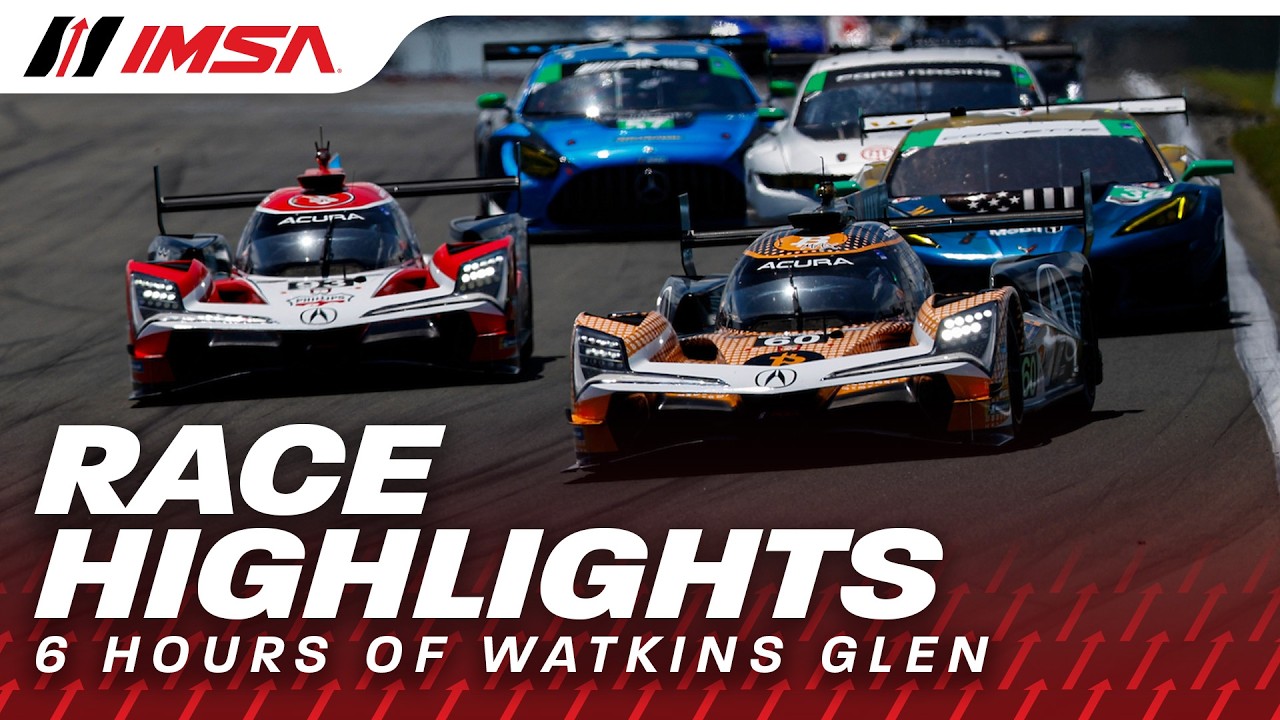
At Watkins Glen, the 2026-spec Porsche 963 carried 53 kilograms more than the Aston Martin Valkyrie, 43 kilograms more than the BMW M Hybrid V8, 41 kilograms more than the Cadillac V-Series.R and 28 kilograms more than the Acura ARX-06. At Road America, despite shedding seven kilograms, it still carried a 46-kilogram weight disadvantage to Aston Martin, 36 kilograms to BMW, 21 kilograms to Acura and 13 kilograms to Cadillac.
The figures become even more striking when looking beyond weight. The Porsche also received the lowest power allocation below 230 km/h. While additional power was restored at higher speeds, that was not enough to offset what remained the least favorable power-to-weight ratio in the GTP field.
One point, however, should not be overlooked: Balance of Performance is designed to equalize the potential of the cars, not their results.
Is Porsche Penske Motorsport still allowed to fight?
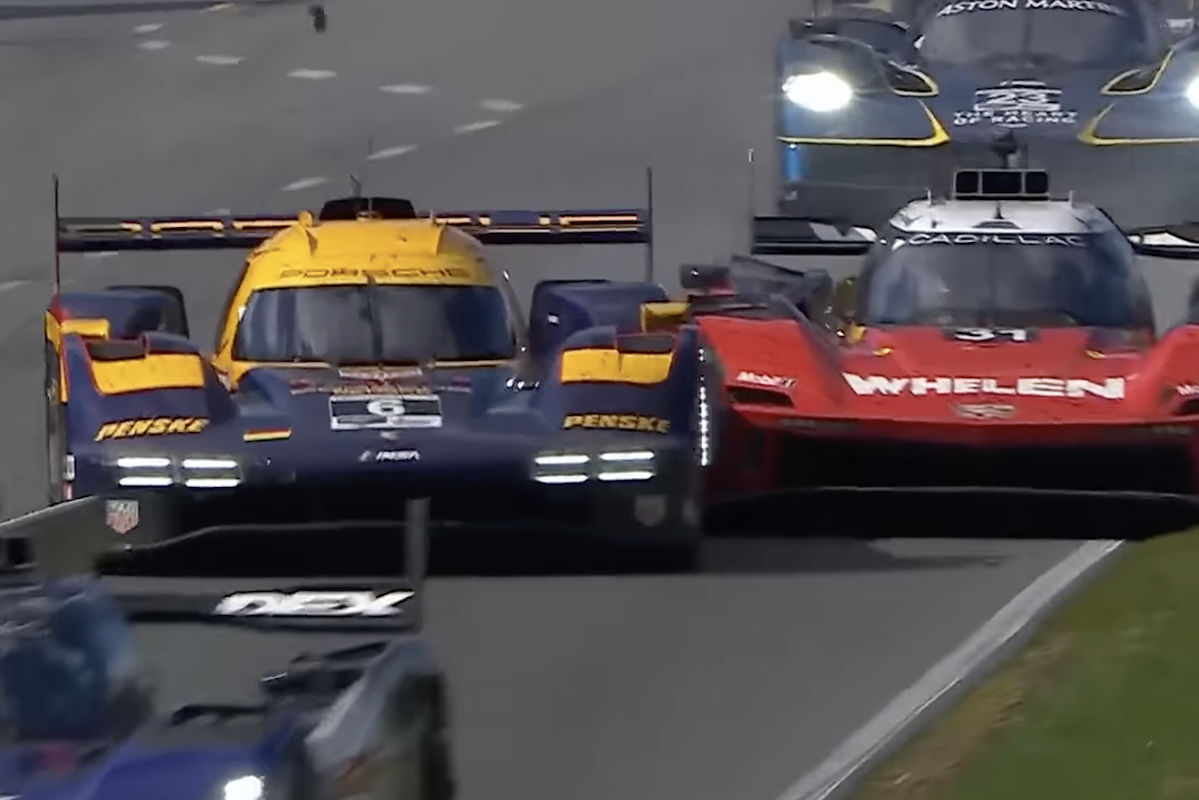
One could argue that, had it not been for the contact with the #31 Cadillac with around ten minutes remaining at Road America, the #6 Porsche would most likely have finished on the podium. A position earned, once again, through flawless execution and the mistakes of others.
But perhaps the more relevant question is why Kévin Estre found himself forced into that situation in the first place.
“I could have left a little more room,” he said. “He could have backed off as well. He just had his nose here. I don’t think there’s 100 percent fault to give to anyone.”
Burdened by extra weight and reduced power, the 2026 Porsche 963 has effectively lost its raceability — its ability to attack or defend in wheel-to-wheel combat. More than outright lap time, this is arguably where BoP has had its greatest impact on Porsche’s LMDh challenger.
“One thing is for sure is that we have to drive like maniacs to be in that position at the moment, “he added. “That’s the way it is.”
When a driver of Estre’s calibre openly admits he has to “drive like a maniac” simply to remain in contention, it underlines how Balance of Performance is now influencing not only performance, but the very way races are being contested.
Just as Toyota experienced in the WEC in recent seasons, Porsche Penske Motorsport now finds itself forced to compensate for the limitations imposed by BoP through constant risk-taking. Under those circumstances, incidents such as the one seen at Road America become almost inevitable.
Last year, Porsche Penske Motorsport’s operational excellence enabled it to overcome an extremely restrictive BoP. This season, however, with the level of competition having risen yet again, execution alone is no longer enough.
When the competitive order becomes blurred
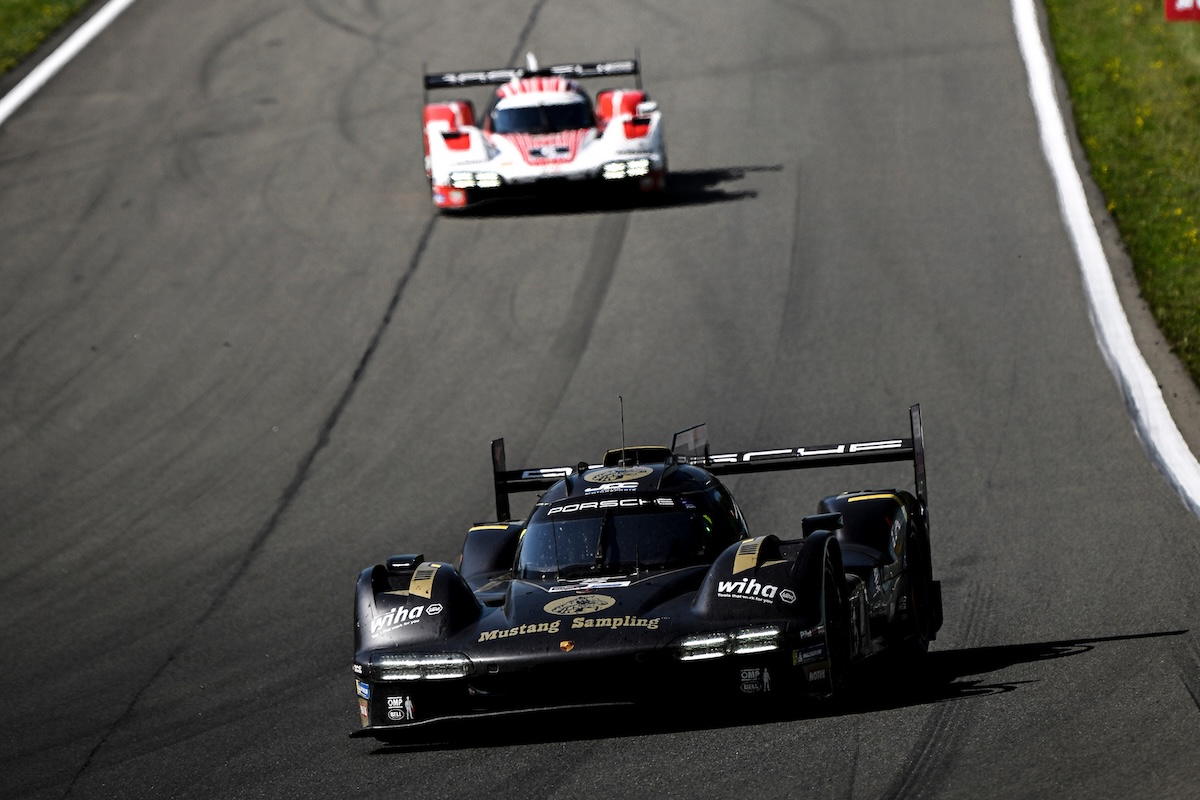
While private entries have disappeared from the top class of the WEC, IMSA remains determined to keep customer teams on its GTP grid. That is why the series approved JDC-Miller MotorSports’ request to continue racing its Porsche 963 without the 2026 Evo Jokers, a decision driven by financial considerations.
Different homologation specifications inevitably mean different BoP calculations. At Watkins Glen, the 2026 Porsche carried 15 kilograms more than the 2025 version while also receiving 3.7 percent less power below 230 km/h. At Road America, the weight difference was reduced to four kilograms (1,066 kg versus 1,062 kg), yet the newer specification still received less power below 230 km/h (96.5 percent versus 97.3 percent).
Admittedly, Porsche’s Evo Jokers do provide measurable gains, but not nearly enough to justify such discrepancies, particularly at circuits such as Watkins Glen and Road America, where the upgrades offer only limited performance benefits.
While Team Penske endured four consecutive races without a podium — a first in IMSA competition for the organization with either Acura or Porsche — little JDC-Miller MotorSports collected three podium finishes, including a victory.
Those results have propelled the Minnesota-based outfit to within striking distance of the Mooresville giant in the Teams’ standings, while allowing Laurin Heinrich to remain Jack Aitken’s closest challenger in the Drivers’ Championship.
Watching JDC-Miller challenge Porsche Penske Motorsport through bold strategy or opportunistic race circumstances would be perfectly understandable. Watching the Minnesota team consistently outperform the joint venture between America’s largest racing organization and the most successful manufacturer in endurance racing history, with what most fans perceive to be the same car, is far more difficult to rationalize. Even more so considering JDC continues to race the technically older specification and fields a driver lineup that is objectively less evenly matched.
It would be interesting to hear what The Captain thinks about it…
Two incidents that left a mark…
Race control has also found itself at the center of the debate.
At Watkins Glen, Earl Bamber collided with the #21 Ferrari, sending it heavily into the barriers. The impact was severe enough for AF Corse to replace the car’s chassis. To the surprise of many, the #31 Cadillac received no penalty.
According to several well-informed sources, race control later acknowledged internally that mistakes had been made in its assessment of the incident.
Then, at Road America, history appeared to repeat itself. Jack Aitken struck Felipe Nasr from behind, spinning the #7 Porsche into the gravel trap. Once again, no penalty followed.
Contact between the No. 7 Porsche Penske and the No. 31 Whelen Cadillac GTP Cars. 😳
Motul SportsCar Endurance Grand Prix 🟢: Sunday, August 2 | 11:40AM ET 📺: Peacock 🌍: IMSA YouTube Live, IMSA .tv 📻: IMSA Radio pic.twitter.com/pxXFwDB3vq
Every officiating decision is, by nature, open to debate. That is an inherent part of motorsport, which is precisely why FIA championships rely on a panel of stewards rather than a single race director. The issue arises when, for the same competitor, the coin consistently seems to land on the same side. At that point, questions inevitably begin to emerge about the consistency of the officiating.
Laurens Vanthoor captured that sentiment with characteristic irony on X, posting a single line:
As a reminder, Jim France, NASCAR Chairman and CEO, is also co-owner of Action Express Racing. NASCAR, in turn, owns IMSA Holdings. The Belgian was not making an accusation. In just a few words—and with a touch of humor—he gave voice to a question many inside the paddock were quietly asking. That said, we categorically reject the idea that there is any connection between Jim France’s dual role and the officiating decisions.
Given the pace shown by the 2026 Cadillac V-Series.R, the quality of Action Express Racing’s work and the form displayed by Jack Aitken, Earl Bamber and Fred Vesti, the #31 Cadillac certainly does not need any additional help to win races or championships.
Are race circumstances having too much influence?
That impression is reinforced by IMSA’s very racing philosophy.
Full Course Yellows are deeply embedded in the DNA of the championship. They erase gaps, reset strategies, create suspense and often deliver spectacular finishes. Yet they also reduce the value of work carried out over multiple stints. A perfectly executed strategy can disappear in a matter of minutes.
Race circumstances therefore play an increasingly significant role in determining the final result. They can also allow less balanced driver lineups to remain in contention until the closing stages, whereas a race run without interruptions would more naturally allow the competitive hierarchy to emerge.
As track position becomes increasingly decisive in modern endurance racing, the contribution of drivers who complete their stints early in the race inevitably carries less weight under such circumstances. It is one of the reasons why Ben Keating ultimately chose to leave IMSA in favor of the World Endurance Championship.
“I’d like my stints to have a greater impact on the final result,” he explained. “Right now, it sometimes feels like we’re just here to pay the bill.”
His point was clear: repeated late-race cautions can dramatically reduce the value of the work accomplished over the preceding hours.
Likewise, with repeated Full Course Yellows and the pass-around procedure regularly bringing cars back into contention, a perfectly balanced driver lineup is no longer an absolute requirement to fight for top results in IMSA. In the WEC, by contrast, a six-hour race such as São Paulo — run without a single Safety Car interruption — leaves very little room to hide weaknesses within a driver lineup.
This is not a criticism of the American model. It is simply a different philosophy. Whereas the WEC tends to reward consistency, execution and long-term race management, IMSA deliberately embraces unpredictability. Both approaches are perfectly legitimate. The concern arises only when that unpredictability is compounded by a controversial Balance of Performance or by officiating decisions that competitors struggle to understand.
Preserving what makes IMSA special
It is precisely because IMSA has become one of the world’s finest endurance racing championships that these questions deserve to be asked.
Spectacle is part of its identity, and nobody wants to see that change. But a championship of this caliber can only thrive if one fundamental principle remains intact: when the checkered flag falls, everyone should understand why one car was faster than another, why one driver was penalized while another was not.
Above all, they should understand why the winner deserved to win.
Don't miss any news
Get our weekly newsletter with all the latest endurance racing news.