The heat was impossible to ignore. Even as the sun began its slow descent over the Circuit de la Sarthe, the air remained heavy and still. Guests arriving for the inauguration of M24 instinctively searched for shade before making their way towards the entrance. Most paused in the same place.
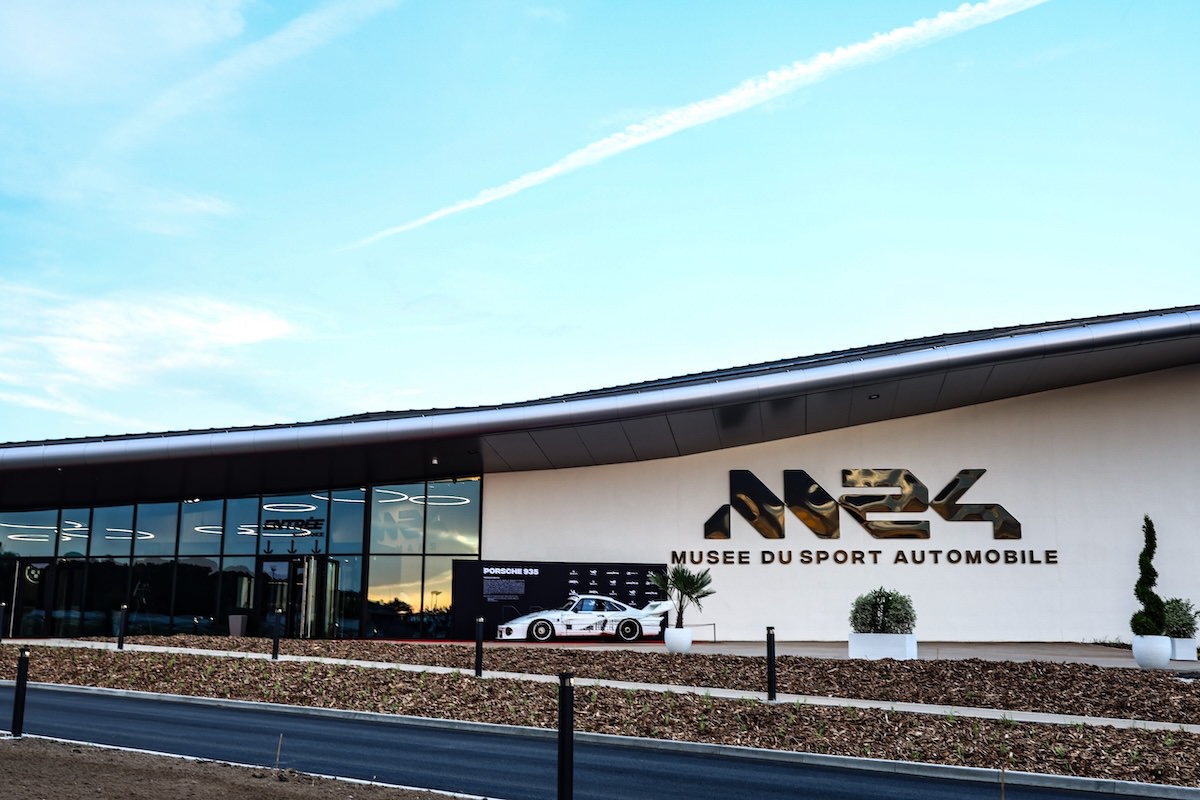
Positioned outside the building stood a Porsche 935 carrying the museum’s colours and proudly displaying the M24 logo across its bodywork. It felt like more than a display piece. More like a welcome committee. A reminder that this was not a museum about static objects, but about racing cars and the lives they had lived. Beyond the museum walls, another story was already unfolding.
Less than two weeks before the 94th running of the 24 Hours of Le Mans, the circuit had begun its annual transformation. Trucks moved through the paddock. Team personnel crossed paths carrying equipment and paperwork. Garages were slowly filling. The familiar hum of preparation had returned to the place where endurance racing has measured itself for more than a century. Inside M24, however, time seemed to move differently.
Formula 1, SportsCars, Rally cars, IndyCar, motorcycles and Can-Am all shared the same roof. So did the people who shaped them. Rafael Nadal, Ferrari Formula 1 team principal Frédéric Vasseur, four-time Le Mans winner Yannick Dalmas and Indianapolis 500 winner Simon Pagenaud were among those present to witness the opening of what its creators believe is the most ambitious motorsport museum project ever undertaken.
And that ambition becomes apparent almost immediately.
Why did Le Mans need a new museum?
Le Mans has never lacked history. The original museum opened in 1961. It evolved in 1991 and was further enhanced during the centenary celebrations of the 24 Hours in 2023. Yet those behind M24 believed there was another step to take.
Or rather, many stories to tell. The creation of MACO in 2022, bringing together the Automobile Club de l’Ouest and Richard Mille, marked the beginning of a project designed to go beyond Le Mans itself. The objective was not to replace the existing museum, but to rethink its purpose entirely.
“The M24 is not a look towards yesterday,” wrote Richard Mille and ACO president Pierre Fillon. “It is an invitation to understand where we come from in order to imagine what motorsport will become tomorrow.”
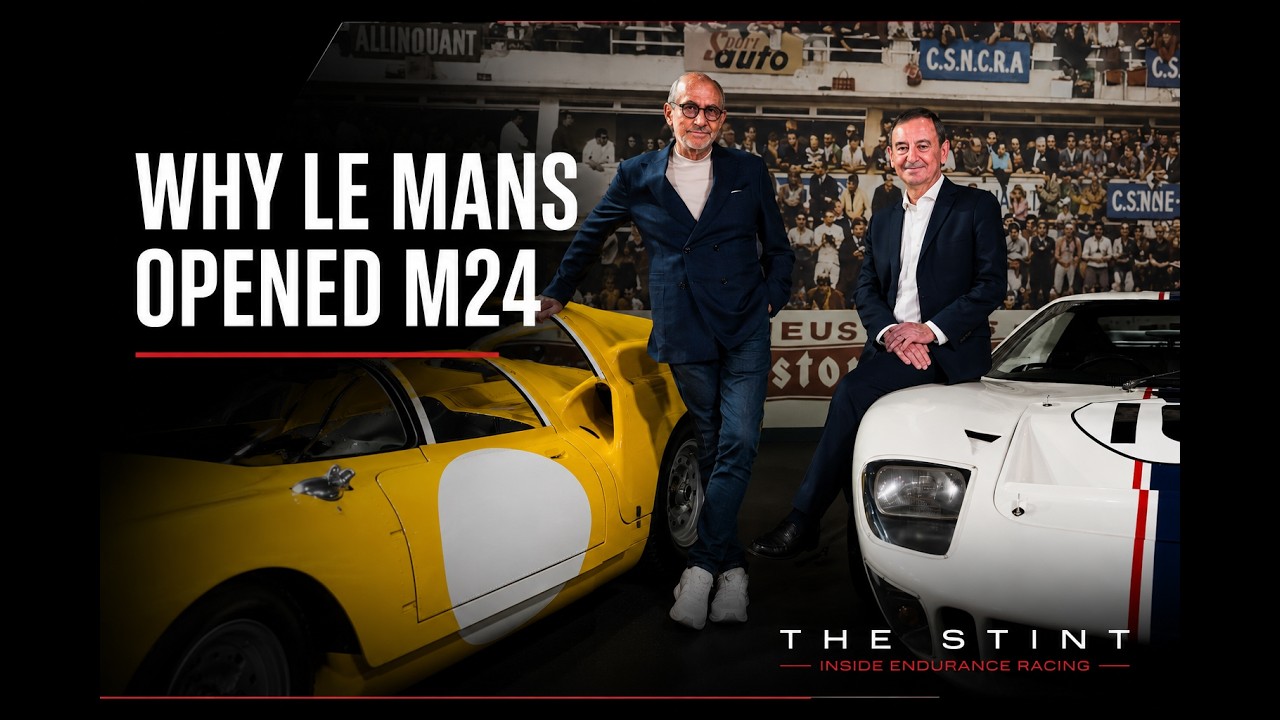
“Today, my childhood dream has come true” he added. “Our wish is to share this glorious history with those who love beautiful cars, with everyone who enjoys a new experience, and, most importantly, to pass on the legacy to the next generations. I have collected, somewhat compulsively I must admit, a collection of cars, works of art, that retrace 70 years of human endeavour, technical prowess, feats of innovation and design. They are all beauty queens, that, like all masterpieces, convey emotion and magnify elegance.”
That philosophy runs through every gallery.
Le Mans remains the backbone of the experience, but it is no longer the only chapter. Formula 1, rallying, IndyCar, motorcycles and Can-Am all sit alongside endurance racing, creating a broader narrative about innovation, risk, competition and human endeavour.
How do you bring motorsport history to life?
That question sits at the heart of M24. After all, museums are full of extraordinary objects. What they often struggle to convey is the emotion attached to them.
The team behind M24 approached the challenge by building the visitor experience around the rhythm of a race rather than around a collection.
“M24 is not only a major cog in today’s motorsport world, it is also a custodian of its history” Pierre Fillon explained. “We have shared aims: international renown for our brands, and for M24 to be a pinnacle of local tourism and culture and a source of prosperity.”
Visitors begin with scrutineering, that uniquely Le Mans moment when the race traditionally meets the city. They move through the tension of the start, the uncertainty of the night and the intensity of the pits before eventually reaching the finish line and the celebration of champions.
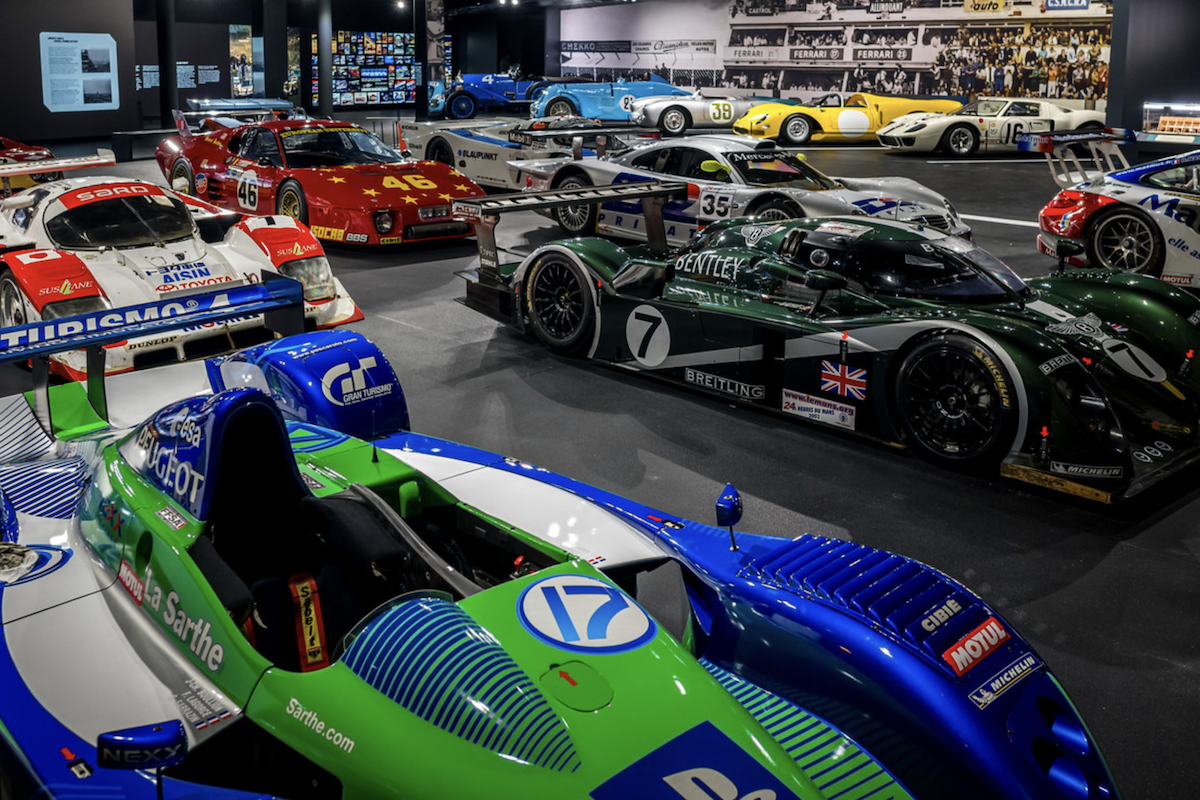
The amazing scenography, created by The Immersers, favours immersion over observation. Insane full-scale dioramas recreate scenes from motorsport history. Interactive displays encourage visitors to engage with the materials and tools of racing. One room recreates the atmosphere of Le Mans after dark, that strange moment when drivers battle fatigue beneath the headlights while thousands of spectators settle into a night unlike any other in motorsport.
It feels less like walking through a museum and more like stepping into a series of memories.
What makes M24 unlike any other motorsport museum?
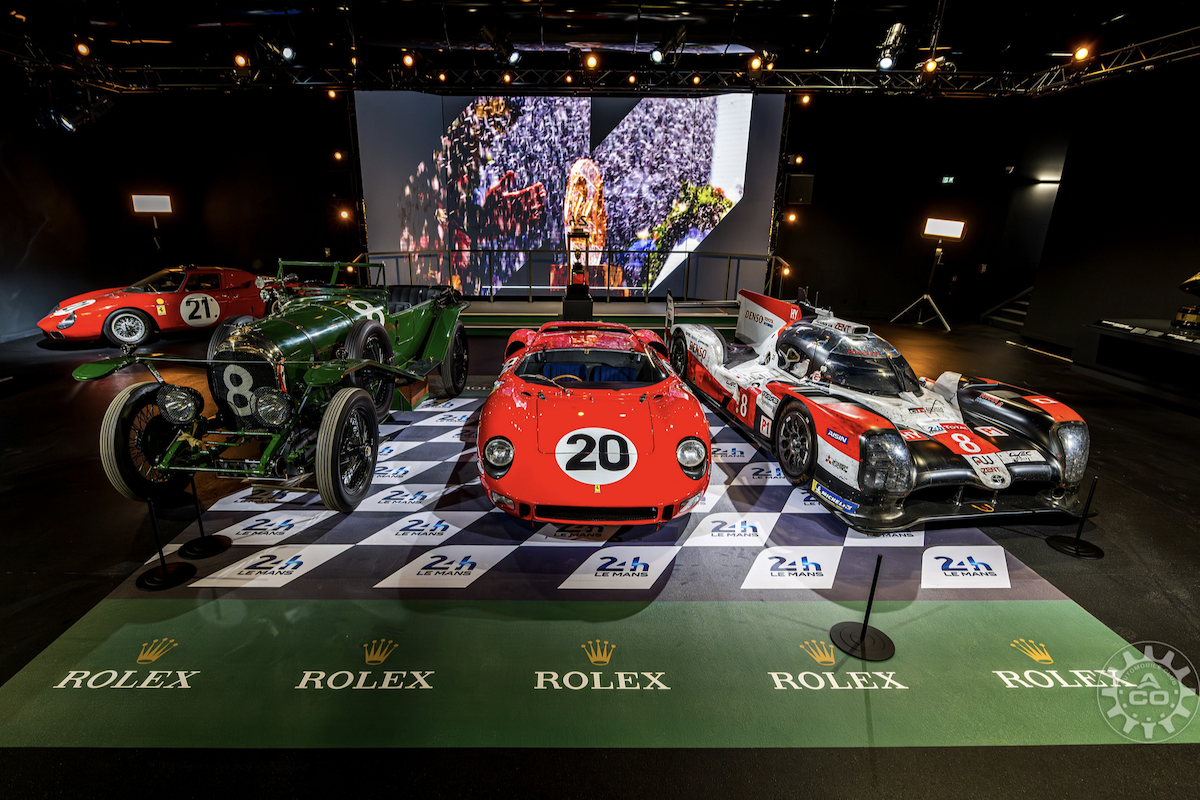
The obvious answer is the collection. More than 120 authentic vehicles occupy the museum’s 8,600 square metres, joined by 4,667 scale models representing every car to have started the 24 Hours of Le Mans since 1923. Six different disciplines are represented under the same roof.
Yet the significance lies less in the quantity than in the conversations the cars create. A few minutes can take visitors from the pioneering days of the automobile to the Hypercar era.
The Bentley 3 Litre that won Le Mans in 1924 remains the oldest surviving Le Mans winner in existence. Restoring it required 3,700 hours of work. Nearby sits the Matra MS670B that completed France’s famous hat-trick of victories in 1974. A little further on stands Lewis Hamilton’s Mercedes W09, the car that delivered his fifth Formula 1 world title and a fitting symbol of the seven-time world champion’s role as patron of the museum.
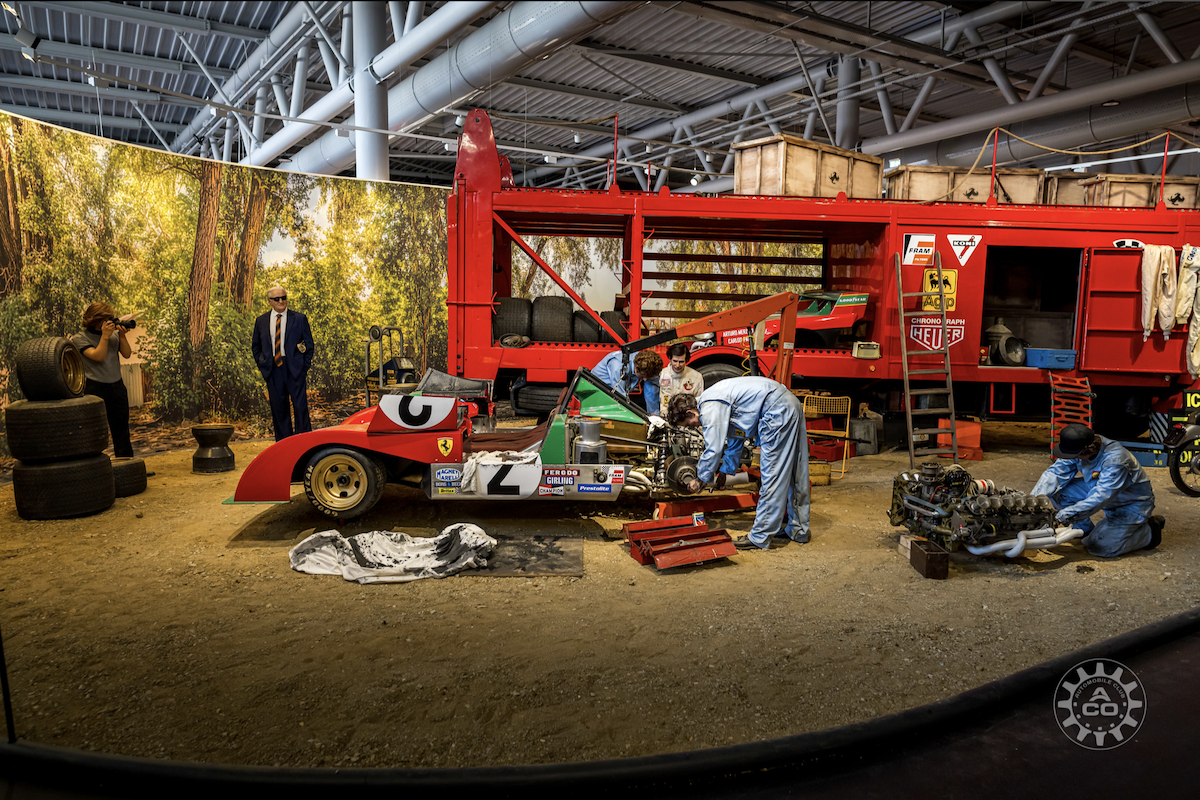
Elsewhere, a Porsche 959 recalls Dakar glory. The Mazda 787B represents one of endurance racing’s most beloved sounds. Sébastien Loeb’s Citroën Xsara WRC reminds visitors that greatness in motorsport has never belonged to a single discipline.
The collection includes 48 endurance cars and 16 Formula 1 machines alone. Yet what lingers are the stories attached to them.
One of the most recent belongs to the Porsche 963 fielded by Hertz Team JOTA. After a major accident during Le Mans week in 2024, mechanics rebuilt the car in just 36 hours, one of those feats of determination that endurance racing continues to produce.
The cars matter, certainly.
But the stories behind them matter even more.
How do you build a museum in eleven months?
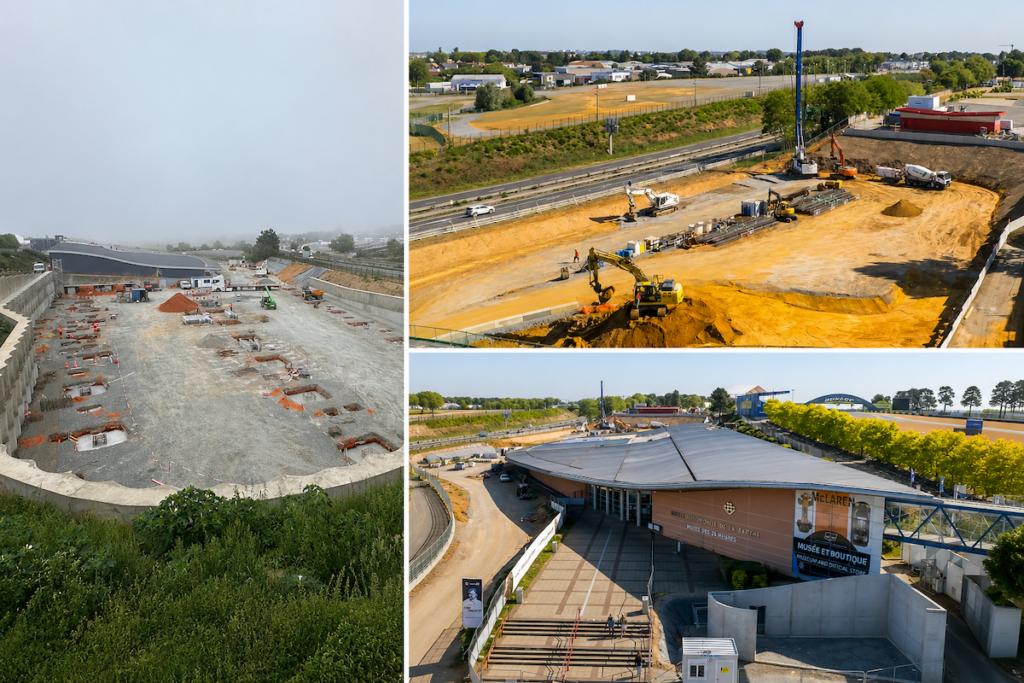
The scale of M24 becomes easier to appreciate when remembering how little time there was to build it.
The previous museum remained open until Le Mans Classic in July 2025. Less than a year later, guests were walking through an entirely transformed venue on the eve of the 2026 24 Hours of Le Mans.
Eleven months.
For a project of this size, most would have expected a timeline measured in years rather than months.
Behind the scenes, the challenge became a race against the calendar. More than 40,000 cubic metres of earth were excavated as 23 companies and 14 different trades worked in parallel to deliver the project, the vast majority drawn from the Sarthe region itself. It was not simply the construction of a museum, but a collective effort involving an entire local network of expertise.
Pierre Fillon often speaks of the M24 as a tool for transmission. The construction phase reflected that same philosophy. Beyond creating a new cultural destination, the project was also intended to showcase the know-how of a region whose identity has been intertwined with motorsport for more than a century.
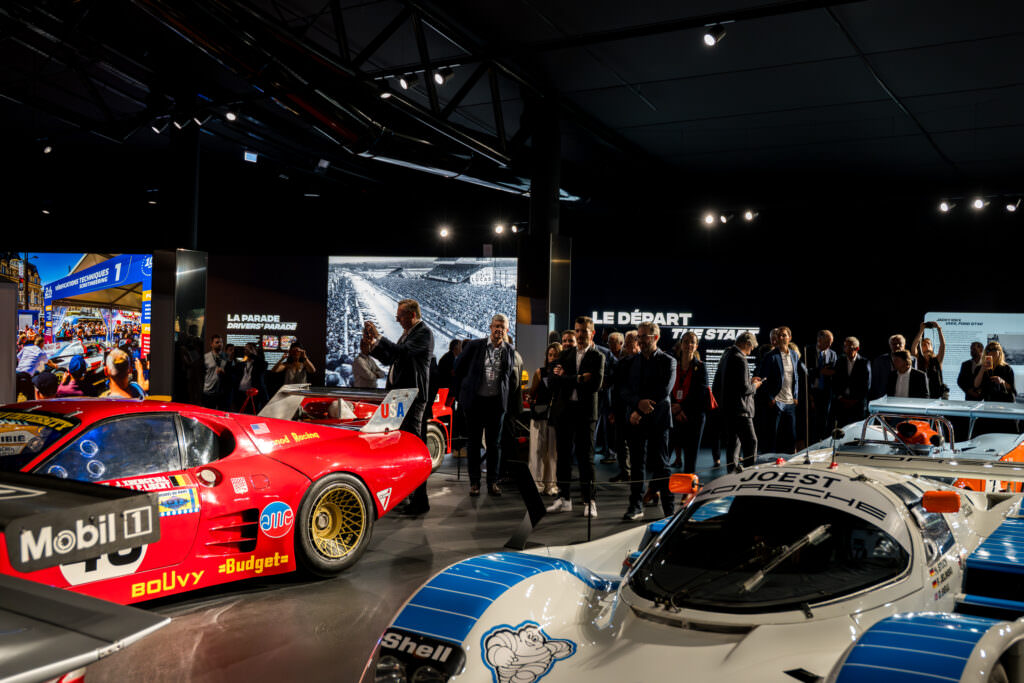
Only once visitors step inside do they realise that the challenge extended far beyond meeting a deadline.
Architect Frédéric Audevard designed the building around movement. Its sweeping forms draw inspiration from the aerodynamic shapes of modern endurance prototypes, creating the impression of motion even when standing still. Natural light accompanies visitors throughout the galleries, while the architecture deliberately avoids competing with the collection it houses. Instead, it guides the eye towards it.
The details reveal an equally thoughtful approach.
The white chosen throughout the building is a subtle nod to the Ford GT40 entered by Équipe de France for the 1967 24 Hours of Le Mans. Underfoot, the flooring takes inspiration from the texture of the Circuit de la Sarthe’s asphalt. The sensation is almost subconscious, but effective: visitors never entirely leave Le Mans behind.
That may be the building’s greatest success. This is not a museum that happens to stand beside the circuit. It feels as though it could only have been built here.
Why will fans keep coming back?
Because M24 was never intended to be a static collection.
Temporary exhibitions will bring new cars and new stories. Manufacturers and institutions will continue to loan significant vehicles. Many of the exhibits remain operational, ensuring the museum retains a connection to the living world of motorsport rather than becoming a simple archive.
Perhaps that is the most striking achievement of all.
Outside, teams were already preparing for another edition of the world’s greatest endurance race. Inside, visitors were travelling through more than a century of triumphs, failures, innovations and obsessions.
The two scenes were not separate. They were part of the same story. Few places in the world allow visitors to walk from the dawn of the automobile to the modern Hypercar era in less than two hours. M24 now does.