
The philosophy behind RaceOn owes much to the experiences of its founders, both of whom spent years working at the highest level of motorsport.
An Italian born in South Africa, where he studied mechanical engineering at the University of Cape Town and took his first steps in motorsport, Franco Chiocchetti moved to Germany in 2001. He spent fifteen seasons in the Class 1 DTM with ABT and Audi before becoming technical director of ABT’s Formula E programme, with which Lucas di Grassi won the championship in 2017. He subsequently joined HWA to help establish what would become Mercedes’ highly successful Formula E programme.
Not all his memories of those years at the highest level are happy ones. Chiocchetti also experienced periods when he was unhappy in his work, despite never wanting to turn his back on motorsport. Those experiences inspired him to offer other engineers an alternative.
The idea of starting his own company had been on his mind for some time. Taking the plunge, however, was another matter. Ultimately, it was Mercedes’ decision to relocate its team to Brackley, close to its Formula 1 operation, that prompted him to act.
Neither he nor Pim de Wit, his future business partner, wanted to move to England. Encouraged by Ian James, they founded RaceOn in 2021, with Mercedes becoming their first client.
The best of both worlds

Having spent much of their careers working for major manufacturers, both men were familiar with the reservations surrounding the use of freelance engineers, particularly when it came to confidentiality and intellectual property.
“Our concept was to give the teams the flexibility of a freelancer, but the security of an employee,” explains Chiocchetti.
All RaceOn engineers are employed full-time by the company and assigned to its clients. They have a six-month notice period, while contractual safeguards govern their potential moves from one programme to another. RaceOn is currently working with six Formula E teams simultaneously, which, according to its co-founder, demonstrates its ability to protect each client’s confidential information.
The flexibility of the model is perhaps best illustrated by practical examples. When one of its engineers decided to leave RaceOn, the company found a replacement and arranged a two-month handover to ensure uninterrupted service for the client.
But the model is equally compelling from the engineers’ perspective.
“They spend five years in a championship and then they’re bored, they want to do something else,” Chiocchetti told us. “You don’t need to change jobs. You don’t need to relocate. You just tell me, and we find you a new position.”
Some engineers work full-time at their team’s premises, while others work from home, provided the client allows it. That geographical freedom is far from insignificant in an industry where career progression often comes at the cost of relocation.
There is also a compelling argument for teams. By insisting that every engineer be based at the factory, an organisation may inadvertently exclude some of the most talented people in the industry. In Chiocchetti’s view, allowing engineers to work remotely, wherever practical, gives teams access to a wider pool of expertise. Bringing the best minds together does not necessarily mean bringing them under the same roof.
Putting people in a position to succeed
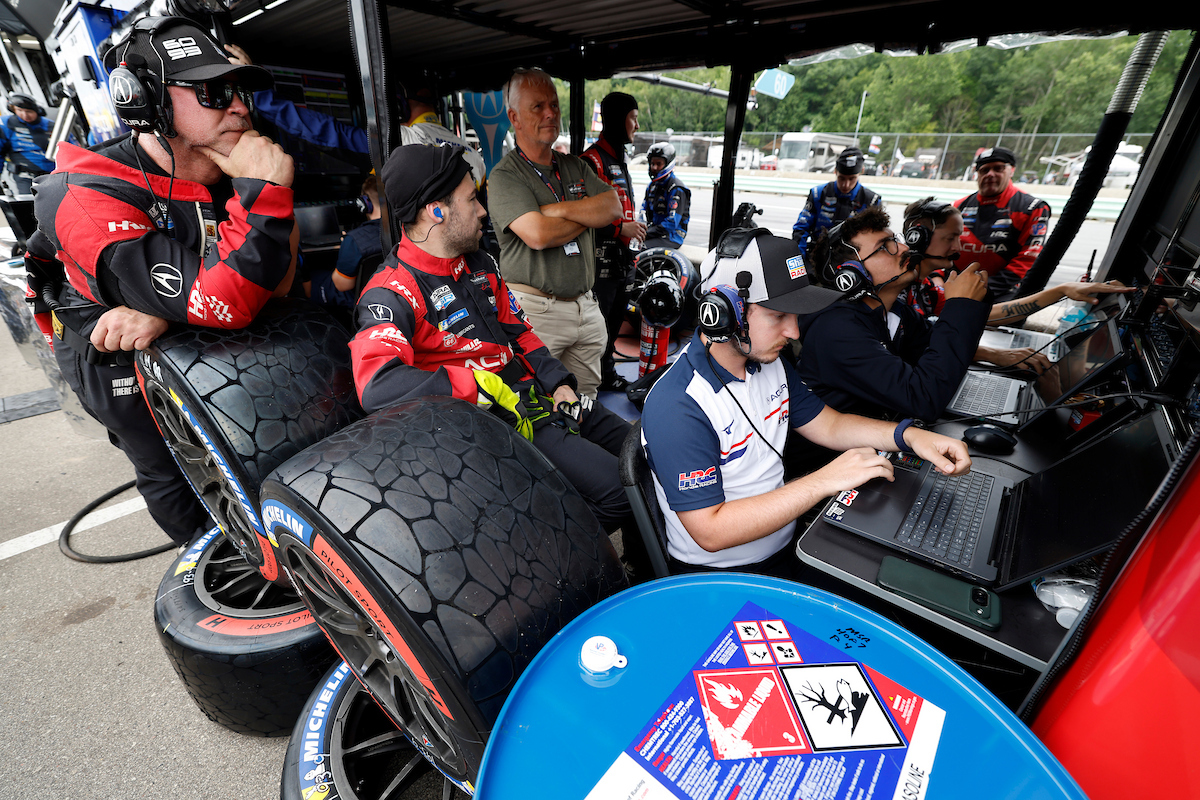
The challenge, of course, is identifying the individuals most likely to thrive in a particular environment. An outstanding engineer is not necessarily the right engineer for every team. Beyond technical expertise, personality, working methods and interpersonal relationships all have a part to play.
That is why RaceOn takes the time to understand not only a client’s technical requirements, but also its organisational structure, working culture and the people with whom an engineer will be working. Finding the right person is as much about understanding the team as it is about assessing the engineer.
“The biggest thing for me is putting people in a position to succeed,” explains Chiocchetti. “I will never send an engineer to a customer where I don’t believe they will succeed.”
RaceOn primarily looks for experienced engineers capable of making an immediate contribution, without closing the door on recent graduates. Chiocchetti likes to talk about the “uncut diamonds” he occasionally discovers straight out of university, sometimes approaching a client who had not even been looking to fill a position.
Race engineers, performance engineers, systems engineers, high-voltage specialists, simulator engineers and tyre engineers: the company’s expertise spans a broad range of disciplines. Alongside the provision of engineering personnel, its core business, RaceOn undertakes specific engineering projects, such as the development of thermal tyre models, and offers a more selective recruitment service.
In 2024, RaceOn established a US base near Charlotte. The company has worked on the Acura and BMW programmes in IMSA, provides engineering services to NASCAR teams and has recently signed an agreement with an IndyCar team.
In the FIA World Endurance Championship’s Hypercar class, its engineers are working with organisations including JOTA, WRT and Ford, according to Chiocchetti. Its activities also extend to the DTM and GT World Challenge, as well as E1, the electric powerboat racing championship it has supported since its inception. Beyond its work with racing teams, RaceOn is also involved in development projects for a GT3 manufacturer and a tyre manufacturer.
Behind the trophies
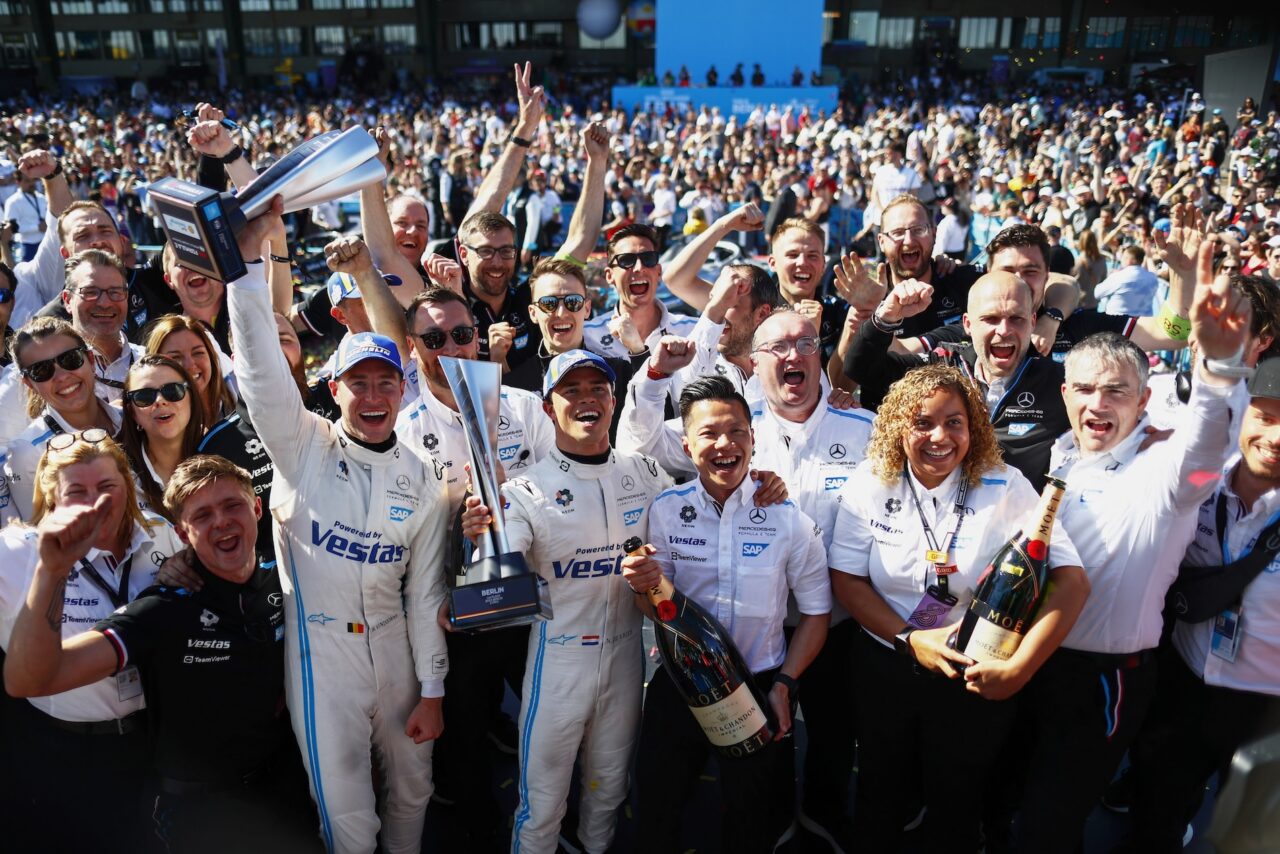
There are seventeen of them at the time of our interview. Seventeen colleagues spread across different racing programmes. Every year, Chiocchetti and de Wit bring them together for a few days, away from the racetracks and telemetry screens. After Mallorca, the Bavarian mountains, Vienna and Croatia, their most recent gathering took them to the Maltese coastline.
It is a significant investment for a company whose co-founder readily acknowledges the narrow margins of the business. But how do you maintain a sense of belonging when your employees spend their working lives wearing another team’s colours?
“I’m not in this business to buy a yacht in Monaco,” he told us. “I’m in the business because I’m passionate about motorsport. I’m passionate about engineering. And I’m passionate about people.”
That final remark says much about the man himself. He regrets how little attention engineering education devotes to psychology, management and interpersonal skills. Yet these are essential qualities in an environment where the pressure to deliver results and the demands of working in close quarters regularly put personalities to the test.
He likes to remind people that there may be only one name on a trophy, even though hundreds have contributed to winning it.
It is to some of those people that RaceOn hopes to offer a different career path. The opportunity to change cars, teams or championships without having to rebuild their lives around every new challenge. And to hold on to the enjoyment that first drew them to the racetrack.