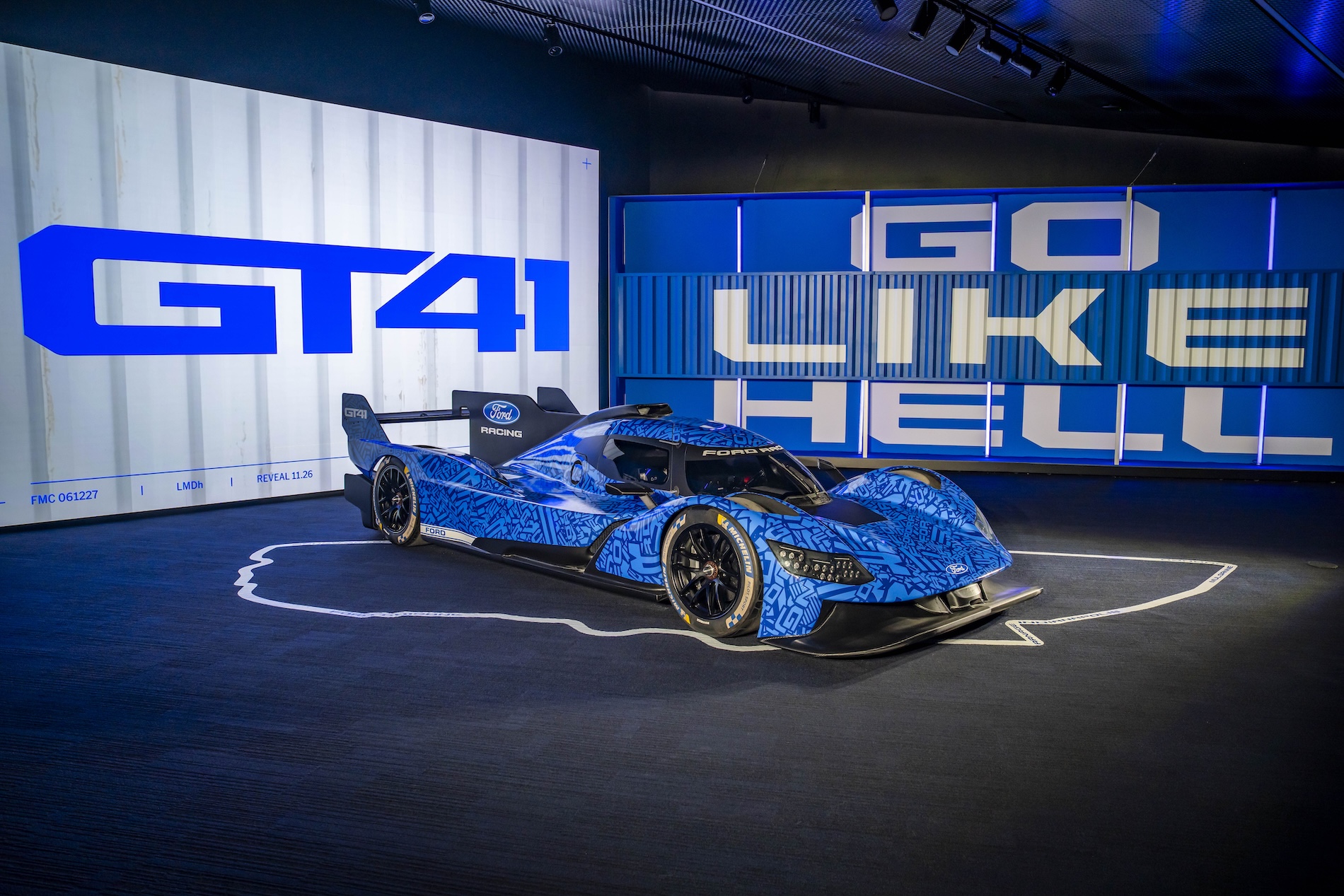
It is hard to imagine a more quintessentially American setting than Detroit’s Ford Field on Thanksgiving Day to unveil the car with which Ford intends to challenge for outright victory at the Le Mans 24 Hours once again. The manufacturer revealed its new Hypercar during the NFL game between the Detroit Lions and the Chicago Bears.
“Ford’s racing history began 125 years ago when my great-grandfather won a race that helped him found Ford Motor Company,” said Bill Ford, executive chair of the company and Henry Ford’s great-grandson. “Our 1-2-3 triumph at Le Mans in 1966 remains one of the defining moments in motorsport history. We cherish that history, but we are driven by the opportunity to take on new and greater challenges.”
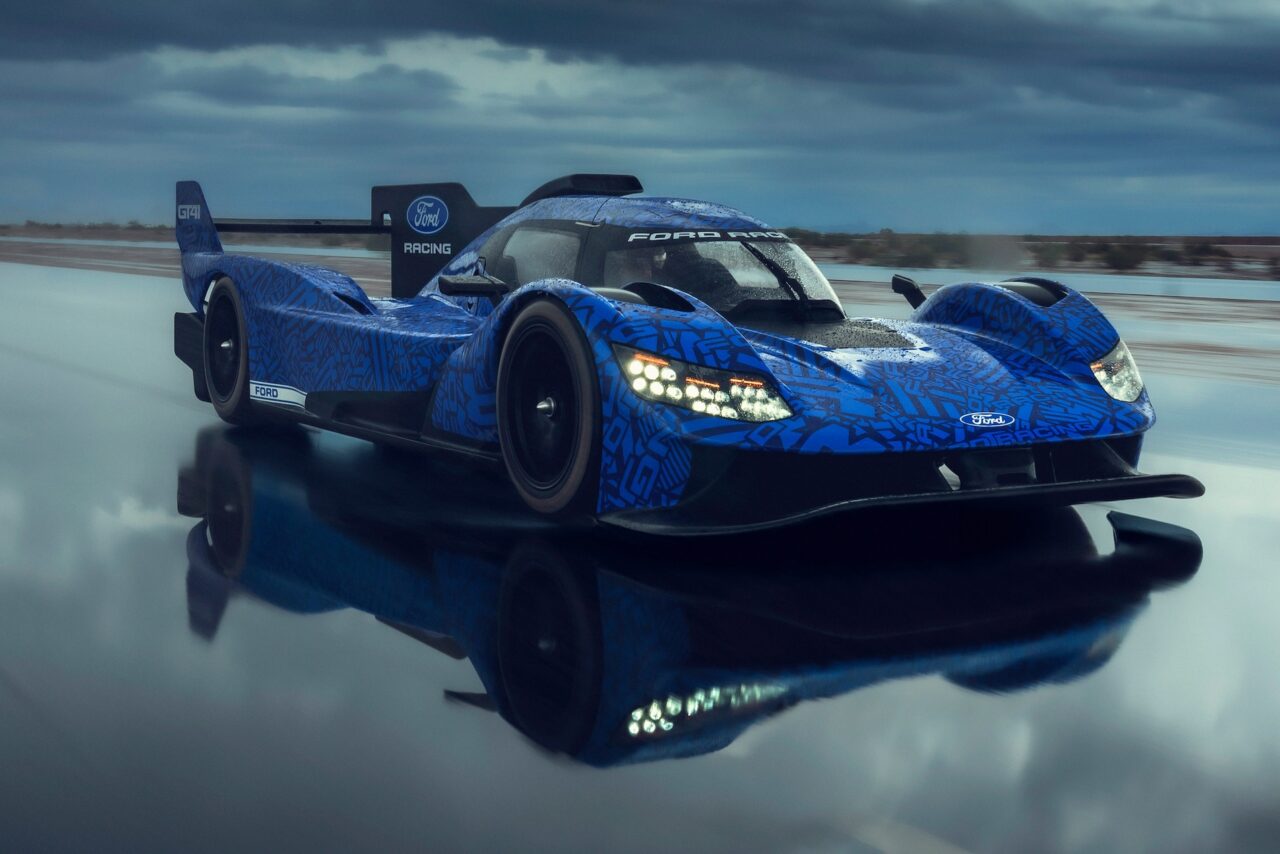
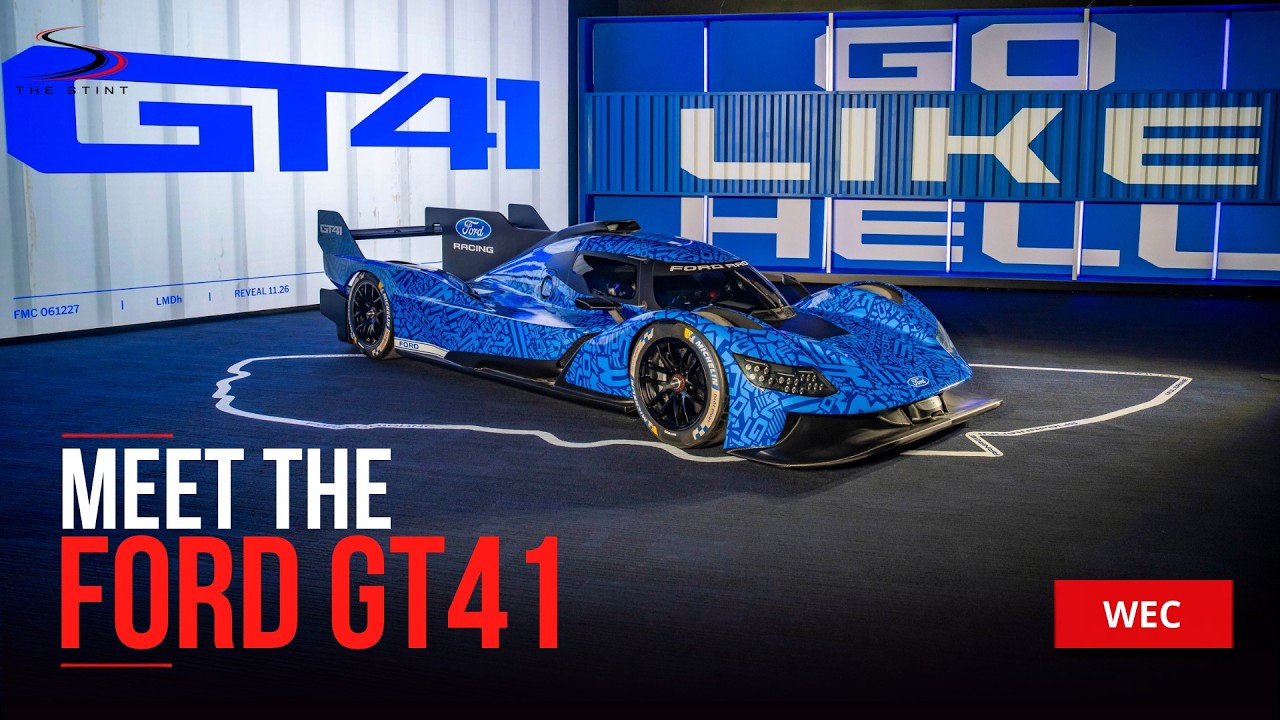
From the American flag to a bald eagle and a depiction of The Spirit of Detroit sculpture, several references to the United States are hidden within the blue livery. The design will evolve further ahead of the opening round of the 2027 FIA World Endurance Championship in Qatar in March. But we now know the car’s name: GT41.
Why GT41?
The GT40 took its name from its 40-inch height, equivalent to approximately 1.02 metres. In the case of the GT41, it is the 41 inches (1.04 metres) from the ground to the top of the engine air intake that have dictated the choice of name.
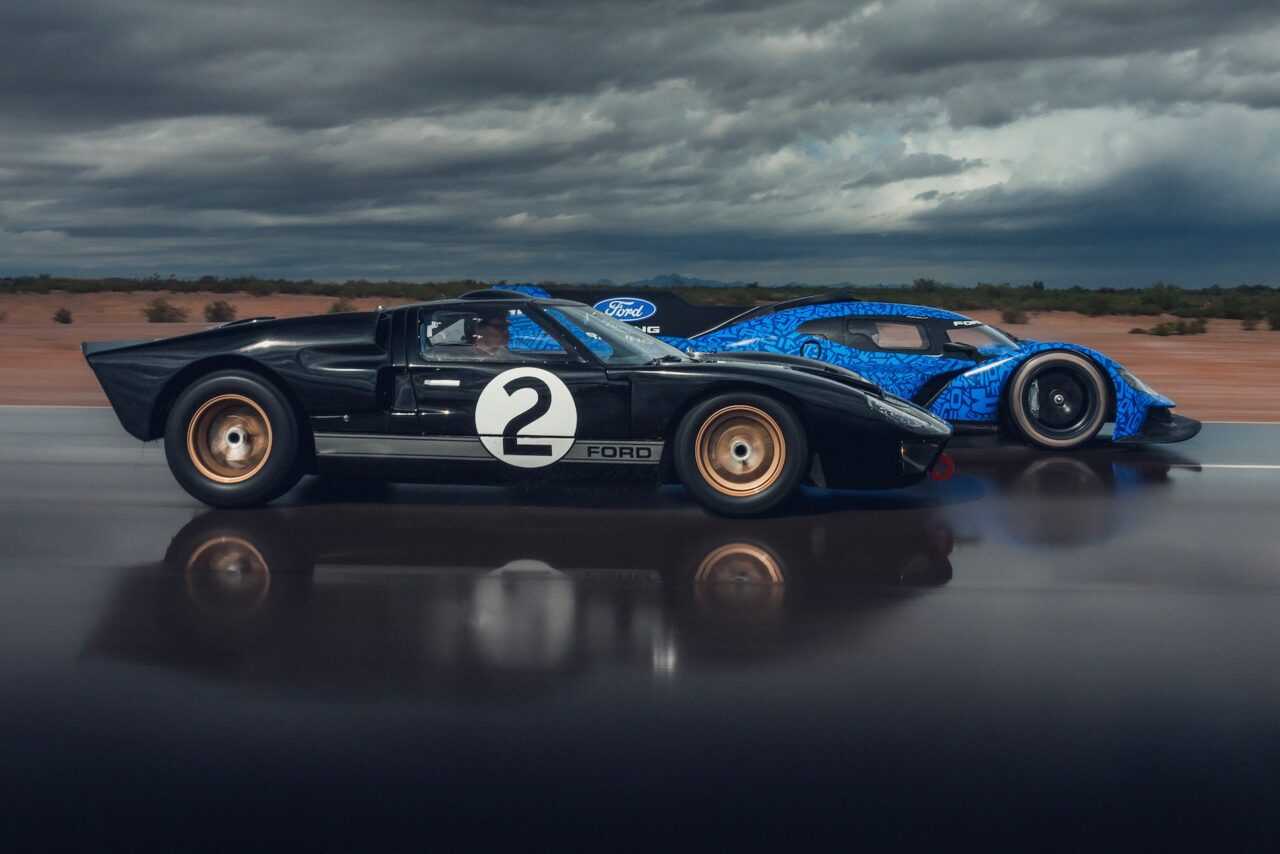
A happy coincidence for Ford, given that the LMDh technical regulations stipulate a maximum height of 1,060mm, or 41.73 inches. The opportunity to establish a direct link with the GT40 was too good to pass up. A clever piece of marketing, given how firmly the GT40 name remains embedded in the public consciousness.
“The Ford GT41 is exactly the kind of audacious, go-like-hell project that gets our blood pumping,” continued Bill Ford. “It’s our chance to return to Le Mans and compete for the outright win.”
While Ford returned to winning ways at Le Mans in 2016, claiming GTE Pro honours with the Ford GT 50 years after its maiden triumph at La Sarthe, the GT41 has been conceived as the successor to the GT40s that claimed four consecutive outright victories between 1966 and 1969.
A V8 born in Dearborn
The Ford GT41 has been built to LMDh regulations. The American automotive giant turned to Oreca for its chassis, but the engine was developed in Dearborn. It is a naturally aspirated 5.4-litre V8 derived from the Coyote family, which also includes the 5.0-litre unit found in the road-going Mustang GT.
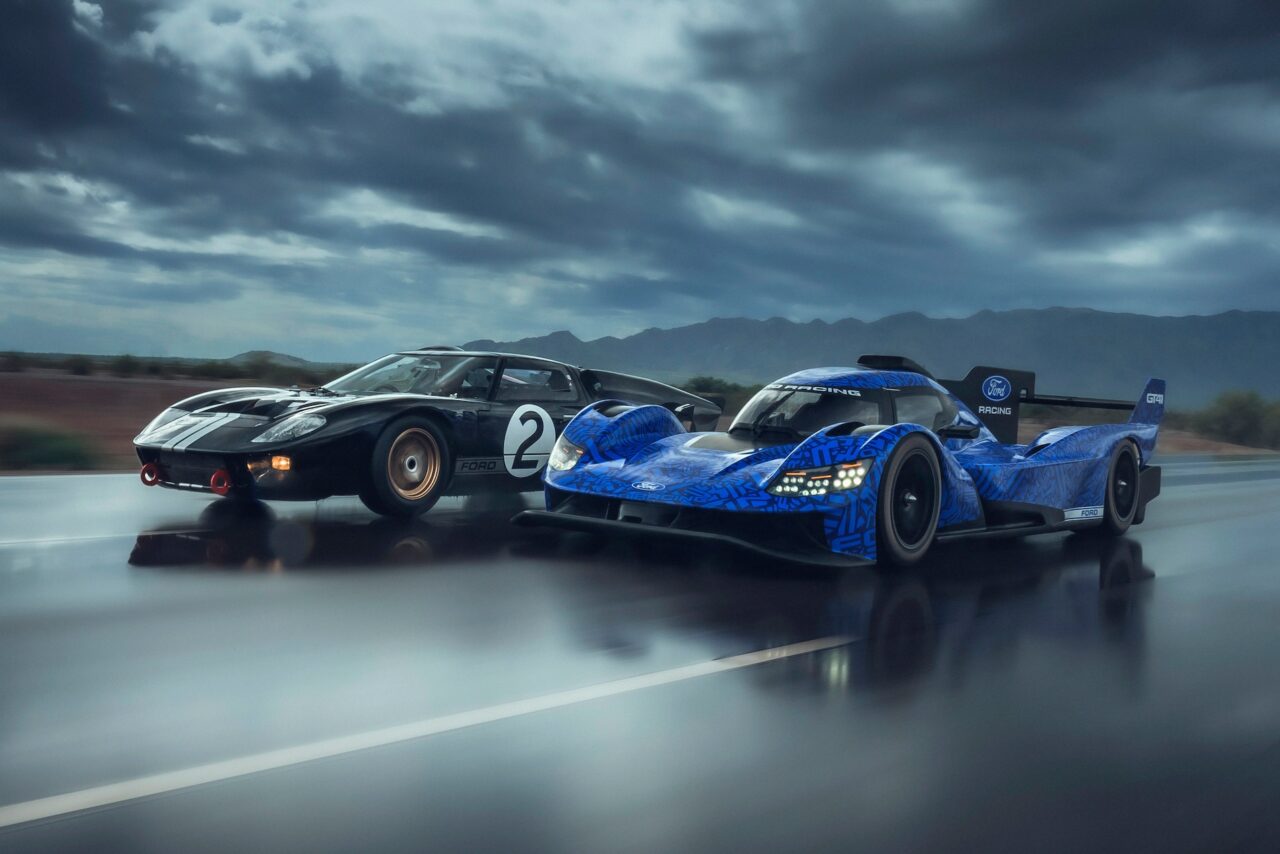
One detail worth highlighting is that this is the first racing engine to have been developed entirely in Dearborn since… that of the GT40. A somewhat surprising fact, and one that has required a degree of restructuring within the Blue Oval, which has traditionally relied on partners such as Roush and M-Sport.
“The Hypercar program brings together the very best of Ford Racing and Ford Motor Company,” said Mark Rushbrook. “Le Mans has a special place in Ford’s history, and we are incredibly proud to be returning to compete for overall victory. But this is about more than one race.”
Under a set of regulations that requires manufacturers to use one of four approved chassis constructors and a common hybrid system, the choice of internal combustion engine remains one of the main freedoms afforded to them. Ford has opted for a naturally aspirated V8, while others have favoured turbocharged units. And judging by its soundtrack, it is sure to be a crowd favourite.
Having spent the past few months testing in Europe, the GT41 will continue its development in the United States throughout December and January.
A reshuffled team
Ford will rely on British outfit Venture Racing to run its two Hypercars in the FIA WEC, albeit with a somewhat reshuffled organisational structure. Having been announced on 5 March, Leena Gade and Jean-Philippe Sarrazin have already left the programme, before the GT41 has even contested its first race. Gade has joined Genesis Magma Racing, where Sarrazin could also end up, although nothing has been finalised at this stage.
Their departures have raised some questions about the management of the programme. However, the two men set to replace them have impressive credentials of their own. As The Stint understands it, the two race engineer positions will be filled by Stefano Pulcini, who previously worked at HRC, most notably on the #93 Acura ARX-06 in IMSA, and Nicolas Morel, who has served as a performance engineer at Alpine Endurance Team this season.
It is also worth recalling that, from 1 January, Pascal Zurlinden, formerly of Audi Sport, Porsche Motorsport and Multimatic, will take over as global director of Ford Racing, overseeing its motorsport activities, high-performance road cars and customer racing operations. Mark Rushbrook, meanwhile, will focus on the manufacturer’s racing programmes, reporting to Zurlinden.
Four of the six drivers recruited by Ford already have racing experience in LMDh machinery: Tom Blomqvist, Matt Campbell, Mike Rockenfeller and Nick Yelloly. Logan Sargeant and Sebastian Priaulx will be able to draw on that experience. Nor should we overlook Tom Dillmann, who was confirmed as reserve driver earlier this month and made a strong impression last week during his first outing behind the wheel of the GT41.
“We know the scale of the challenge ahead – the level of competition in Hypercar is incredibly high and there are no shortcuts to success,” said Dan Sayers, Ford Racing’s Hypercar programme manager. “Our focus has been on building the right foundations, bringing together the right people and making sure we learn as much as possible from every stage of development. We’ve made encouraging progress through our testing program but there is still a huge amount of work to do before we arrive for the season opener.”
That is precisely the challenge facing Ford over the next four months, as it prepares to join a class in which several of its rivals already have four seasons of experience with their LMDh machinery. How long will it take the American manufacturer to become a genuine contender for victory?